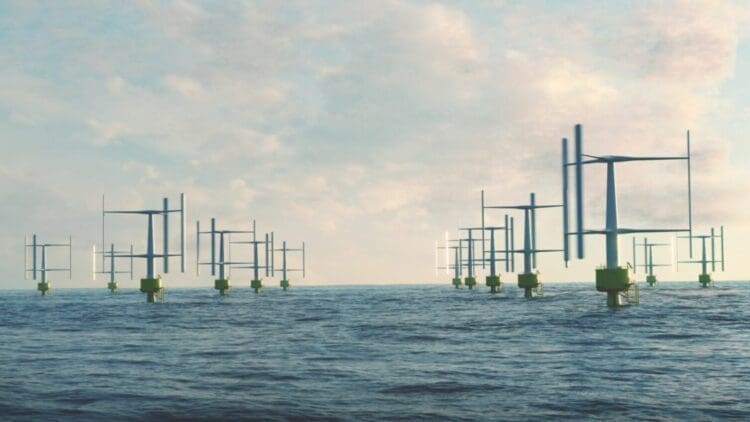

A floating deep-sea turbine has been created to make offshore wind energy simpler and more affordable.
The world’s energy demand is spiking as the economy digitizes and sectors electrify.
The predictable, high-speed winds of the ocean are critical to meeting this swift global surge. But local opposition against these giant turbines is growing.


Will implementing a different offshore turbine design help address these concerns and overcome the industry’s greatest hurdles?
How offshore wind could save the energy sector
Digitalization and electrification have become central to driving the modern world forward.
But these high-tech advancements come with a skyrocketing energy price.
AI and data centers are pushing global power grids to their structural limits.
Global annual electricity generation is nearing 30,000 TWh to meet baseline demand.
Data centers alone are consuming nearly 1,050 TWh.
AI-focused power demand increased by 17% in one year. This outpaces the global grid growth fivefold.
Offshore wind infrastructure is essential to address the global energy crisis.
The steadier, stronger wind forces of the ocean ensure higher output. This is why international markets are adding substantial new offshore capacity to the grid.
The sector is now closing in on a historic 92 GW milestone. But further expansion has hit a wall.
The industry is facing significant global pushback due to rising concerns about environmental and economic impact.
The rise of local and economic friction
The rise in global inflation and capital expenses has made turbine component manufacturing unprofitable.
Giant marine operations face surging borrowing costs. This is because interest rates have dramatically increased.
Furthermore, supply chain bottlenecks are straining the industry.
Worldwide, a shortage of specialized installation vessels delays the transport of massive components. Regulatory delays and failed contract tender rounds add to development postponements.
Local community opposition has become another roadblock.
Coastal regions are deeply concerned about the environmental impact of these major offshore projects.
The vibrations of these turbines cause acoustic pollution that disrupts marine migration and distribution. Some argue that wind farms also block traditional fishing routes.
The heavy marine traffic for installation and maintenance further impacts marine wildlife.
Fortunately, a Swedish company called SeaTwirl decided to address these obstacles. The result was an innovative floating, deep-sea turbine with a different configuration.
A unique take on offshore turbine designs
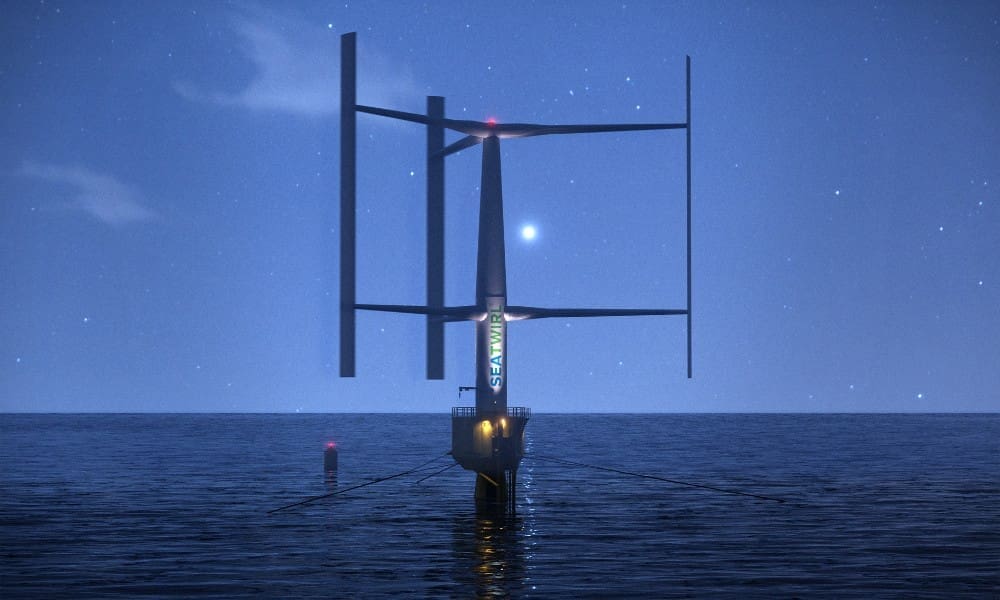
SeaTwirl has created a floating vertical-axis wind turbine.
Conventional horizontal blades must actively shift to face alternating wind directions. However, the vertical configuration enables the blades to absorb moving air currents from any direction.
It ultimately removes the need for heavy, complex steering mechanisms.
The mechanics of the SeaTwirl turbine
The structure relies on a unique underwater setup.
A long, hollow spar buoy extends 3,200 feet below the surface. A heavy, fixed ballast keel is on the bottom of the spar.
This creates a low gravity center. The surrounding water sustains the machine’s weight, lowering stress on the main mechanical bearing.
The generator is located on the sea surface. Technicians therefore have easy access just above the waterline.
Maintenance can be conducted using standard local utility vessels. This cuts waiting times and service costs.
The entire floating system is secured to the seabed with flexible mooring lines. This enables deep-sea deployment.
The modern world’s digital evolution cannot be slowed down.
Conventional energy infrastructure is failing to sustain the grid. However, the SeaTwirl turbine could alleviate this increasing strain.
The bypassing of economic and community obstacles of traditional wind will bridge the power gap.
The ability to tap energy in deeper waters with lower mechanical stress is essential to safeguarding the global grid. By scaling it, the global energy transition can move forward.