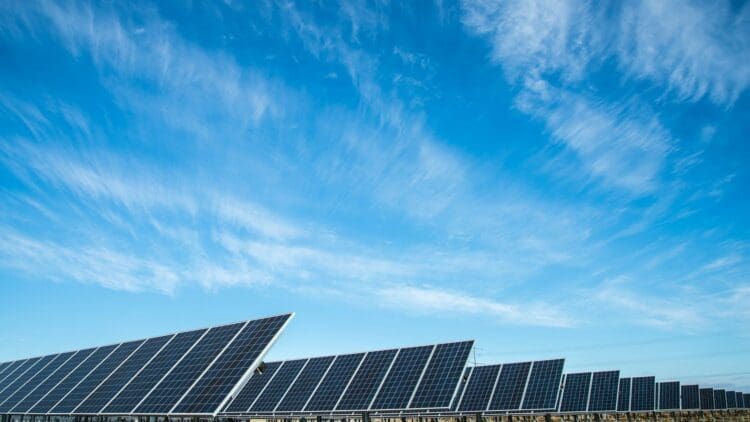

The solar energy industry is going through an interesting transitional period as developers are being more and more creative with the way that they establish solar facilities. For instance, developers are exploring ways to install solar panels instead of windows on buildings. There is no telling where the solar projects will go, considering the unpredictable and ongoing nature of innovation advancement. One entity that is partaking in the transition is QCells after launching domestic solar cell manufacturing at its fully integrated production complex in Georgia.
Assessing the significance of Qcells in the contemporary solar landscape
It is always interesting when a company from many decades ago is able to adapt and survive multiple eras. Qcells is a leading Tier-1 clean energy company that has made a name for itself when it comes to solar cells and modules. It was founded in Germany in 1999 but is now headquartered in Seoul, South Korea.
Asia is well respected for its solar energy facilities, considering that China is the leading solar energy-producing country in the world. Companies from the region seek to rely on the momentum that China has in order to execute groundbreaking initiatives.



On that note, Qcells has reached a major milestone in the American renewable energy sector by launching domestic solar cell manufacturing at its Cartersville, Georgia, production complex.
There has been massive attention surrounding this occurrence because it represents the first time that a U.S. facility has incorporated the manufacturing of solar ingots, wafers, cells, and modules under one roof at a commercial scale. The achievement enhances domestic energy supply chains while lowering dependence on imported solar resources.
Qcells at the heart of a historic moment in American solar energy manufacturing
Not only is the initiative massive for America as a whole, but it also specifically emphasizes Georgia’s growing role as a hub for clean energy manufacturing. Qcells is recognized as the U.S. solar division of South Korea-based Hanwha Solutions. It publicly revealed that its Cartersville facility has officially started producing solar cells.
There will be a massive amount of eyes and attention on the Cartersville facility, especially considering that solar cells represent one of the most essential elements in photovoltaic panels. The launch itself shows the overall advancement of the company’s long-term strategy to establish a fully domestic solar supply chain.
Industry experts view this initiative as having the potential to transform U.S solar energy generation. Solar cells convert sunlight into electricity and are usually imported from overseas manufacturers, mainly in Asia. While the United States is consistently among the leading solar producers, its domestic solar cell production has remained slightly below par.
Understanding why Georgia is the chosen destination for the solar initiative
For a country with the reputation and resources of the U.S., every decision is made strategically. In this case, industry data proves that U.S. module manufacturing capacity is above the nation’s solar cell production capacity which means the new Qcells facility is a necessary addition to the market.
According to reports, the company invested an estimated $2.5 billion into the Cartersville campus. This was enough to turn it into America’s first and only vertically integrated silicon solar manufacturing complex. There are massive expectations for the facility to become the largest solar cell factory in U.S. history after it reaches full production later in 2026.
Analyzing the details of solar development in the Cartersville complex
The Cartersville complex is built to manufacture about 3.3 gigawatts (GW) of ingots, wafers, and solar cells each year, along with 3.5 GW of solar modules. When added to Qcells’ existing manufacturing operations in Dalton, Georgia, the company will have a total domestic module production capacity of 8.6 GW.
Domestic production is increasingly becoming important in the United States following the trade restrictions, supply chain disruptions, and growing demand for locally manufactured renewable energy technologies. Qcells employs thousands of workers across its Georgia operations at the moment, benefiting the state economically.