
A rare ‘kryptonite twin’ found 20 years ago could power millions of electric cars, but only 136 million tons exist in the world
 Credits: Dungodung, Wikimedia Commons 4.0 BY-SA, no changes made
While kryptonite could render Superman powerless, its rare “twin” could generate a vast amount of power.
The world is embracing electrification to complete the green energy transition, but several challenges are slowing it down.
These obstacles will have to be overcome before true resilience and sustainability can be achieved globally.
Presently, researchers are exploring synthetic replication, which is the only way to ensure Jadarite’s role in the transition.
Will the discovery of a mineral from two decades ago help fast-track the path to electric transportation before being depleted?
How electrification fuels the green energy transition
To move forward into a sustainable future, the world has to replace the fuels that power its vehicles.
It is fundamental to drive the clean power movement, as zero emissions have become a globally shared goal.
A high-capacity electrical grid will help to leverage renewable sources on a larger scale.
However, this global shift cannot be completed successfully without adequate energy storage.
It all ties together with high-capacity batteries, which are used to power electric vehicles (EVs).
Without them, energy generated by renewables cannot be utilized by EVs and their charging infrastructure. Excess clean electricity is also lost without a storage system.
Battery energy storage systems are now widely used with solar facilities, ensuring grid stability at all times.
Unfortunately, these systems require a great number of certain resources for production.
As these become increasingly in demand, nations are now competing to find the highest yields.
The most critical mineral at a more critical time
The point of moving towards a clean energy economy is to ensure the protection of the environment.
However, shifting from fossil fuel-intensive systems to a material-intensive one seems to defeat the purpose.
Electric motors and utility-scale storage require a great number of critical minerals upfront.
Not all nations have direct, localized access to these minerals. This includes the U.S., which is trailing behind in critical mineral mine development time.
This creates a significant geopolitical leverage for those rich in reserves, driving up import prices and production costs.
Furthermore, lithium is the most sought-after resource, as it can store high amounts of energy in a compact space.
Beyond the issues with global supply chains, lithium mining operations are extremely environmentally invasive.
As high-yield reserves become scarcer, a report from CSIRO could offer renewed hope for the world.
A Kryptonite-like mineral that could power millions
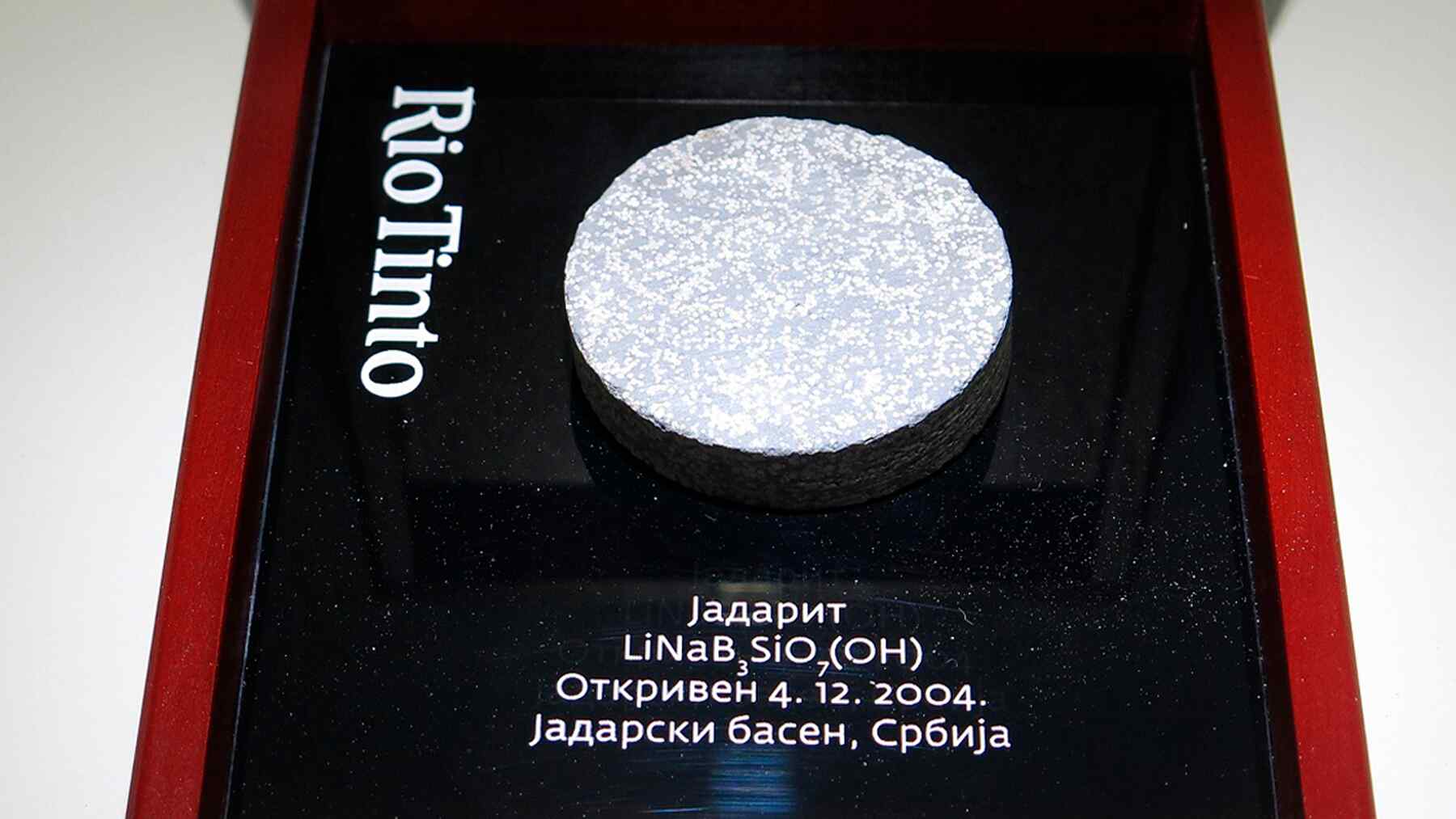
Two decades ago, a search for higher-yielding resources unveiled a soft, white mineral in the Jadar Valley of Serbia.
Analysis revealed that it consisted of sodium, lithium, boron, silicate, and hydroxide. Its chemical formula is a near-perfect match for “kryptonite” as described in Superman Returns.
The mineral was named Jadarite. CSIRO’s recent report highlights that the high concentrations of lithium and boron make it ideal for battery production.
Seeing as the nation is facing oil supply issues due to sanctions, revisiting this mineral could certainly be worthwhile.
Jadarite’s small footprint and massive potential
Jadar’s deposit contains nearly 136 million tons of ore. Experts predict that full utilization could produce enough lithium to power over a million EVs annually.
This concentrated reserve enables more ore extraction from a smaller land area. Theoretically, it is then less invasive than brine or hard-rock mining.
However, Jadarite is even rarer, as it is only found in Serbia, making it a strategically significant asset.
This mineral has the potential to be either Earth’s “kryptonite” or its salvation, depending on how it is mined.
The Jadar Valley may hold the right amount of lithium to fast-track global electrification, but the project is currently stalled.
Only once the intense environmental opposition subsides can the world continue on the path to electric transportation. Presently, researchers are exploring synthetic replication, which is the only way to ensure Jadarite’s role in the transition.
Anke Maree is a writer with a clear and engaging editorial style. Her work focuses on making complex topics accessible, informative, and relevant for readers across different areas of interest.
