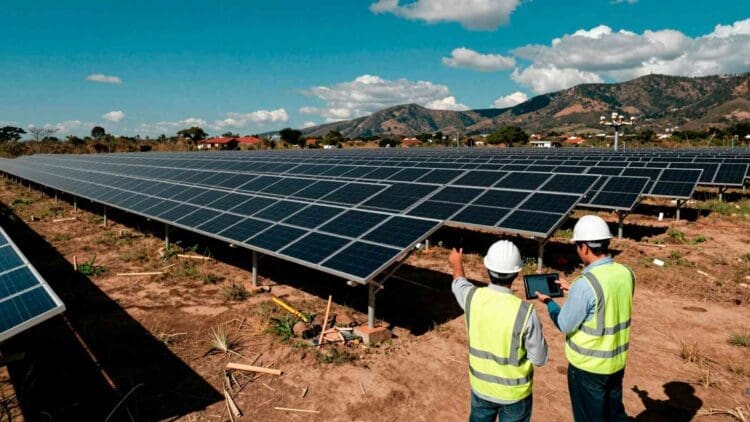

MPC Energy Solutions has announced that its 66.1 MWp San Patricio solar PV plant in Guatemala has secured its final permit and entered the testing and commissioning phase. Testing is set to begin within days and is expected to take approximately two weeks, with the plant’s commercial operation date (COD) now targeted for July 2026—sliding into the third quarter after an originally guided second-quarter timeline.
San Patricio Plant Begins Testing After Securing Final Permit
Receipt of the final permit marks a turning point for a project that has been in development for some time. With that regulatory hurdle cleared, MPC Energy Solutions confirmed the San Patricio plant has officially entered the testing and commissioning phase, with testing set to begin within days of the announcement.
The testing period is expected to last roughly two weeks. Once completed successfully, the plant is anticipated to receive its commercial operation date certificate during July 2026—a designation that formally confirms commercial operability and carries significant weight for both the project’s finances and its planned sale.


The shift from a Q2 to a Q3 COD represents a notable change in the project’s timeline, though the company moved quickly to address the financial consequences.
Delay Driven by Permitting Timeline, Pushing COD Into Third Quarter
MPC Energy Solutions had originally guided for commercial operations to begin in the second quarter of 2026. The delay stemmed from the time required to secure the final permit, pushing the anticipated COD into July — firmly in Q3.
That timeline shift was not without financial consequences. Additional debt service payments accumulated during the extended pre-COD period, while on-site staff commitments and ongoing operational expenses continued to accrue. Together, these costs created a funding gap the company needed to address before the plant could reach the finish line. Notably, the delay was tied entirely to the permitting process rather than any technical or construction issue.
Company Makes USD 1.5 Million Additional Capital Contribution to Cover Final Stage
To bridge the financial gap, MPC Energy Solutions injected USD 1.5 million in additional capital into the project. The contribution covers the company’s obligations — debt service, staffing, and operational costs — through to the COD milestone.
The company does not expect to absorb the full cost. MPC Energy Solutions anticipates recovering nearly the entire USD 1.5 million through contractually agreed closing adjustments to the purchase price at the time of the asset sale, a recovery mechanism already built into the sale agreement. There is also a near-term revenue offset: energy generated during the testing phase and the pre-COD window can be sold through the spot market, providing a partial cushion even if spot revenues do not fully substitute for contracted income.
COD Marks Key Milestone Toward Planned Asset Sale
Reaching commercial operation is not just a technical milestone for San Patricio; it is a prerequisite for completing the planned sale of the asset. MPC Energy Solutions described the COD as a critical step toward closing that transaction, with the broader sale process expected to proceed once the certificate is issued.
The company indicated that transaction economics remain in line with prior guidance despite the delay. A recovery mechanism embedded in the purchase price adjustments, combined with the relatively short timeline extension, appears to have contained the financial impact. For MPC Energy Solutions, bringing San Patricio to commercial operation and then completing its sale would mark a meaningful step in the company’s Central American renewable energy strategy.
USD 1.5 Million in Additional Capital
San Patricio is a 66.1 MWp solar PV plant in Guatemala developed by MPC Energy Solutions. The plant secured its final permit and entered testing and commissioning, with a two-week testing period. Commercial operation is expected in July 2026, pushing the COD from Q2 into Q3. The delay triggered USD 1.5 million in additional capital contributions, though the company expects to recover nearly the full amount through closing adjustments at sale. Transaction economics remain consistent with prior guidance, and COD certification is the remaining step before the planned asset sale can close.
Kelly is an experienced writer with 15 years of experience exploring the big stories that shape our world, from tech breakthroughs and space exploration to climate, energy, and the fascinating quirks of science. She has a talent for turning complex ideas into sharp, memorable insights that stay with readers long after they’ve finished reading.