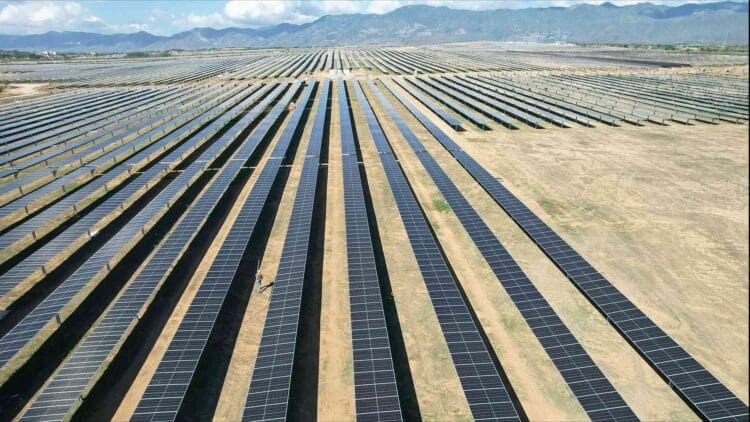

The energy industry has transformed drastically from what it was decades ago, and the biggest reason for this is the incorporation of technological innovation. In the past, developers were less willing to take risks in the projects that they pursued, but nowadays, the industry is a place where most companies are trying to predict where the energy sector is headed. Another huge element behind the abundance of energy initiatives this year is the decarbonization targets that most countries have. In the latest captivating initiative, Meta secures a renewable energy supply from RWE through a Texas solar agreement tied to Rabbit’s Foot development.
Meta decides to collaborate with RWE in a Texas-based solar energy project
Meta is one of the wealthiest and most well-known technology companies in the world. For the company to maintain its position, it will need to invest a tremendous amount of money into electricity for its data centers. Meta is a multinational technology entity that owns social media platforms such as Facebook, Instagram, and WhatsApp.
In what has been a notable trend in the energy industry, it is not surprising to witness a technology company deciding to combine with an energy company. RWE is a leading global energy company that is headquartered in Germany, Essen.



As of 2026, the company’s main objective is to achieve decarbonization through its abundance of solar and wind facilities. The energy industry was left astounded after Meta announced the new long-term corporate power purchase agreement.
The PPA is specifically for the electricity generated by the 298-megawatt (MWac) Rabbit’s Foot Solar project in northeast Texas. The Texas region is recognized for being the fastest-growing solar energy-producing state in the country, and it could spearhead the clean energy transition in the United States.
Delving deeper into the Rabbit’s Foot project and its potential impact in Texas
The Rabbit’s Foot project, situated in Bowie County, was officially underway in the earlier part of the year. When it finally becomes functional, the energy produced from the place will complement Meta’s target of matching its operations with completely clean energy.
With data centers using a tremendous amount of electricity, it is incumbent on technology companies like Meta to invest money into energy projects so that they can solely use clean energy and protect the Earth. Industry experts and enthusiasts are looking forward to the RWE and Meta collaboration continuing to change energy generation as a whole.
The companies already have a long history of collaborating in groundbreaking initiatives. For instance, in the past, the companies signed PPAs for projects that reached up to 574 megawatts. This included the 274 MW Emily Solar project in Illinois, the 100 MW Lafitte Solar project in Louisiana, and the 200 MW Waterloo Solar facility in Texas.
More to come?: Assessing the future benefits set to come from RWE and Meta
What is interesting to note is that the two entities are headquartered in different countries but have developed such a strong relationship that they can collaborate repeatedly. Ingmar Ritzenhofen, who is the Chief Commercial Officer of RWE Americas, stated the following:
“Our partnership with Meta continues to grow as we work together to deliver reliable power that supports their energy commitments. This agreement for the Rabbit’s Foot Solar project demonstrates how collaboration can drive meaningful economic growth and community benefits.”
Breaking down the economic and community benefits of the Rabbit’s Foot solar project
For the people of Texas, the project will not only provide an electricity supply but will also bring distinct advantages. This includes the creation of almost 200 local construction job openings and more than $50 million generated in long-term tax revenues over a period of 40 years for Bowie County, the DeKalb Independent School District, Texarkana College, and the Emergency District.
With the latest deal, the two companies have officially signed agreements of up to 872 MW in the space of two years. The future is bright for solar energy facilities.
Prince is a versatile writer focused on energy, automotive, environmental, and general news topics. He makes complex technical and policy issues clear, engaging, and accessible for a broad audience.