
Solar quietly grew ninefold in a decade and is now closing in on every other energy source combined
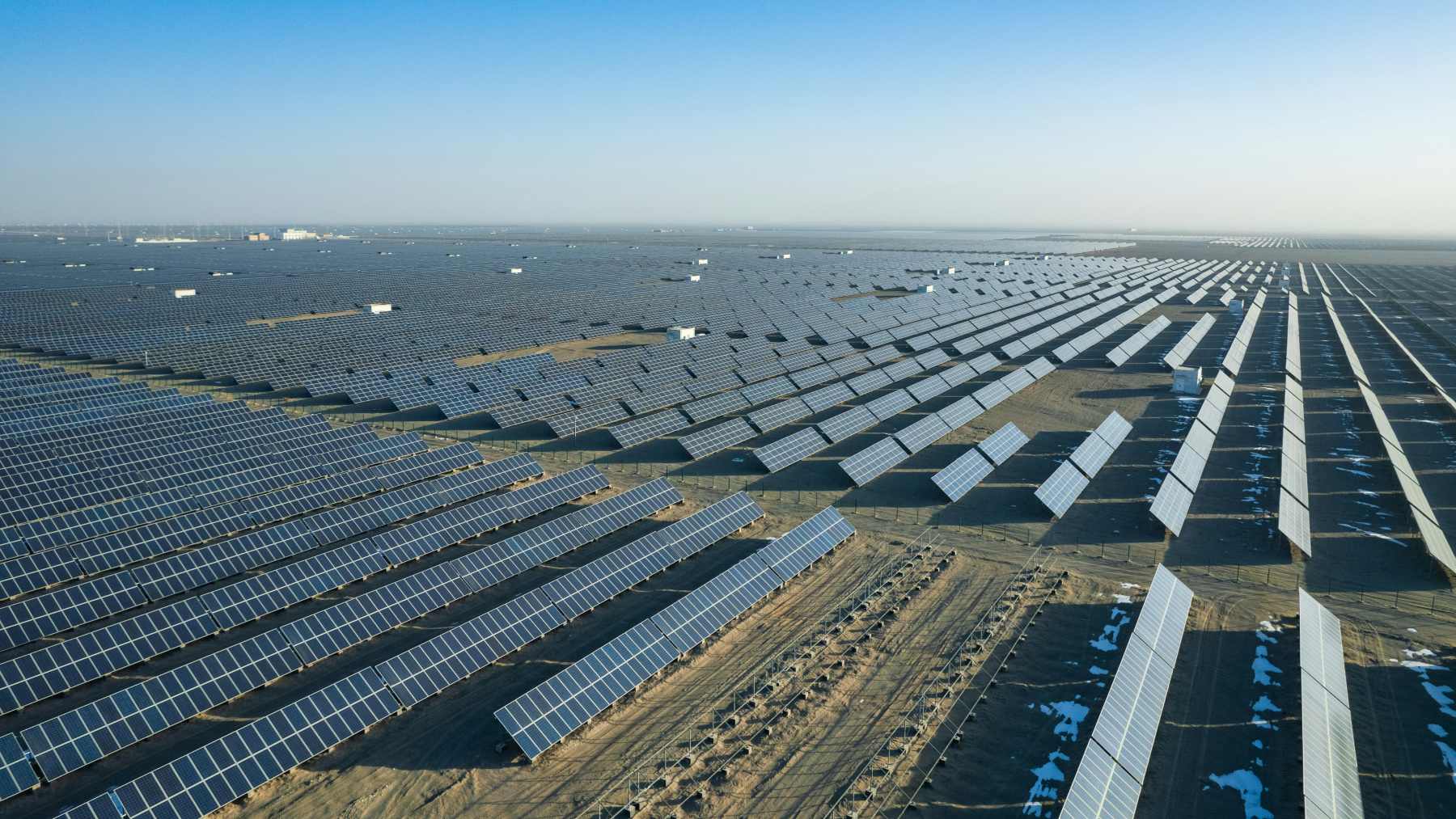
In 2016, the world added 75 gigawatts of solar power in a single year. By 2025, that figure had reached 655 gigawatts — nearly nine times as much. The expansion moved gradually at first, then accelerated, spreading across rooftops and desert plains on nearly every continent.
According to BloombergNEF’s New Energy Outlook 2026, solar is now on a trajectory to surpass every other electricity source combined by 2032. Something historically significant is already in motion — and the energy system is only beginning to reflect it.
From niche technology to global powerhouse
Annual installations grew nearly ninefold between 2016 and 2025, from 75 GW to 655 GW. A decade of growth at that pace reflects a technology that kept getting cheaper while panels, inverters, and installation practices all improved alongside it.
Long-duration storage is moving toward cost competitiveness but hasn’t reached the scale needed to materially affect grid modeling over the next decade or two.
BloombergNEF’s New Energy Outlook 2026 projects that solar will become the largest zero-carbon power source before the end of this decade — then go further still. By 2032, it’s expected to overtake all other generation sources combined.
What gives this projection particular weight is the scenario underlying it. The Economic Transition Scenario assumes no major new climate policy. Governments don’t need to mandate solar’s expansion; the economics are already doing that. This is a market-led shift, not a policy-led one.
Electricity demand is surging — and solar is positioned to meet it
Solar isn’t growing into a stable market. Global electricity demand is projected to rise 29% by 2035 and 69% by 2050 under the Economic Transition Scenario, pulled upward by electric vehicles, data centers, heat pumps, industrial electrification, and air conditioning.
Data centers deserve particular attention. Their electricity use is expected to more than triple by 2035, reaching 5.4% of global power demand. BloombergNEF estimates they could account for 23% of demand in the U.S. PJM market and 18% in Malaysia by that same year.
Electricity represented 21% of final energy in 2025, well behind oil products at 38%. By 2047, under the Economic Transition Scenario, electricity is forecast to surpass oil as the largest source of final energy — a reversal that would’ve seemed far-fetched a generation ago.
Batteries: the essential partner to solar’s rise
Solar generates power when the sun shines. Batteries make that power available when it doesn’t. Storage capacity is projected to grow 17-fold — from 223 GW in 2025 to 3.8 TW by 2050 — driven by lithium-iron phosphate prices falling faster than previously expected.
The core use case is straightforward: shift midday solar generation into evening peak hours. As renewable penetration rises, though, battery economics face mounting pressure because storage assets are no longer fully cycled every day. Long-duration storage is moving toward cost competitiveness but hasn’t reached the scale needed to materially affect grid modeling over the next decade or two.
Oil peaks, gas grows, coal fades
Oil demand is expected to peak around 2029, then fall to levels last seen in the early 2000s by 2050. The primary driver is EV adoption, which is already reducing gasoline consumption in China and spreading into Southeast Asia and Latin America.
Gas follows a different path. Demand grows under the Economic Transition Scenario, supported by power generation, data centers, and industry — with gas projected to surpass oil as the largest share of primary energy by the mid-2040s. Only under the Net Zero Scenario does gas enter structural decline, peaking in the early 2030s.
Coal’s share of global power generation peaked at 41% in 2011 and is projected to fall to around 8% by 2050. Existing assets and industrial uses keep it in the mix, but its role is shrinking steadily.
The investment gap that could determine the outcome
Record investment in the energy transition in 2025 — $2.3 trillion — represents real progress, yet still falls short of what’s needed. The Economic Transition Scenario requires average annual investment of $3.1 trillion through 2030. The Net Zero Scenario demands $4.8 trillion per year through 2030, rising to $7.7 trillion annually in the first half of the 2030s.
BloombergNEF is direct about one implication: the window for limiting warming to 1.5°C using currently available technologies has effectively closed. The current trajectory points to a 2.4°C warming outcome by 2100 under the Economic Transition Scenario.
Asia at the center of the solar story
No region illustrates solar’s momentum more clearly than Asia. India installed a record 15.3 GW of solar capacity in the first quarter of 2026 alone — up 143% year-over-year, and more than the entire world installed annually just fifteen years ago.
The economic logic runs deeper than clean energy targets. Energy imports accounted for 3% to 6% of GDP in markets like Vietnam, Japan, Indonesia, and India in 2025. That exposure is expected to decline sharply by 2035 as domestic solar and storage displace imported fossil fuels.
China adds another dimension entirely. BloombergNEF estimates China’s energy-related emissions peaked in 2023–2024 and projects a roughly 50% decline from that peak by 2050 — the largest absolute emissions reduction of any country.
The next decade will test whether investment, infrastructure, and political will can keep pace with the technology’s momentum. Solar’s rise has already been quieter and faster than most forecasters anticipated. If the pattern holds, the surprises ahead may well run in the same direction.

Carlos is an engineer with strong expertise in technical and industrial topics. He previously worked at international companies such as Siemens and is multilingual.
