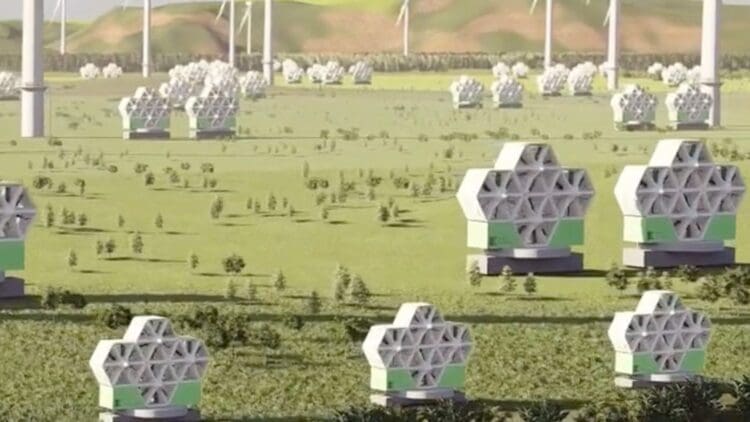

Wind turbines inspired by honeycombs can increase access to wind energy in historically restricted regions.
Conventional designs are facing significant regulatory hurdles, slowing capacity expansion in the U.S.
This raises concerns for major metropolises that need clean power supplies to maintain digital infrastructure and operations.

While many developers are defending giant installations during lengthy lawsuits, others have taken an alternative route. Could reimagining the designs be key to meeting energy goals?
How cities have been locked out of the wind market
Major cities have historically lacked access to traditional renewable power.
Wind energy is geographically limited to vast open plains. High-altitude wind that is consistent and easy to harness is another limitation.
In modern urban settings, layouts have become highly condensed. The industrial corridors and skyscrapers also cause low-level turbulence and unpredictable gusts.
This makes these environments incompatible with massive horizontal-axis wind turbines.
Transmitting the electricity from faraway wind farms to cities is complex.
The long-distance transmission results in significant energy losses. The required network of high-voltage cables is also costly.
This lack of access is creating an increasing energy gap.
Digitalization is pushing urban electricity demand to record highs. A significant share of city power is now consumed by digital infrastructure.
In the U.S., several states invested in offshore wind to relieve strained grids. However, these projects are facing obstacles of their own.
Offshore wind is becoming an unlikely solution
Coastal urban regions turned to offshore wind to bridge the energy gap.
Now, many of these major developments are halted due to regulatory restrictions and legal opposition.
The Trump administration is responsible for delays in several offshore project permits.
U.S. Environmental laws, intended to protect marine ecosystems, can suspend permitting for multiple years.
Concerns are also rising about potential security risks due to cyberattacks on operational technology.
Economic and logistical barriers further complicate the future of offshore wind.
The need for specialized vessels for installation and maintenance, and rising material prices, have made it more of a liability.
To prevent system failures and potential blackouts in major metropolises, a less invasive and affordable approach is needed.
Engineers at Katrick Technologies addressed these obstacles by seeking inspiration from nature.
They have created an innovative turbine design that increases access to wind energy in the most condensed environments.
The honeycomb: A ground-level wind revolution
Nature-inspired renewable technology designs are reshaping the urban landscape.
Katrick Technologies developed a city-appropriate wind turbine based on how bees move.
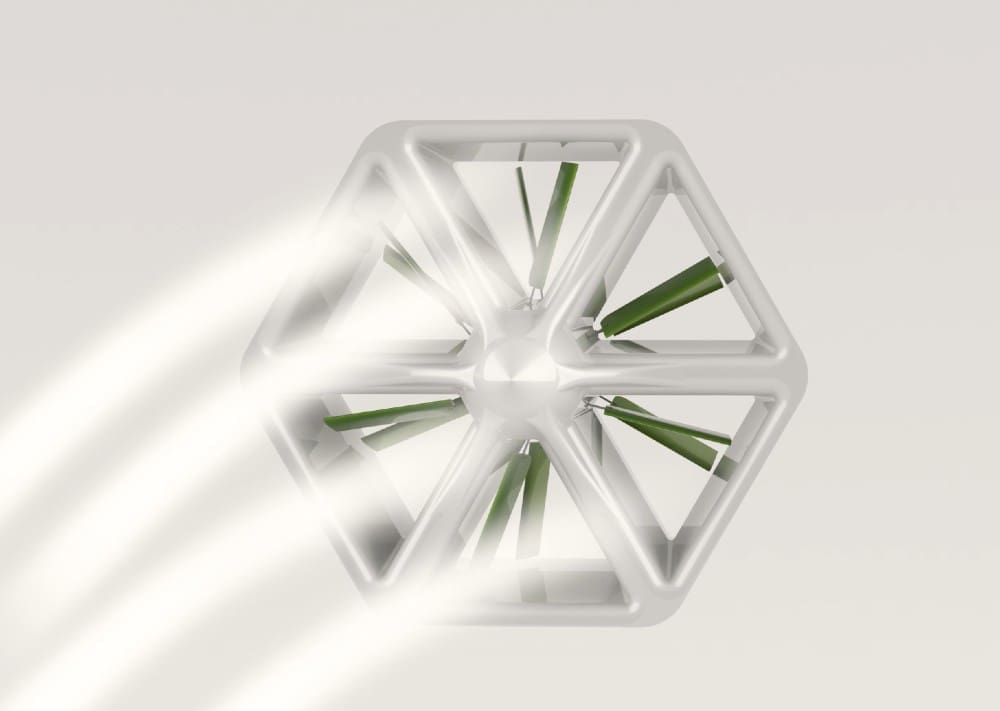
The technology consists of a series of oscillating “flapping” aerofoils.
The wing-like structures are mounted inside a modular, honeycomb-shaped frame. These frames can be easily stacked and integrated into existing city infrastructure.
This turbine harnesses the kinetic energy of turbulent, low-level gusts.
When wind passes through the panels, a quick oscillating motion is triggered in the aerofoils. A unique hydraulic powertrain converts it into grid-compatible electricity.
How this ground-level wind turbine benefits cities
It bypasses environmentally invasive and logistically challenging construction.
The compact system can be retrofitted onto highway noise barriers, airport perimeters, and rooftops.
Its silent operation makes it an ideal addition to urban public spaces and residential areas.
The bio-inspired design is more visually aesthetic, and its enclosed structure makes it safer for local biodiversity.
The company estimates that a standard 10kW array operating at 25% capacity can generate almost 22,000 kWh annually.
Katrick Technologies’ design ensures a localized source of clean power production.
It offers major cities a viable pathway to stabilize their grids without any compromises.
The honeycomb-shaped technology bridges the energy gap by transforming static urban surfaces into active power hubs. Harnessing the “chaotic” local wind can ensure that the digital age is powered sustainably.