
Engineers want to sink giant spheres nearly as tall as Big Ben into the ocean, using waves, seawater, and satellites to help power the internet
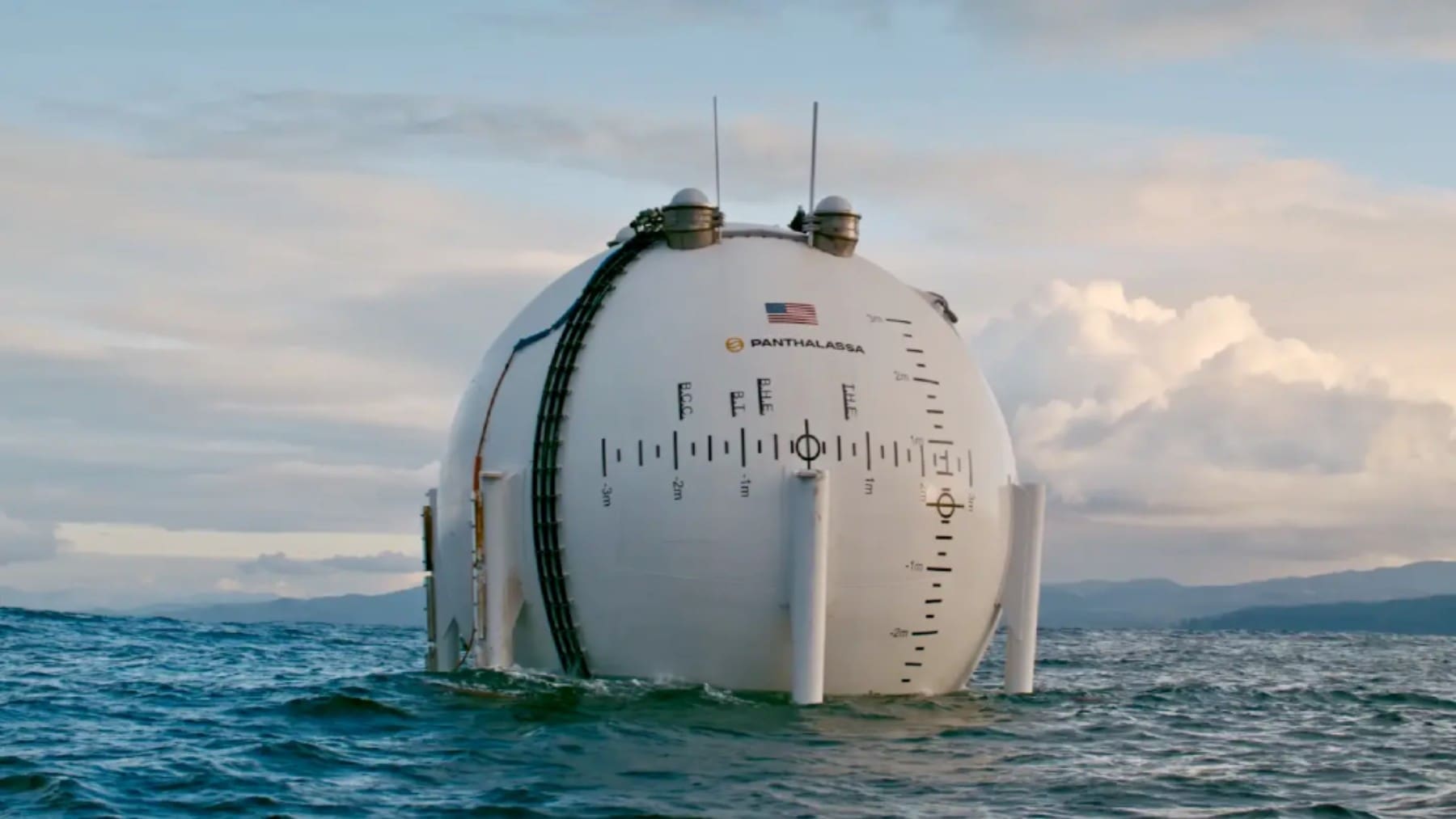 Credits: Panthalassa, Ocean-2
Onshore infrastructure is struggling to keep the internet alive, but giant spheres in the ocean could provide the necessary power.
As the world evolves during the digital era, energy demand will also continue to rise to record highs.
These needs complicate the global transition to green energy sources, as their technologies begin to face significant limitations.
As the world’s aging infrastructure becomes overwhelmed by this “always-on” demand, tech giants are forced to compete for limited resources.
Will moving smart spheres to the sea prove to be as innovative and efficient as engineers have hoped?
How the world’s energy needs have shifted
The digital era has fundamentally changed the way the world operates.
More than 50% of the population is now connected thanks to smart devices that have accelerated communication.
Access to information and services has become digitized within just two decades, and several industries are now automated.
This has shifted the economy toward instant, data-driven, and globalized models. Daily life has been altered through remote work, online commerce, and social media.
However, this rapid transformation has made maintaining these digital operations that much more complicated.
It is no longer just a matter of software, but of physical space and vast power.
These two factors have now overlapped with the expansion of the world’s green energy capacity.
Finding a balance is key to ensuring that the population’s needs are met while keeping carbon footprints low.
Unfortunately, this adds several layers of complexity to the tech and energy sectors.
The green transition meets the “AI tax”
The move toward low-carbon, sustainable, and secure energy systems is well underway.
Wind and solar energy have been revolutionary in this shift. However, their intermittent nature has made it difficult to keep pace with the global digital growth.
Massive battery energy storage systems have been suggested to bridge these gaps. Yet, these chemical battery technologies have not been scaled to the level required to supply constant, baseline power.
This particular grid strain is now nearing a breaking point due to the rise of generative AI and cloud computing.
Training and running language models result in staggering amounts of electricity consumption. This usage is further increased by cooling systems that prevent the hardware from overheating.
As the world’s aging infrastructure becomes overwhelmed by this “always-on” demand, tech giants are forced to compete for limited resources.
Now that land-based grids are hitting capacity, the industry must power the future of intelligence elsewhere.
Fortunately, Panthalassa is positioning itself as the “maritime utility” for the AI era.
The 300-foot sphere solution in the North Pacific
Data centers are the powerhouses of AI, and the reason why managing IT hardware for sustainability is so complex.
That is why Panthalassa is deploying a fleet of floating, autonomous data centers.
Peter Thiel has invested $140 million in the Series B funding to support these giant, 280-foot-long steel structures. This technology is now scaled to provide a carbon-free baseline for AI.
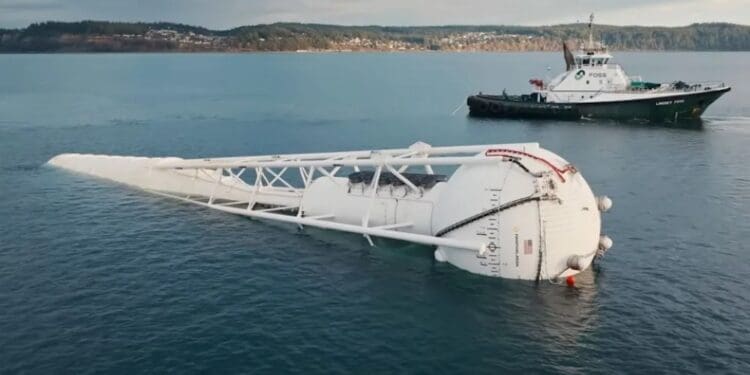
The benefits of the nodes that are nearly as tall as Big Ben
The scale of the nodes enables them to capture deep-sea swell kinetic energy utilizing a closed hydraulic loop.
The design avoids fragile hinges and gears, ensuring the hardware’s long-term survival in the extreme environment.
The seawater provides “free supercooling,” eliminating the need for billions of gallons of freshwater.
These units are also untethered and use satellite-linked autonomy to move toward the strongest waves.
Low-Earth-Orbit satellites beam data back to the mainland.
This maritime leap has represented a real-time shift for the world’s digital infrastructure. As of May 2026, ocean-powered intelligence will be a reality.
The Ocean-1 and Ocean-2 prototypes had successful trials, and Ocean-3 is now being prepared for deployment in the North Pacific.
The first commercial-scale nodes are expected to be fully operational by 2027. This technology could perhaps transform how AI is powered for good, reshaping the future of the internet.
Disclaimer: Our coverage of events affecting companies is purely informative and descriptive. Under no circumstances does it seek to promote an opinion or create a trend, nor can it be taken as investment advice or a recommendation of any kind.
Anke Maree is a writer with a clear and engaging editorial style. Her work focuses on making complex topics accessible, informative, and relevant for readers across different areas of interest.
