
UK engineers found a smarter way to build offshore wind turbines in deep water, then hit an invisible wall at 200 feet
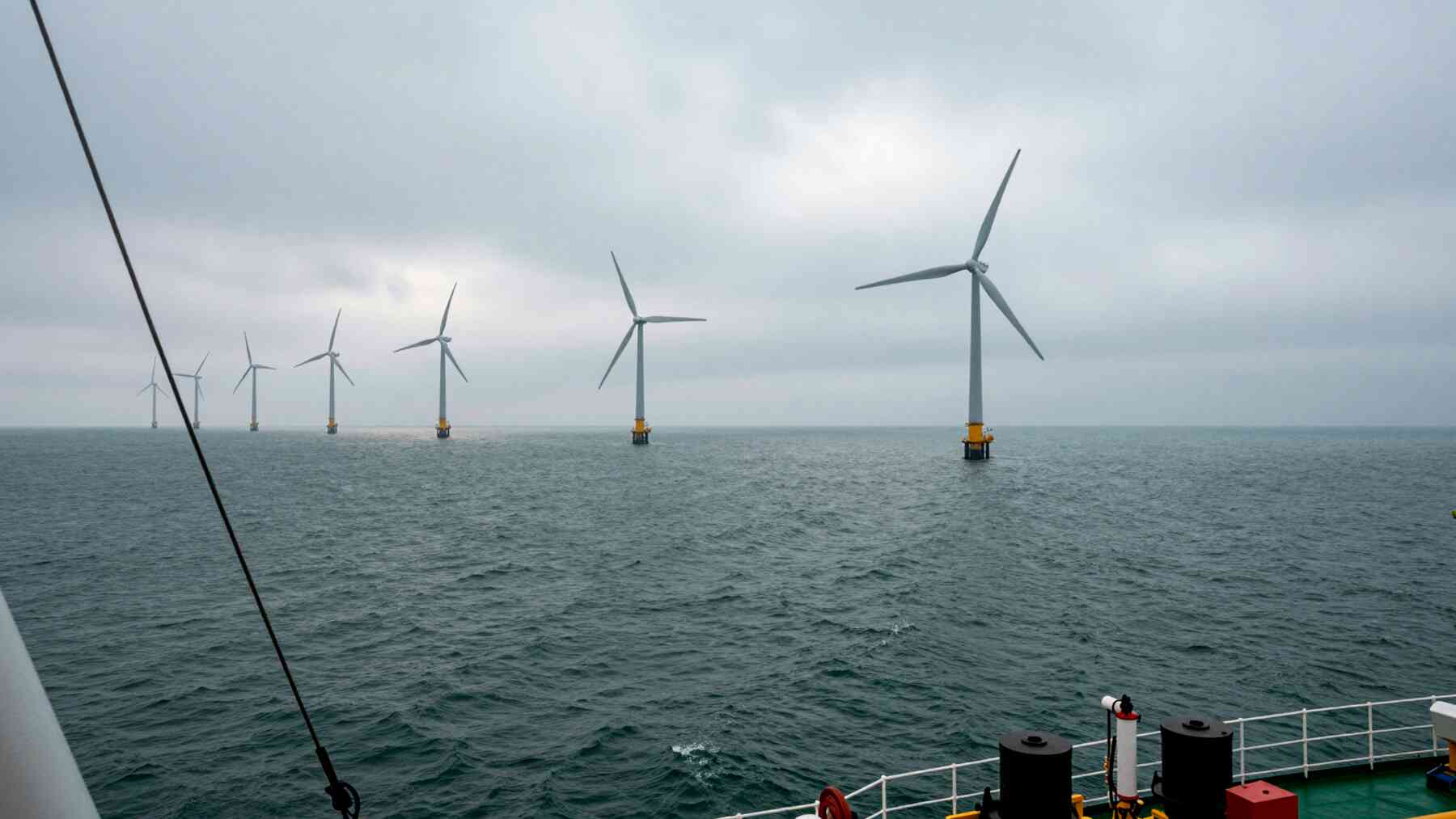 AI-made
Britain’s offshore wind industry has spent years pushing further out to sea, chasing stronger, steadier winds in waters too deep for conventional fixed-bottom turbines. Now a new wave of foundation technologies is generating real excitement—promising to unlock vast stretches of the seabed that were previously out of reach, without the complexity of full floating structures.
But something is getting in the way.
Beyond 200 feet of water depth, enthusiasm runs into a constraint the industry hasn’t quietly solved yet — and that gap between ambition and execution may matter more than the current buzz suggests.
The UK has set ambitious offshore wind capacity targets, and a significant share of the remaining accessible resource sits in waters deeper than 200 feet.
Why the UK is looking beyond floating wind
Floating wind has long been the assumed answer for deep-water offshore sites. The concept is straightforward: anchor a turbine to a buoyant platform rather than fixing it to the seabed. It works, and projects like the Hywind Scotland array have proven the technology is real. But floating wind remains expensive, complex to deploy at scale, and dependent on supply chains that are still maturing.
That reality has pushed developers and engineers toward a different question. Could there be a middle path — something between conventional fixed-bottom foundations and full floating structures — that is cheaper, faster to build, and easier to install?
The UK’s deeper offshore areas, particularly in Scottish waters and parts of the Celtic Sea, sit at depths where fixed-bottom turbines become unworkable but floating structures feel like overkill. Those regions represent a significant share of the country’s untapped offshore wind resource, and finding a cost-effective way to access them has become a genuine commercial priority.
The new foundation technologies attracting attention
Several alternative deep-water foundation concepts are now drawing serious interest from developers — extended jacket structures, gravity-based hybrid designs, and other novel configurations that sit on or are anchored to the seabed without relying on the mooring systems that define floating wind.
The appeal is real. These designs borrow from the engineering logic of fixed-bottom foundations, which the industry already knows how to build and install efficiently, while stretching that logic into deeper water. Some of the dynamic load challenges and mooring complexity that drive up floating wind costs are avoided entirely. Various developers and engineering firms across the UK are exploring these approaches, though the sector remains at a relatively early stage—with lower costs per unit compared to floating wind and a faster route to commercial deployment if the technical hurdles can be cleared.
The 200-foot problem: where progress stalls
Designing a foundation that works in 200-plus feet of water is one challenge. Getting a turbine on top of it is quite another, and that second part is proving harder to resolve.
Beyond 200 feet, the vessels and equipment currently used to install offshore wind turbines struggle. Turbine installation requires specialized heavy-lift vessels with sufficient crane height and deck capacity. Operational complexity increases sharply in deeper water, and the fleet capable of handling those conditions is limited. This is not purely a foundation engineering problem—it is a supply chain and logistics problem. The bottleneck sits at the installation phase, not the design phase, meaning even the most well-engineered foundation concept cannot deliver results if the industry lacks the tools to place turbines on top of them at depth. Purpose-built installation ships capable of working reliably beyond 200 feet are not yet widely available.
What needs to change—and who is working on it
Solving the deep-water installation problem requires movement on several fronts simultaneously. Vessel operators need to invest in next-generation installation ships. Ports need infrastructure capable of handling the components involved. Developers need enough project pipeline to justify that investment — a classic chicken-and-egg situation.
Some R&D activity is underway, and early-stage thinking is emerging around modified installation approaches. Practical, at-scale solutions are likely still several years away. Policy support is pivoting to address this, with capital injections from Great British Energy and the National Wealth Fund targeting port upgrades. However, aligning these investments with vessel manufacturing timelines means practical, at-scale deployment is still several years away. Without deliberate intervention, the gap may persist longer than the industry’s current optimism implies.
What is at stake for UK offshore wind targets
The UK has set ambitious offshore wind capacity targets, and a significant share of the remaining accessible resource sits in waters deeper than 200 feet. If the installation bottleneck is not resolved, that resource stays locked — and the country’s ability to hit its clean energy goals becomes harder to model with confidence.
Other nations are working on similar deep-water challenges. Move too slowly, and the UK risks ceding ground both in energy capacity and in the industrial expertise that comes from being a first mover. The foundation technologies are ready to be taken seriously. Whether the rest of the system — vessels, ports, policy, investment — can catch up before the window of competitive advantage narrows is the question that actually needs answering.
Kelly is an experienced writer with 15 years of experience exploring the big stories that shape our world, from tech breakthroughs and space exploration to climate, energy, and the fascinating quirks of science. She has a talent for turning complex ideas into sharp, memorable insights that stay with readers long after they’ve finished reading.
