
ORE Catapult report calls for UK offshore wind workforce to nearly double to 94,000 by 2030
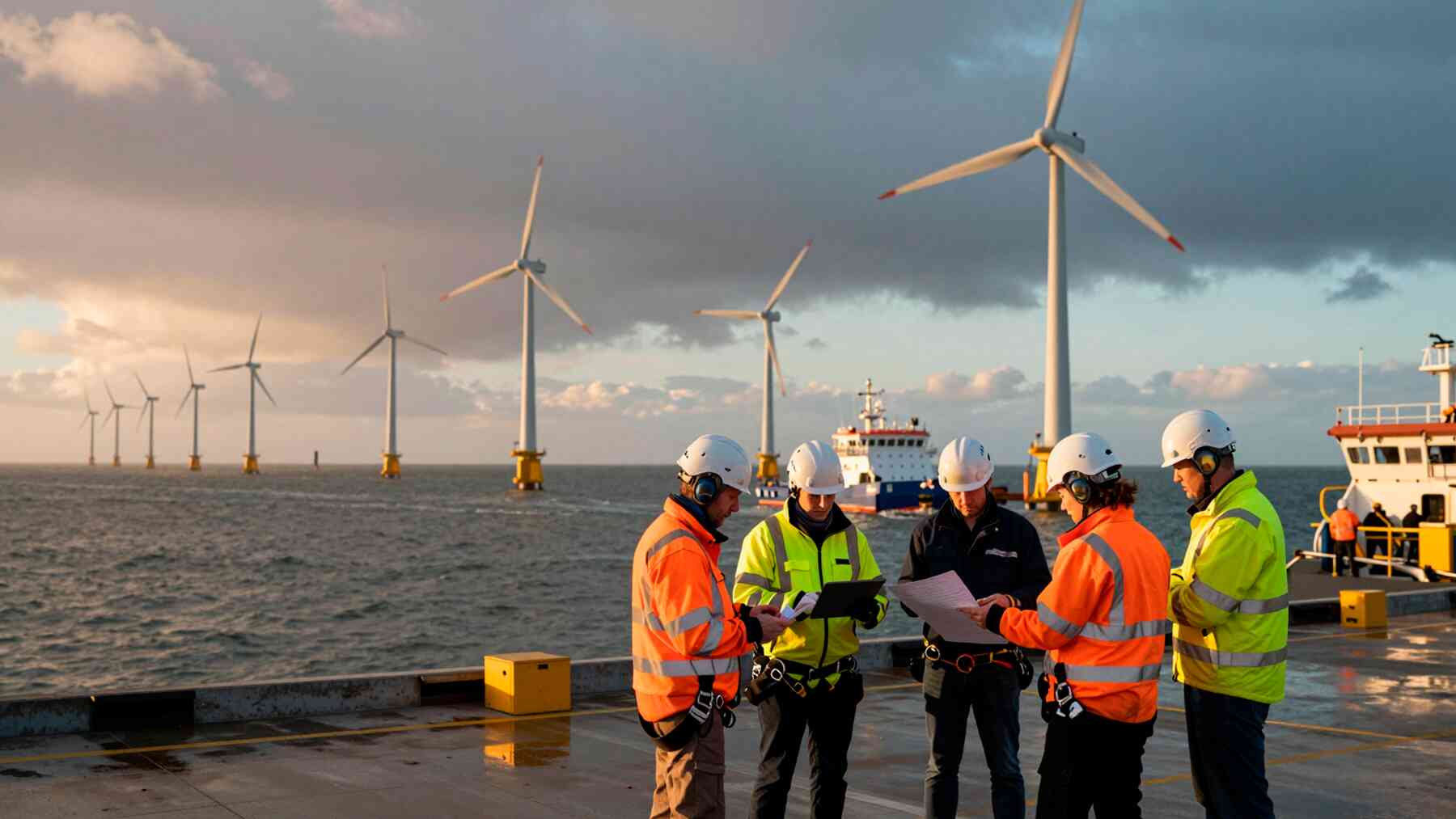 AI-made
The UK’s offshore wind sector needs to more than double its workforce — from 40,000 workers today to as many as 94,000 — by the end of the decade, according to a new report from the Offshore Renewable Energy (ORE) Catapult.
Published this week, “Workforce Foresighting for Offshore Wind 2030–2035” consolidates findings from five linked studies conducted between 2023 and 2025. The report, sponsored by industry body RenewableUK, maps the skills and talent pipeline the UK will need as it pursues its clean power ambitions.
Report Findings: Workforce Must Nearly Double
The target range set by the report — between 75,000 and 94,000 workers by 2030 — represents a substantial step up from today’s 40,000-strong workforce. That means the sector may need to recruit and train tens of thousands of people within just five years.
The UK government has also committed over £100 million across three years to support engineering skills development — a sign that policymakers recognize the urgency.
Drawing on five linked studies conducted between 2023 and 2025, the report covers the skills and talent pipeline needed to support emerging technologies while keeping the UK competitive globally. RenewableUK, which represents more than 500 companies across the UK renewable energy sector, sponsored the research. The UK government has also committed over £100 million across three years to support engineering skills development — a sign that policymakers recognize the urgency.
Why the Gap Exists: Training Systems Lagging Behind Technology
The report identifies a structural problem at the heart of the challenge. The UK’s education and training systems currently operate on a “lagging” model — they respond to existing industry demand rather than anticipating what the sector will need next. The fix requires a shift to a “leading” model, where skills development gets ahead of emerging technology requirements: designing courses, recruiting learners, and building practical experience before demand fully materializes.
The timeline is tight. Danielle Portsmouth, ORE Catapult’s Future Skills Manager, put it plainly: “There is little, if any, time to spare.” She noted that if the full cycle of developing course content, recruiting learners, re-skilling, and providing on-the-job experience starts now, it will take until 2030 to complete. Any further delay risks leaving the sector without the people it needs precisely when it needs them most.
Consequences of Inaction: Clean Power Targets at Risk
The stakes extend well beyond workforce planning. The UK government has set a target to deploy 43 to 50 gigawatts of offshore wind by 2030 as part of its clean power ambitions, and without sufficient workforce growth, that target could slip out of reach.
The UK currently holds a strong position as a global leader in offshore wind installed capacity. Failing to build the skills pipeline now could undermine that standing, opening the door for other nations to close the gap. There is also an economic dimension — tens of thousands of high-quality, well-paid jobs depend on deliberate, coordinated action across industry and education. Those opportunities will not materialize on their own.
Proposed Actions: Role Archetypes, Working Groups, and New Qualifications
The report does not stop at identifying the problem. It lays out a concrete set of recommendations designed to close the gap.
Central to the approach is the concept of “role archetypes” — a flexible training framework that lets educators focus on new and emerging capabilities without rebuilding entire courses from scratch each time a new role appears. Key roles highlighted include wind turbine technicians, high-voltage cable specialists, installation engineers, fabrication specialists, and electrical managers.
Five emerging technology areas are also flagged as needing dedicated sector champions: dynamic cable systems, remote and autonomous operations, automated welding for offshore wind flotation structures, wind turbine blade manufacture, and UK production of high-voltage direct current cable systems. On the institutional side, the report recommends cross-sector working groups spanning education and offshore wind, a new MSc in Renewable Energy, and an open-access online tool covering workforce planning datasets, archetypes, and occupational profiles.
From Reactive Training to Workforce Training
The ORE Catapult report presents a clear picture: the UK offshore wind sector faces a significant workforce shortfall, and the window to address it is narrow. Between 75,000 and 94,000 workers will be needed by 2030 — up from 40,000 today — to meet the government’s Clean Power deployment targets.
What is required is a fundamental shift away from reactive training toward forward-looking workforce planning. Role archetypes, new postgraduate qualifications, cross-sector working groups, and better data tools all form part of the proposed solution. Government funding of over £100 million has been committed to engineering skills in the sector. Whether that investment translates into action quickly enough will determine whether the UK can hold its position as a global offshore wind leader through the decade ahead.
Kelly is an experienced writer with 15 years of experience exploring the big stories that shape our world, from tech breakthroughs and space exploration to climate, energy, and the fascinating quirks of science. She has a talent for turning complex ideas into sharp, memorable insights that stay with readers long after they’ve finished reading.
