
Invisible underwater currents can now generate energy using a pendulum that spins like a giant underwater whip
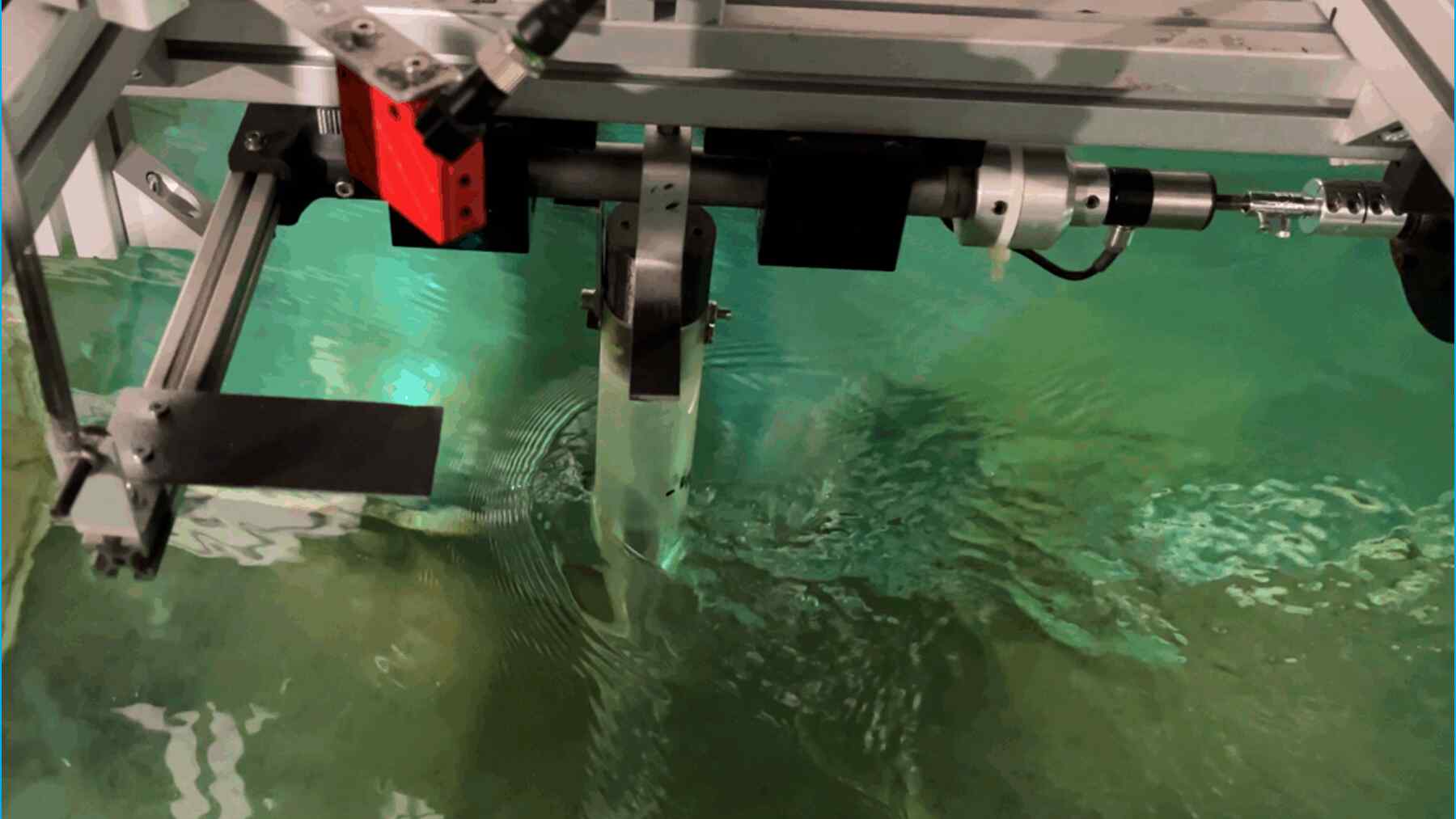 Credits: Universitat Rovira i Virgili (URV), no changes made
A researcher turned the gentle sway of a pendulum into a powerful swirl of submerged energy.
It addresses a decades-long losing battle against underwater vibrations by turning the problem into a sustainable asset.
The rhythmic oscillations of passing currents can now become a source of power by tapping wherever water moves continuously.
The details are in the study “Energy harvesting from vortex-induced vibrations using a pendulum” published in the Journal of Fluids and Structures.
Could this design be the versatile approach that researchers and industry have been missing to secure clean, constant electricity?
How maritime is fighting an uphill battle to decarbonize
Aligning with global net-zero goals is easier said than done, especially for the hard-to-abate industries.
The maritime industry is among the most difficult to decarbonize due to the harsh environment’s impact on renewable energy infrastructure.
Saltwater corrosion and mechanical stress from deep-sea currents are common obstacles that pose the greatest threats to conventional technologies.
Traditional approaches rely on submerged turbines, which are often troubled by “biofouling.”
This phenomenon entails barnacles and seaweed accumulating on and clogging the moving components.
Biofouling necessitates frequent system shutdown for maintenance, significantly increasing costs.
Infrastructure deployment is already challenging and expensive, making the industry reluctant to break its ties with fossil fuels.
Another physical constraint threatening to increase economic costs is the phenomenon known as “Vortex-Induced Vibrations” (VIV).
If a solution cannot be found to overcome it, the industry will remain hard-to-abate for a long time.
Making the vast blue ocean greener
Maritime’s footprint on the planet is undeniably big. The reliance on heavy fuel oils is responsible for substantial sulfur and nitrogen oxide emissions globally.
Fortunately, international regulations are becoming stricter to ensure that renewable alternatives become the norm.
But the primary goal is starting to evolve beyond producing “green” energy.
Preventing the further disruption of fragile marine ecosystems is now key to unlocking the future of sustainability.
This means not only changing the fuels that power maritime, but also the physical technology. Conventional tidal turbines are hazardous to marine life, and installation disrupts the seabed.
Experts are realizing that low-impact solutions are needed to coexist with the oceanic environment.
One researcher believes that a pendulum could be a feasible approach to achieve it. The details are in the study “Energy harvesting from vortex-induced vibrations using a pendulum” published in the Journal of Fluids and Structures.
Whipping the industry into shape with a pendulum
Feeding on the energy of the ocean can now be much greener and simpler.
The Universitat Rovira i Virgili (URV) team, led by Francisco Huera, developed a unique inverted pendulum system.
It has an underwater cylinder attached to a vertical axis. When currents flow past the cylinder, alternating vortices with a rhythmic pressure are created.
As the cylinder begins to sway from side to side, the VIV is triggered. This generates a great oscillating force, much like an underwater whip.
Making accessibility simpler and greener
Conventional tidal energy’s most sensitive and costly components, such as the generator, are underwater. This increases vulnerability to corrosion and biofouling.
The pendulum system flips the layout. Vulnerable components are positioned on a platform above the surface.
Not only does it increase performance lifetime, but it also makes routine maintenance easier and more affordable.
Additionally, system production is highly cost-effective compared to conventional designs.
The only disadvantage of this unique approach is its 15% efficiency rate, which is significantly lower than that of traditional turbines.
However, the technology’s true value lies in resilience and accessibility. The lower costs and need for maintenance make it a realistic solution for maritime decarbonization.
Versatile, low-impact technologies are becoming essential to work with the environment instead of against it. As a result, the blue economy is becoming more sustainable with each passing day.
Anke Maree is a writer with a clear and engaging editorial style. Her work focuses on making complex topics accessible, informative, and relevant for readers across different areas of interest.
