
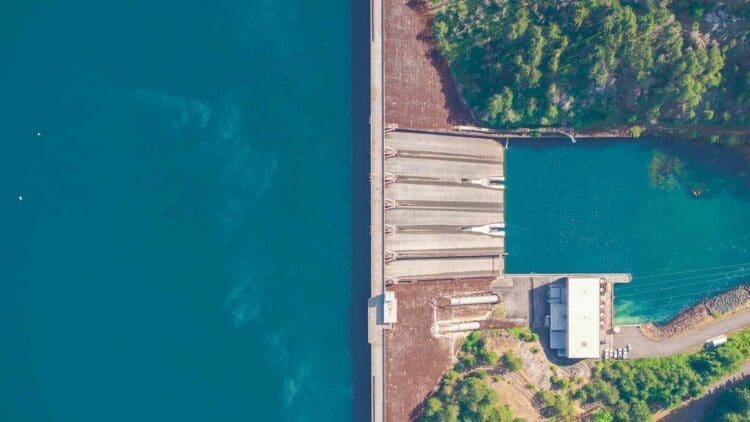

Most hydroelectric facilities in the US were designed for a different type of electrical grid. They have fixed operation modes, and their ability to vary their operation was never considered. The addition of renewable sources of electricity (wind, solar) to the grid has created the need for hydropower facilities to modify their output, balance the grid’s varying load, and follow real-time demands.
System-wide thinking about generation capacity
Through the Water Power Technology office of the US Department of Energy, modernization of existing hydropower plants is now being funded to enable them to dynamically respond to changes in the grid. Specifically, DOE has established a funding program to encourage the development of technologies that will enhance the flexibility of existing hydropower plants to generate electricity without building new dams or reservoirs. This program focuses on improving plant operations rather than constructing new equipment.
The new policy takes a system-wide view of generating capacity by considering both how much electricity is generated and how it behaves. As such, while modernization does not increase a facility’s nameplate rating, it can create additional “effective” capacity.
By allowing plants to start producing electricity more quickly and operate more efficiently at lower flow rates, and by allowing them to interact with other resources (i.e., wind/solar), modernization enables hydropower facilities to produce electricity for more hours of high-value demand.
A $9.5 million DOE injection to fund projects
To achieve this goal, DOE has allocated $9.5 million for three types of projects:
- Hydropower hybrids
- Advanced hydropower components
- New operational strategies that will expand upon the previous two categories.
These investments will allow hydropower to support variable renewables and help ensure there is enough firm, dispatchable energy available to the grid. Concurrently, Congress has moved forward with legislation that would grant extensions of time allowed for the construction completion of delayed hydropower projects that currently have approved permits. This could preserve approximately 2.6 GW of previously-approved capacity that would otherwise go unused.
Policy convergence toward maximizing existing capacities
Collectively, funding and policy efforts are moving toward the common goal of maximizing production from existing resources
Where the upgrades create the greatest benefits
Much of the effort to modernize existing hydropower plants is focused on turbines, control systems, and power electronic limitations that prevent a plant from responding to changing conditions. Some examples include:
- Advanced turbine designs can significantly reduce wear on turbines caused by rapid startup/shut-down cycles.
- Improved efficiency at partial load conditions by using advanced components.
- Allowing plants to operate in hybrid configurations with other forms of generation/storage.
As part of this effort, DOE has indicated that it will fund research and demonstration project proposals that test advanced components and operational models that can be applied to multiple facilities (not individual sites). By supporting demonstrations of flexible approaches to operating hydropower facilities, DOE expects to achieve greater returns from each individual upgrade.
- Recognizing long-lived assets: A key aspect of DOE’s modernization strategy is recognizing that hydropower assets are long-lived. Incremental advances achieved through individual upgrades can collectively contribute substantial amounts of new capacity when widely implemented.
- Alignment between policy efforts: A significant factor contributing to success in this area is alignment among policymakers. There is agreement regarding regulatory flexibility, targeted funding opportunities, and the increased demand from the grid for dispatchable power.
- Grid benefits: An important benefit resulting from this approach is the delivery of modernized hydropower capacity in a manner that avoids many of the environmental impacts and siting issues associated with new construction. Additionally, the new capacity will arrive online more quickly than traditional construction methods and connect directly into existing transmission lines.
U.S. policies related to waterpower are redefining how hydropower capacity is both evaluated and delivered. The combined effect of recent federal funding initiatives and regulatory actions is expected to release approximately 2.6 GW of additional hydropower potential embedded within the existing infrastructure.


