
Freezing winter nights in a Chinese desert are quietly being turned into summer power for a solar plant that cannot afford to overheat
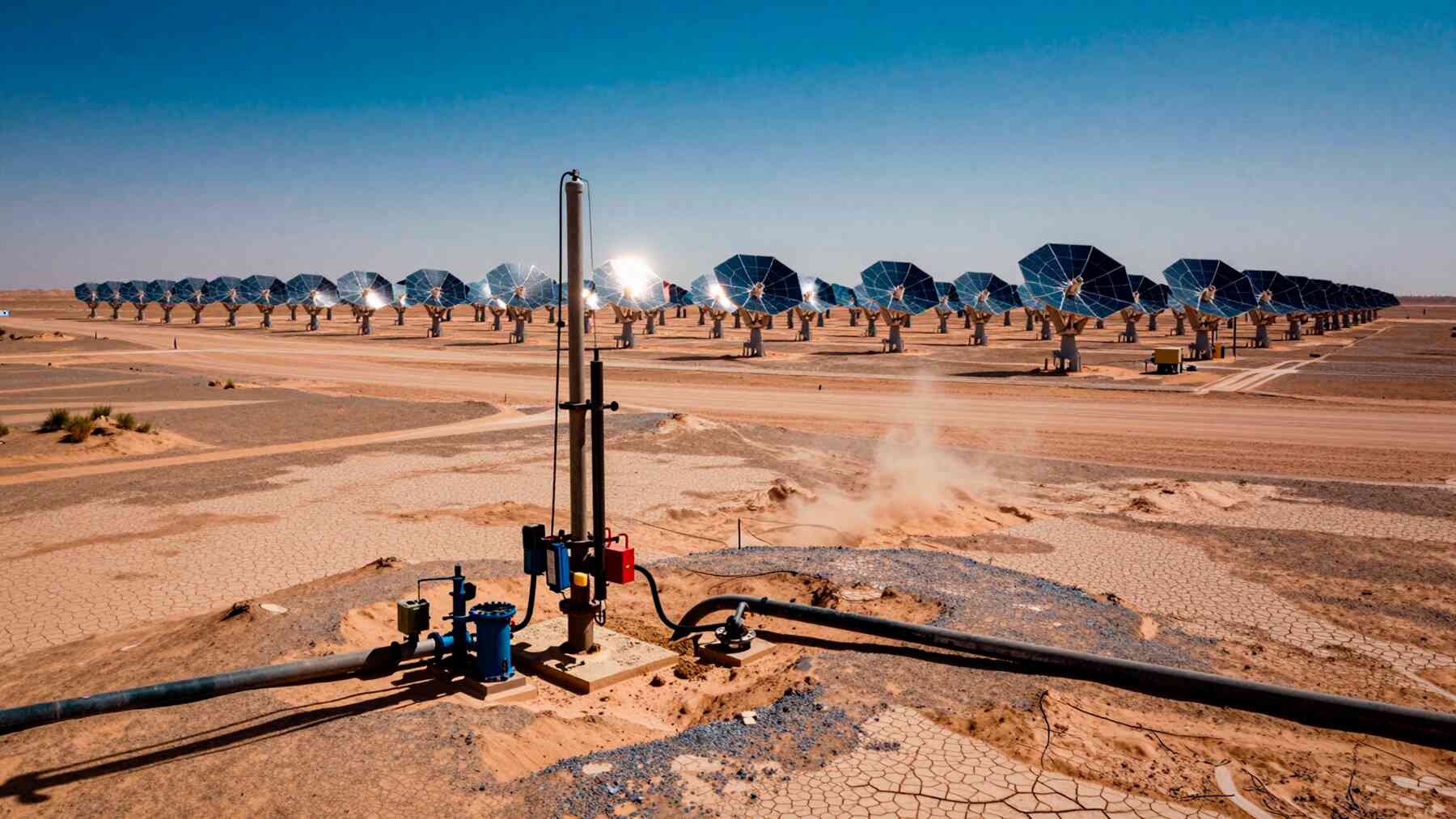
Dunhuang sits at the edge of the Gobi Desert in northwestern China, where the sun is relentless and water is scarce. It’s, by almost every measure, a near-perfect location for a solar thermal power plant. But the same punishing climate that makes the region attractive for harvesting sunlight creates a stubborn engineering problem: to generate electricity, the plant’s condenser must be kept cool — and cooling anything efficiently in a hot, arid desert is neither simple nor cheap.
A new simulation study focused on Dunhuang’s 10 MW solar thermal plant suggests there may be an unexpected answer hiding just beneath the surface.
A cooling problem baked into the desert
Solar thermal power plants generate electricity through a heat cycle — and like any heat cycle, they need a way to dump excess heat. That job falls to the condenser, and keeping it cool isn’t optional. The cooler the condenser, the more efficiently the plant converts heat into power.
For a power plant operating continuously across a full year, though, incremental efficiency gains translate directly into meaningful additional output and revenue.
In arid regions like Dunhuang, engineers face a painful trade-off. Water-cooled condensers work well but drain freshwater reserves that desert communities can barely spare. Air-cooled systems avoid that problem, yet they struggle in peak summer heat — the very season when solar energy is most abundant. When ambient temperatures climb, dry cooling loses effectiveness and plant output drops precisely when it should be highest.
This is the core contradiction the research set out to resolve: find a cooling approach that’s efficient, water-saving, and economically viable — without leaning on either flawed existing option.
The idea: borrow cold from winter and bank it underground
The proposed solution draws on an established geothermal technology called borehole thermal energy storage, or BTES. It involves drilling a network of pipes into the ground, which can either absorb heat from the earth or inject it, depending on the season.
The seasonal logic is elegant. Dunhuang winters are harsh — temperatures drop sharply, and cold ambient air is normally just an inconvenience. In the BTES framework, it becomes a resource. During winter, the system “charges” by circulating fluid through boreholes and pushing cold energy into surrounding rock and soil underground. When summer arrives and the condenser needs relief, that stored cold is “discharged” back into the condenser water loop — functioning like a slow-release natural refrigerator buried beneath the plant. No water consumed, no dependence on hot summer air.
It’s a repurposing of geothermal infrastructure for a problem it was never originally designed to solve.
Simulating a year of charge and discharge
To test whether this idea could work, the researchers built a detailed model using TRNSYS — a transient system simulation platform widely used for energy system analysis. The model tracked the BTES system through a full annual cycle, from winter charging through summer discharge.
The team used Typical Meteorological Year data for Dunhuang, Gansu province. This dataset captures the location’s real seasonal temperature patterns, including the lowest winter temperatures and the windows when cold charging would be most productive. The simulation measured how much cold energy the system could store, how efficiently that energy was retrieved, and what effect discharged cold had on condenser water temperatures during summer peak demand.
Efficiency gains and economic case
The simulation results were encouraging. The proposed BTES seasonal cooling system improved plant efficiency by up to 1.54% compared to a water-cooled condenser system, and by 2.74% compared to an air-cooled system.
Those numbers may sound modest. For a power plant operating continuously across a full year, though, incremental efficiency gains translate directly into meaningful additional output and revenue. The study also conducted a techno-economic assessment — weighing capital, maintenance, and operational costs against energy delivered over time — and confirmed the system is viable for integration with the condenser unit. In a desert region where water is scarce and expensive to transport, the water-saving dimension only strengthens the financial case.
Broader implications for arid-region solar power
Northwestern China holds some of the country’s strongest solar thermal potential, but water scarcity has long constrained how aggressively that potential can be developed. A cooling system that sidesteps freshwater demand directly addresses that bottleneck.
The researchers suggest the approach could scale beyond the 10 MW reference plant and inform the design of larger installations. Arid climates elsewhere — where cold winters and hot, dry summers coexist — could potentially adapt the same framework.
Open questions remain: long-term ground thermal behavior under repeated charge-discharge cycles, the complexity of scaling borehole arrays, and integration with existing plant infrastructure all require further study. The simulation offers a solid proof of concept, but real-world pilots will be the next critical test. Developers watching China’s solar expansion in the northwest should monitor whether BTES moves from model to ground.

Carlos is an engineer with strong expertise in technical and industrial topics. He previously worked at international companies such as Siemens and is multilingual.
