
At World’s End solar park, crews planted 224 trees and over 49 hectares of grassland, adding winter shelters for reptiles
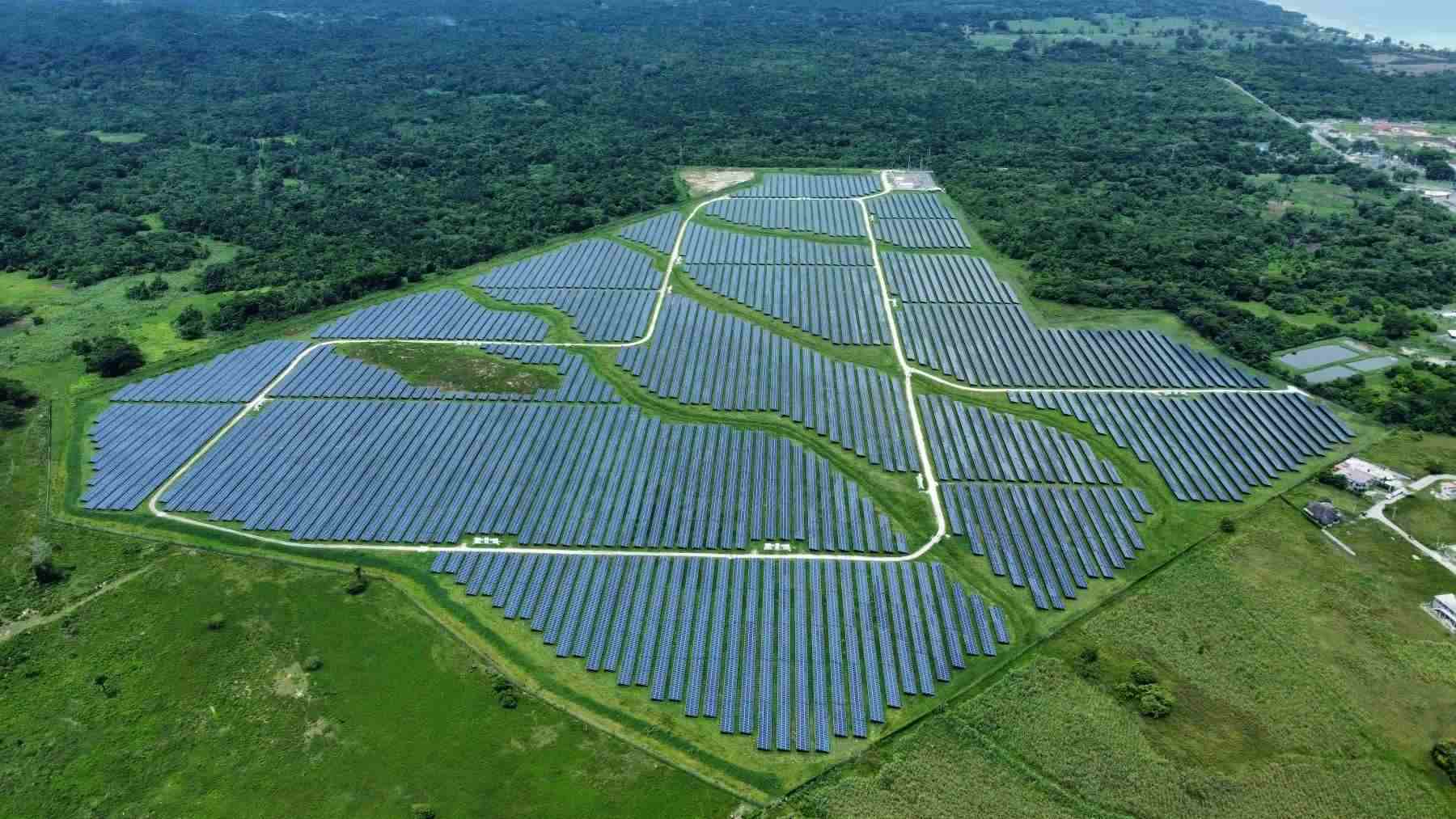
Along a quiet lane near Berkeley, in the flat farmland that stretches toward the Severn Estuary, something unexpected is taking shape. Solar panels now rise from the fields around World’s End Farm — but they’re not the only thing being built here.
Alongside the panels, crews have been planting trees, laying the groundwork for species-rich grassland, and tucking small shelters into the earth for reptiles that will spend their winters there, out of sight. The question the site quietly raises: what does a solar park look like when it’s also meant to function as a nature reserve?
A solar farm with a different kind of blueprint
World’s End Solar Park is a 49.99MW project owned by British Solar Renewables (BSR), currently in pre-construction near Berkeley in Gloucestershire. It generates approximately 56,589MWh of renewable electricity each year — enough to power around 12,501 homes while avoiding roughly 11,702 tonnes of carbon emissions annually. That output makes it a genuine contributor to the UK’s shift toward cleaner energy.
These aren’t rare sightings from a single lucky afternoon — they reflect the variety of habitats the site is already beginning to support.
The site’s location adds real complexity. It sits close to the Severn Estuary, near designations that include a Special Area of Conservation, a Special Protection Area, a Ramsar Site, and a Site of Special Scientific Interest — and it falls within Flood Zone 3. BSR says the design accounted for these sensitivities from the start, raising key electrical infrastructure to manage flood risk and adjusting the layout around archaeological features identified during surveys.
Planting more than panels: The ecological vision
The ecological work at World’s End goes well beyond compliance. Crews have planted 224 trees, established new hedgerow, and created more than 49 hectares of species-rich grassland across the site. These aren’t token gestures — they represent a deliberate, parallel ambition running alongside the energy generation itself.
Habitat features include tussock grassland, wildflower areas, bat and bird boxes, wildlife corridors, and mammal gaps built into fencing. Perhaps most striking are the hibernacula: small shelters tucked into the ground to give reptiles and amphibians somewhere to overwinter. Taken together, these measures are projected to deliver a 69% increase in biodiversity across the site.
This commitment runs across the project’s 40-year operational life. BSR describes itself as developing, building, owning, and operating its projects for the long term — which means the ecological stewardship isn’t handed off to someone else. It stays an ongoing responsibility.
Wildlife already moving in
The species list at World’s End is already striking. Great crested newts, deer, foxes, bats, and small heath butterflies have all been recorded on site. The birdlife is particularly rich.
Skylarks, yellowhammers, cuckoos, reed buntings, linnets, whitethroats, chiffchaffs, and goldfinches have all been spotted. Wintering and foraging visitors include lapwings, kestrels, peregrines, buzzards, grey herons, and yellow wagtails. These aren’t rare sightings from a single lucky afternoon — they reflect the variety of habitats the site is already beginning to support.
Long-term biodiversity monitoring is built into the operation, according to British Solar Renewables, and that matters considerably. It means the ecological picture will be tracked and documented over decades, turning the site into something closer to a living record of what solar development can — or can’t — do for nature.
Construction in a rural community: The harder reality
On February 5, 2025, a cement mixer supplying the World’s End site veered off World’s End Lane and became stuck in a soft verge. Clearing it took approximately 22 hours and required specialist recovery equipment. During that time, the lane was completely impassable.
Tony Costello, who lives nearby with his wife and daughter, said the family felt “imprisoned” at their home, unable to leave by car. He described the incident as a “stark warning” about the disruption that large-scale rural development can bring to the people living closest to it — and his words deserve to be taken seriously.
BSR apologized and acknowledged that the vehicle was operated by a third-party contractor. David Lacey, BSR’s director of construction, said the company was reviewing the incident, strengthening traffic management, and would continue engaging with local residents. The response was measured. But the 22 hours Tony Costello and his family spent unable to leave were real, regardless of who was at fault.
Investing in the community beyond the fence line
BSR has established a £50,000 Community Benefit Fund, administered by Ham and Stone Parish Council. Funding has already supported improvements to Stone Children’s Play Area, upgrades at Hamfields Leisure, solar panels installed at Stone Village Hall, and the creation of a community Men’s Shed — tangible, local investments that are hard to dismiss.
They don’t erase the frustrations of construction — the blocked lanes, the noise, the disruption to daily life. What they represent is a real attempt to ensure the project’s benefits reach the people who live with its consequences. What World’s End ultimately asks is a question that applies far beyond this one site in Gloucestershire: can the infrastructure of the clean energy transition be built in ways that genuinely serve the places it lands in — ecologically, socially, and practically? The answer here is still being written, one planted tree and one difficult conversation at a time.
Kelly is an experienced writer with 15 years of experience exploring the big stories that shape our world, from tech breakthroughs and space exploration to climate, energy, and the fascinating quirks of science. She has a talent for turning complex ideas into sharp, memorable insights that stay with readers long after they’ve finished reading.
