
Italian engineers have built a giant battery that ‘breathes’ CO₂ instead of relying on the mineral the world’s energy industry can’t get enough of
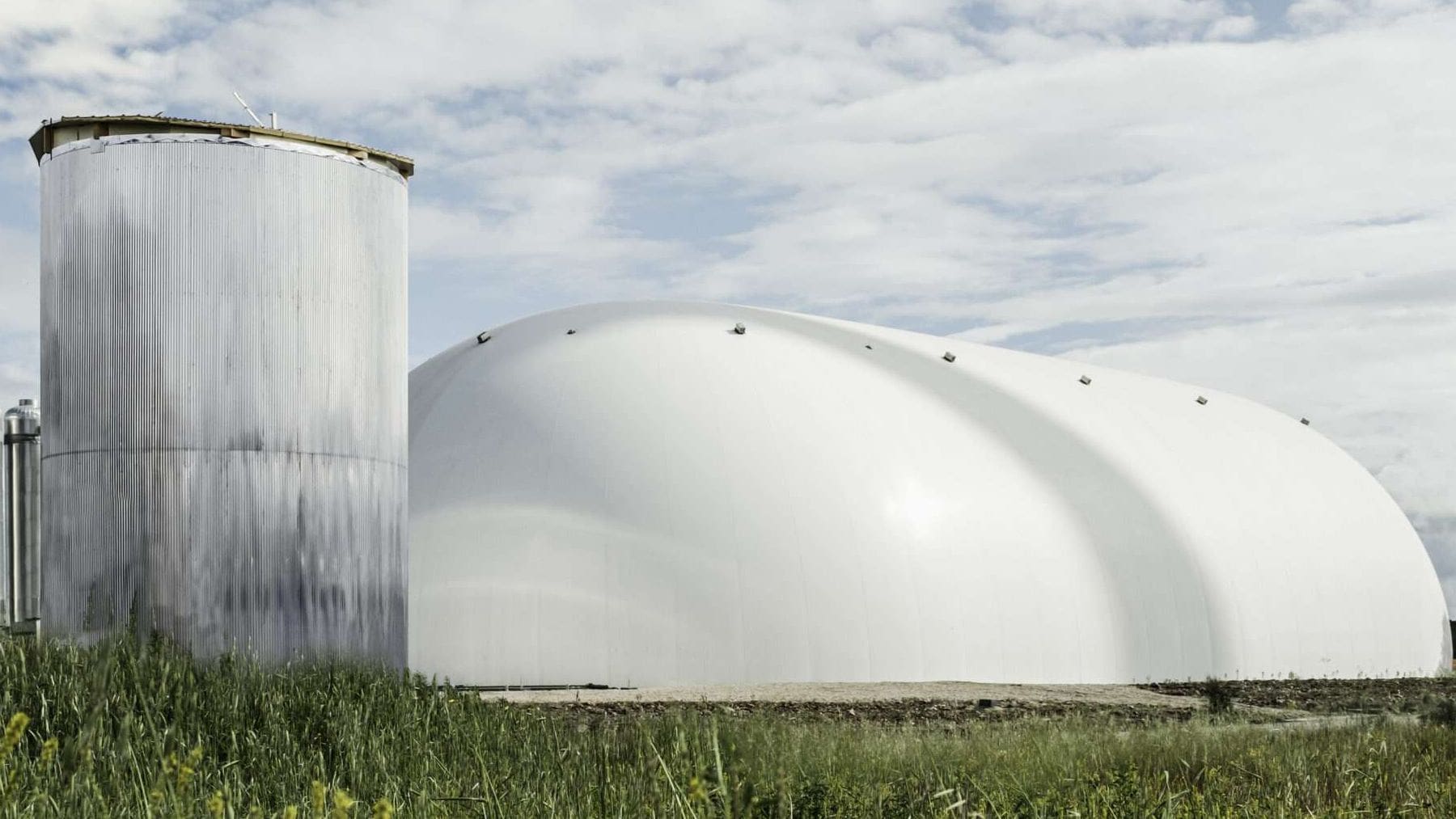 Credits: Energy Dome
A CO₂ battery dome makes long-term energy storage more efficient, affordable, and sustainable.
Globally, electricity consumption is skyrocketing, complicating the transition to renewable sources.
Green power capacity has rapidly evolved and expanded, but intermittency remains a primary obstacle.
Her work focuses on making complex topics accessible, informative, and relevant for readers across different areas of interest.
Traditional batteries quickly rose in popularity to overcome this, until their disadvantages became clearer.
Will reimagining the design of storage systems address these issues and help nations finally transform their utility grids?
How overcoming a dual challenge is more complex than thought
In the modern age, technologies have become highly advanced.
Consequently, the world has transformed into a hyperconnected place, where 24/7 connectivity has become essential.
Several sectors have become digitized, transport is rapidly becoming electric, and AI data centers are quickly expanding.
Global power grids have also modernized, causing electricity consumption to rise at the fastest rate in a decade.
Renewables, such as solar and wind, have been expanding exponentially as well.
The primary goal is to decarbonize the planet to achieve net-zero by 2050.
However, their inherently intermittent nature has slowed progress, especially as demand continues to rise.
The high variability comes from a significant reliance on weather.
During unfavorable conditions, power output drops substantially. Conversely, during over-generation, operators are forced to implement curtailment to safeguard the grid.
To address this intermittency, adequate battery storage systems are needed.
Without them, nations risk facing power shortages and blackouts.
Conventional battery storage systems have become less ideal
Giant chemical battery storage systems have become a more common sight at solar plants and even wind farms.
Lithium-ion batteries, in particular, quickly rose to dominance.
Yet, these systems soon presented severe limitations, especially as the need for long-term storage grew.
Lithium-ion has a short operational lifespan, lasting only 10 to 12 years.
This significant performance and capacity degradation leads to more regular replacements, driving up costs.
To prevent this, these systems maintain a depth of discharge less than 80 percent.
This prevents utilities from fully benefiting from the stored energy.
Furthermore, lithium-ion production relies on critical minerals such as lithium, cobalt, and nickel.
Their extraction causes severe environmental damage and depletes local water resources.
Supply chain issues drive up import costs, and capital expenditure is 1.7 times more expensive.
This is why alternative systems are desperately needed.
Fortunately, Energy Dome is developing an innovative battery that will increase long-term storage.
The closed-loop operation of the CO₂ battery
Unique energy storage systems are being increasingly explored to replace traditional ones.
Energy Dome’s CO₂ battery is a physical, thermo-mechanical storage system.
Carbon dioxide has unique thermodynamic properties. It easily transitions from gas to liquid states at ambient temperatures.
CO₂’s role in a tightly sealed, closed-loop system
During the charging phase, the grid’s clean electricity is abundant.
The system draws the gas from a large, flexible, dome-shaped facility.
The gas is compressed, converting it into a pressurized liquid.
Intense heat is produced, harnessed, and stored in a thermal energy storage system.
The liquid is stored in steel vessels at ambient temperature.
During high demand, discharging begins.
Stored heat is released to warm the liquid, causing it to evaporate and expand into a high-pressure gas.
The gas moves through a turbine generator to produce electricity for the grid.
Afterwards, the gas flows back into the flexible dome and is stored for the next cycle.
The dome maintains a constant atmospheric pressure.
In June 2026, Energy Dome secured a crucial agreement with Salt River Project and Google.
The partnership has led to a 19-MW, 10-hour duration facility at Arizona’s Coronado Generating Station. It is currently under development.
The project is scheduled for grid integration by 2029.
This innovative battery’s commercial viability proves to be a critical milestone for chemical-free long-duration storage
Anke Maree is a writer with a clear and engaging editorial style. Her work focuses on making complex topics accessible, informative, and relevant for readers across different areas of interest.
