
In the Sea of Japan (East Sea), a first-of-its-kind power plant is generating electricity from the moment fresh river water tries to mix with the sea
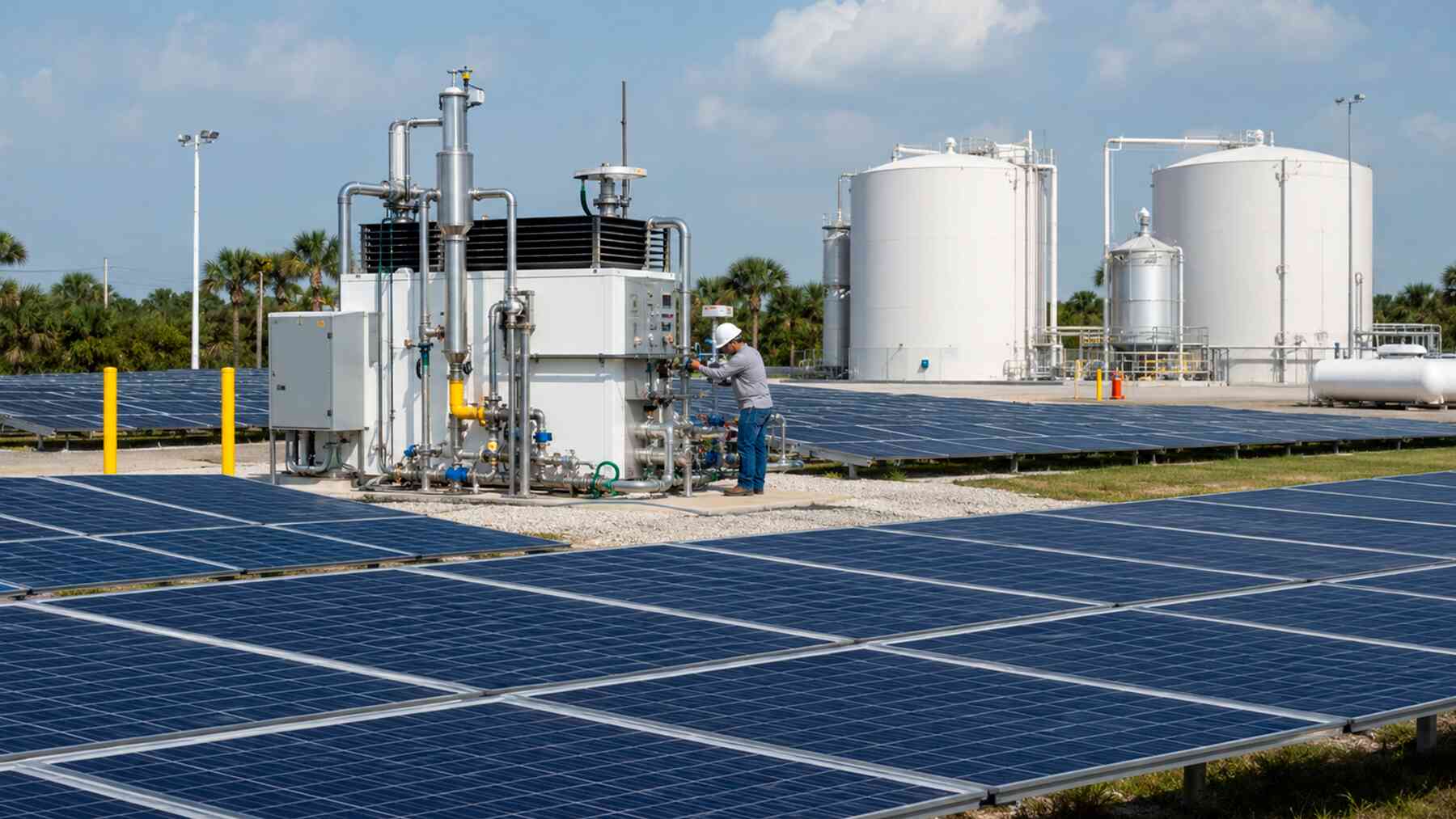 Credits: AI-made
An innovative power plant in Japan is generating higher electricity output by using “blue energy.”
As climate change accelerates, natural resources, such as drinking water, become scarcer worldwide.
To mitigate the effects of global warming, nations are rushing to increase renewable energy generation.
The two streams are concentrated seawater brine from desalination and a nearby sewage facility’s treated freshwater effluent.
However, major coastal cities are struggling to meet decarbonization goals due to their locations.
Can this unique power plant help the specific Japanese seaside region in addressing both issues?
How green power can save the environment
The modern world has become highly advanced and hyperconnected.
But it also still has a major carbon footprint.
To keep this digitized society operational, several global utilities still rely on fossil fuels to stabilize grids.
Furthermore, several sectors remain stubbornly carbon-intensive.
This is why fossil fuels continue to generate over 75% of global greenhouse gas emissions.
Coal, oil, and gas combustion release significant amounts of carbon dioxide into the atmosphere.
This triggers the global greenhouse effect, causing the planet to rapidly warm.
Higher temperatures effectively alter natural cycles on Earth, often leading to catastrophic consequences.
To slow this course of events, nations are scaling up renewable capacity at a rapid pace.
Green resources generate zero direct carbon emissions during operation.
Renewable energy will also lower severe air and water pollution caused by conventional power extraction.
Yet, the transition to clean power is not as straightforward for all nations.
The battle to decarbonize in coastal regions
Coastal towns and cities face unique geographical challenges in decarbonizing.
These seaside urban regions face extreme land scarcity, making utility-scale solar or wind farms impractical.
These coastal cities are also usually densely populated, straining local reservoirs beyond sustainable levels.
With climate change accelerating global freshwater scarcity, these regions face an urgent crisis.
Fukuoka, Japan, is a key example of this dual problem.
The city has a population of 2.5 million, but lacks major rivers to secure a reliable water supply.
Energy-intensive seawater desalination is used to prevent severe droughts.
This process traditionally consumes vast amounts of electricity, raising grid emissions and operational costs.
This leads to a damaging feedback loop.
Since conventional renewable options are not ideal alternatives, the Government of Japan had to seek more innovative solutions.
Vulnerable coastal regions like Fukuoka need continuous, space-efficient energy technologies.
Fortunately, a first-of-its-kind power plant was constructed, which secures water and power.
Securing resilience with a “blue energy” power plant
Desalination technologies and plants are becoming key in water-scarce regions.
In Fukuoka, the osmotic power plant operates at the Mamizupia desalination center.
The power plant produces “blue energy” using two industrial waste streams.
The two streams are concentrated seawater brine from desalination and a nearby sewage facility’s treated freshwater effluent.
The osmotic process to generate clean electricity
The two liquids are fed into adjacent chambers separated by a semi-permeable membrane.
Water molecules pass through the membrane, while salt particles are blocked.
Natural osmosis drives freshwater rapidly across the membrane into the concentrated brine chamber. This is to balance the salt levels.
The salt chamber is kept under high hydraulic pressure. Incoming freshwater builds up immense pressure inside the system.
The pressurized liquid is directed to a turbine, which turns the generator to produce continuous zero-carbon power.
Using concentrated brine instead of seawater widens the salinity gap.
The brine contains an 8% salt concentration, while the treated sewage water contains almost zero salt.
This generates a higher pressure and energy output.
Fukuoka’s 24/7 “blue energy” proves that coastal regions can overcome land constraints.
By turning a costly environmental liability into a zero-carbon power source, nearly 300 Japanese homes can benefit.
Widespread adoption will depend on whether certain bottlenecks can be overcome. This includes membrane durability and costs.
Nonetheless, scaling the technology will enable coastal regions to secure freshwater and clean energy simultaneously.
Anke Maree is a writer with a clear and engaging editorial style. Her work focuses on making complex topics accessible, informative, and relevant for readers across different areas of interest.
