
Four three-ton oyster structures off the Dutch coast hold living shellfish on rods where currents deliver food and oxygen
 Ørsted; Van Oord Ørsted
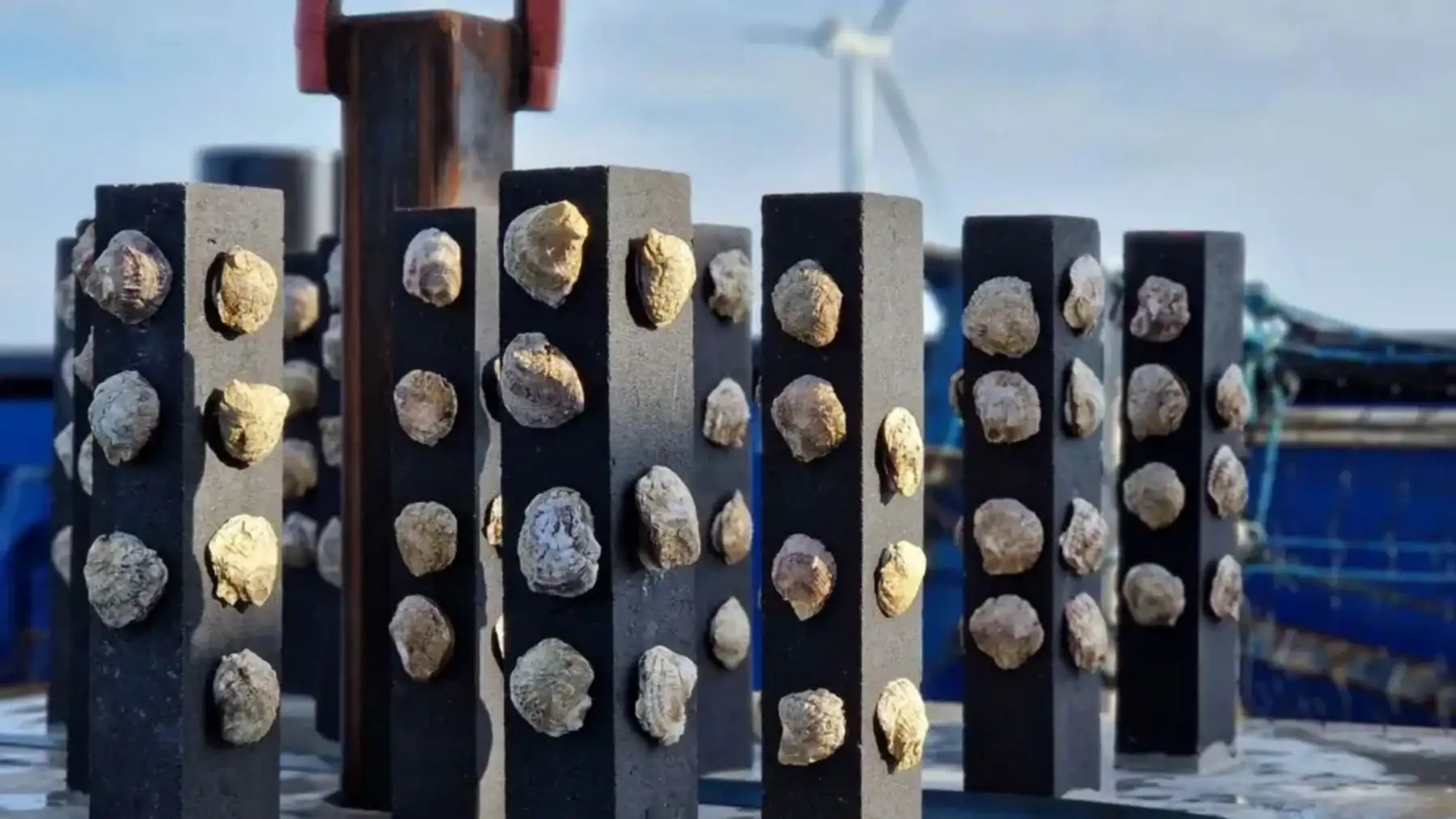
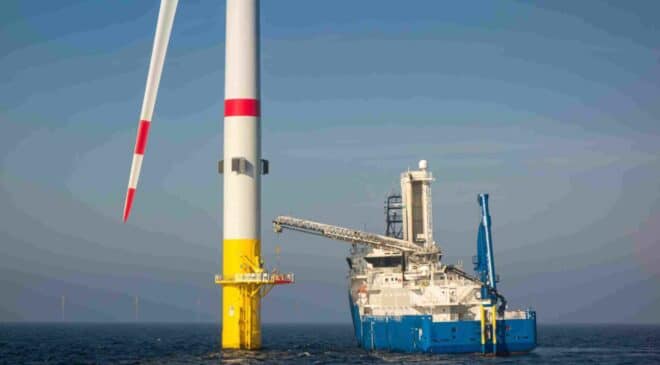
Miles off the Dutch coast near Noordwijk aan Zee, four concrete-and-steel structures — each weighing more than three tons — now rest on the seafloor among the turbine bases of the Luchterduinen wind farm. Attached to their vertical rods are live oysters, precisely positioned so that the North Sea’s currents deliver food and oxygen directly to them.
It’s a carefully engineered response to a quiet collapse. Until roughly 200 years ago, oyster reefs covered about 20 percent of the Dutch North Sea. Today, almost none remain.
A seafloor that used to be alive
Two centuries ago, the Dutch North Sea looked nothing like it does today. Oyster reefs stretched across roughly 20 percent of the seafloor — vast, living structures that filtered water, sheltered fish, and held entire ecosystems together. Keystone habitats, the kind that other species depend on to survive.
This design takes a different approach: for the first time, live oysters are glued directly onto vertical rods, a small change with significant consequences.
Then came the trawlers. Centuries of bottom trawling and overfishing stripped those reefs almost entirely away. Scientists describe the near-total disappearance of natural oyster beds as a serious ecological loss, one with cascading effects on North Sea health that are still playing out. What was once a thriving underwater landscape is now mostly bare sand.
Four years of research, four structures on the seabed
The Rich North Sea program — a collaboration between NGOs Stichting de Noordzee and Natuur & Milieu, energy company Eneco, and marine contractor Van Oord — launched its first pilot at Luchterduinen in 2018, using oyster cages and reef cubes. The results were instructive, and every lesson fed directly into the new design.
The four oyster tables now sit on the seabed, weighted at the base for stability on a seafloor shaped by powerful currents and shifting sand. Placement was equally deliberate. The structures sit on scour protection — the rock and gravel laid around each turbine base — because without it, the tables would slowly sink into the sediment and lose their effectiveness entirely.
Rods instead of baskets: The design detail that changes everything
Previous oyster restoration efforts typically placed shellfish in baskets or cages. This design takes a different approach: for the first time, live oysters are glued directly onto vertical rods, a small change with significant consequences.
When currents flow past individual oysters mounted on open rods, each animal gets a continuous supply of food particles and oxygen. A basket interrupts that flow. A rod doesn’t. Remment ter Hofstede of Van Oord put it directly: everything learned from previous projects has been concentrated into this design to maximize the oysters’ chances of survival and reproduction. The rod system isn’t an aesthetic choice — it’s an engineering response to Luchterduinen’s specific conditions.
Wind farms as unexpected allies for ocean life
Offshore wind farms weren’t designed with oysters in mind. But they create something rare on the North Sea floor: hard substrate. In an environment otherwise dominated by soft, shifting sediment, turbine bases and their surrounding scour protection offer exactly the kind of surface that reef-building species need to gain a foothold.
The oyster tables extend and accelerate that effect, adding structured habitat where there was none and giving flat oysters a presence in waters that haven’t supported them naturally for generations. The Rich North Sea program has since expanded from Luchterduinen to five other offshore wind farm projects across the Netherlands, according to the European Maritime Spatial Planning Platform. Dutch regulations prohibit diving inside offshore wind farms, though, so underwater monitoring depends on technology and sampling rather than direct observation — a constraint researchers are working around, not through.
What the North Sea could look like in a few years
The timeline is closer than it might seem. Researchers expect the oysters on the new tables to release larvae as soon as next year. Those larvae can drift on currents and settle onto hard surfaces — including the scour protection already surrounding Luchterduinen’s turbines — and if conditions hold, natural reef formation could begin without any further intervention.
Future monitoring missions will track oyster growth, survival, and reproduction, building a knowledge base that reaches well beyond this single wind farm. That matters enormously. Thousands of new turbines are planned for the North Sea in the coming decades, and each installation is either an opportunity or a missed one. Program director Erwin Coolen frames the stakes plainly: a healthy North Sea is inseparable from meeting broader climate goals, and nature development, he argues, should be built into every wind farm project from the start. Luchterduinen is showing what that looks like in practice.
Kelly is an experienced writer with 15 years of experience exploring the big stories that shape our world, from tech breakthroughs and space exploration to climate, energy, and the fascinating quirks of science. She has a talent for turning complex ideas into sharp, memorable insights that stay with readers long after they’ve finished reading.
