
At Georgia’s Hazlehurst solar farms, ending plowing and adjusting mowing schedules coincided with reported northern bobwhite population increases
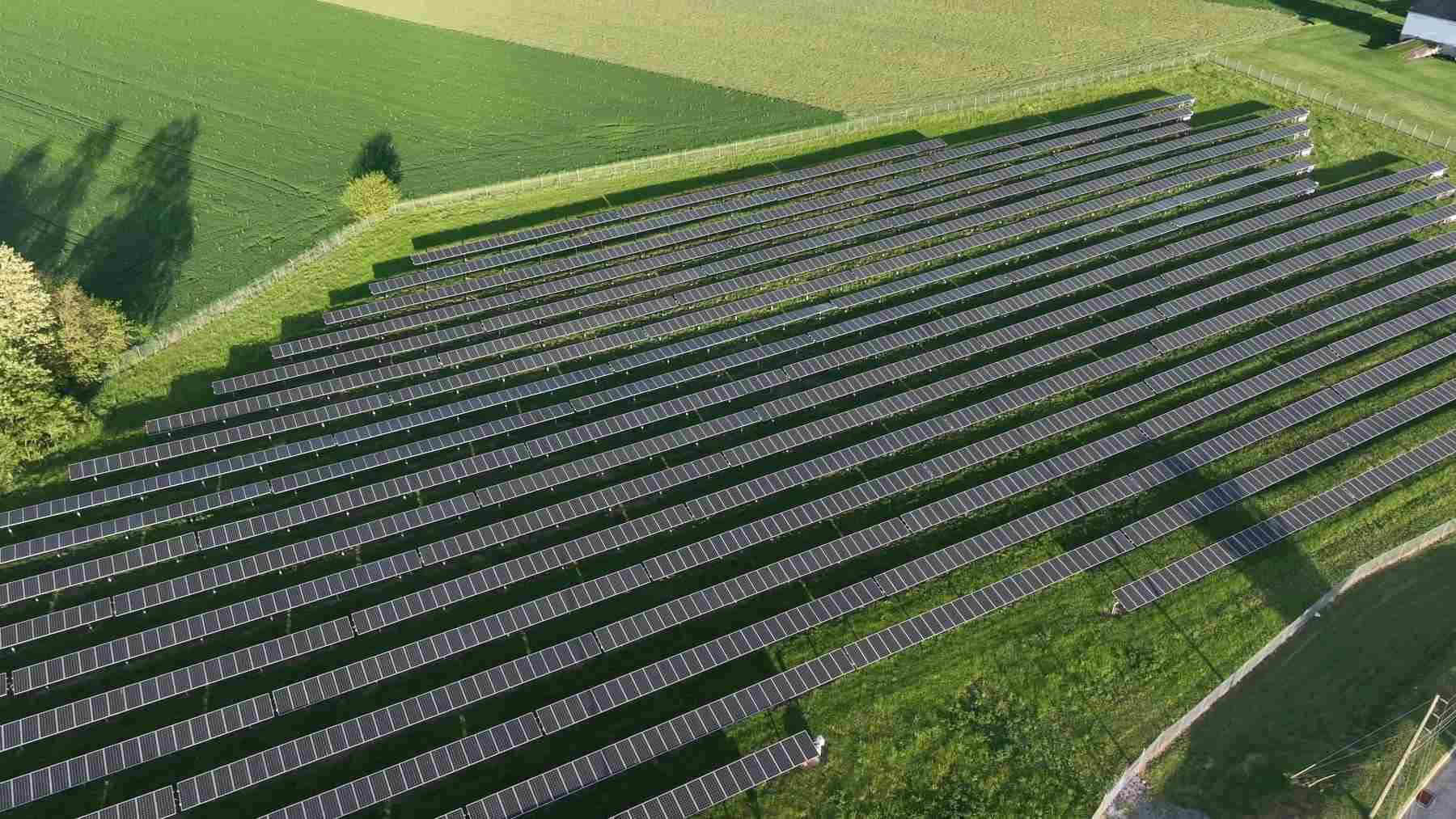
On a quiet morning in Jeff Davis County, Georgia, the two-note whistle of a northern bobwhite drifts across rows of solar panels — a sound that would have seemed out of place here not long ago, when this land was worked hard for cotton, peanuts, and corn.
The bobwhite is woven into Georgia’s identity. The state legislature named it the official gamebird in 1970, a nod to a bird that once filled the fields of the coastal plain. Yet its population has collapsed by nearly 90% since the 1960s, according to the Georgia Department of Natural Resources. Now, something unexpected appears to be happening at Silicon Ranch’s Hazlehurst solar farms — and wildlife watchers are paying close attention.
A bird that Georgia almost lost
The northern bobwhite’s decline in Georgia is one of the steepest collapses of any gamebird in the state’s history. Since the 1960s, the population has fallen by more than 85%, according to the Georgia Department of Natural Resources — a figure that tracks closely with the more than 80% drop in quail hunters over the same period.
Research from the University of Georgia’s Warnell School of Forestry and Natural Resources helps explain why these management choices could produce results.
The legislature’s decision to name the bobwhite Georgia’s official gamebird in 1970 reflected how central this bird once was to rural life. A century ago, Georgia’s landscape — shaped by low-intensity farming and open forestry — was essentially ideal quail habitat. That world largely disappeared.
Habitat loss is the primary driver. Bobwhites depend on early successional landscapes: native grasses, legumes, weeds, briars, shrubby cover, and the messy edges that intensive agriculture tends to eliminate. As farming and suburban development reshaped the coastal plain, that vegetation gave way to cleaner fields and manicured margins. For a ground-nesting bird, those tidy environments are nearly uninhabitable.
Georgia DNR launched the Bobwhite Quail Initiative in 1999 to reverse the trend, starting in 15 upper coastal plain counties. Despite sustained effort and real progress in targeted areas, population recovery has remained elusive across most of the state.
What made Hazlehurst different
For roughly 80 years, the land around Hazlehurst in Jeff Davis County was worked hard. Cotton, peanuts, and corn rotated through fields maintained by heavy tillage and herbicide regimes that left little room for the weedy, shrubby margins that bobwhites need.
Silicon Ranch acquired the land and built utility-scale solar farms there, beginning with its first Hazlehurst project — later recognized as the “Best of the Best” Energy Project by Engineering News-Record. Construction was disruptive, as solar construction always is. What happened afterward was different.
After construction, Silicon Ranch transitioned to zero soil disturbance. No more plowing. Perennial vegetation was established across the site and allowed to develop over time, while mowing schedules were deliberately timed to avoid disrupting nesting cycles — a detail that turns out to matter enormously for ground-nesting birds.
Why no-till and timed mowing matter so much for bobwhites
Research from the University of Georgia’s Warnell School of Forestry and Natural Resources helps explain why these management choices could produce results. A study tracking 169 radio-tagged bobwhites found that birds roosting near dense woody cover — blackberry thickets, plum tangles, overgrown fence rows, young trees — were roughly twice as likely to survive as birds in more open areas.
“It’s a patch of any woody-stem vegetation that’s really kind of thick, nasty, difficult that you wouldn’t want to walk into,” said Justin Hill, a postdoctoral researcher and the study’s corresponding author. That unpleasantness, from a human perspective, is exactly what quail need for predator refuge.
Ending tillage removes a direct source of nest destruction and allows soil insect populations — critical food for bobwhite chicks — to recover. Perennial ground cover, left undisturbed, gradually develops the shrubby structure that supports survival. Timed mowing then prevents mechanical destruction of active nests during breeding season. That single adjustment, compounded across multiple generations of birds, can meaningfully shift survival rates.
Bobwhites returning — and spilling beyond the fence line
Silicon Ranch reports a measurable increase in bobwhite quail populations at its Hazlehurst projects following the transition to regenerative land management, attributing the change directly to zero soil disturbance, perennial vegetation, and properly timed mowing.
What’s notable is where those birds are going. Healthy bobwhite populations are spilling over onto adjacent hunting properties — benefiting neighboring landowners who haven’t changed their own practices at all. The fence line, it turns out, is not a barrier to wildlife.
The bobwhite functions as what UGA researchers call a “poster child” species. Its recovery signals broader habitat health — for songbirds, rabbits, wild turkey, deer, and pollinators sharing the same landscape. Silicon Ranch third-party verifies its ecological outcomes through the Savory Institute’s Ecological Outcome Verification methodology, which adds weight to the reported trends, though it doesn’t replace the need for longer-term, population-level monitoring.
What this could mean for solar land management nationwide
The Hazlehurst case raises a question worth taking seriously. If routine land-use decisions — ending plowing, adjusting mowing schedules — can restore bobwhite habitat, solar farms covering thousands of acres could become an unexpected conservation tool, not just an energy one.
Silicon Ranch is already regeneratively grazing and managing over 5,000 acres across its Georgia projects, a scale suggesting the Hazlehurst outcomes may not be a one-site anomaly. Georgia DNR’s Bobwhite Quail Initiative is now expanding to 68 upper coastal plain counties. Solar developers adopting similar no-till, timed-mowing practices across private land could amplify those public efforts considerably.
Researchers and wildlife managers will rightly caution that reported increases at individual sites need broader, long-term monitoring before drawing firm population-level conclusions. The Hazlehurst data point is compelling — but it’s still a data point.
What it points toward is worth watching. As solar development continues to expand across the rural South, the land management choices made inside those fence lines will quietly shape the wildlife landscape for decades. In Jeff Davis County, at least, those choices appear to be bringing the bobwhite back.
Kelly is an experienced writer with 15 years of experience exploring the big stories that shape our world, from tech breakthroughs and space exploration to climate, energy, and the fascinating quirks of science. She has a talent for turning complex ideas into sharp, memorable insights that stay with readers long after they’ve finished reading.
