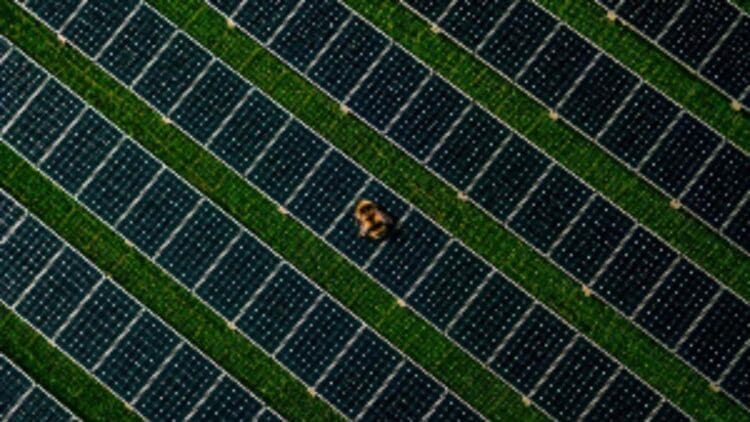

The latest research by Lancaster University found that bumblebees act differently around solar plants.
In the UK, the transition to renewable energy has been key to breaking free from its carbon-fueled past.
Solar is now among the top green sources to help the nation achieve its climate goals, but it may have a second purpose.



Will the new insights about the technology help retrace its steps back to a time when pollinator populations were thriving?
How Britain’s industrialization took a toll on the environment
Nearly half of the UK’s natural biodiversity has been lost since the onset of the Industrial Revolution.
The quick shift from wood to coal-fired mechanization in the 18th and 19th centuries changed the environment significantly.
The long-term decline in native species and habitats began, placing the UK among the most nature-depleted countries globally.
Soon, intensive agricultural practices became the norm, aggravating the already heavy toll on the natural landscape.
Woodlands and meadows were converted into vast, single-crop farmlands, stripping away structural and floral diversity.
Coal-fired power plants filled the air with high levels of sulfur dioxide and particulate matter. The soil and waterways became contaminated, debasing ecosystems that had been stable for centuries.
Currently, over one in six species is facing the risk of extinction in Great Britain. With the global climate crisis worsening, these numbers could grow.
This is why intervention is now more important than ever.
A clean energy transition at a critical time
To break free from the clutches of its fossil fuel past, the UK established the Clean Power 2030 Action Plan.
The plan is to decarbonize its power sector by sourcing more than 95% of electricity from renewable infrastructure. This goal will help the nation accelerate its journey to net-zero.
It will also play an important role in ensuring energy independence.
The UK decommissioned its last coal power plant in 2024, but gas has remained a main heating and electricity source. As North Sea production declines, natural gas imports have been the norm.
This is why investments in solar and wind have become crucial. Record-breaking solar farm developments in the UK will help protect industries and households from volatile fossil fuel markets.
Rapid utility-scale deployment will also become fundamental for the nation’s electrification shift.
The relationship between solar plants and bumblebees
The environmental impact of renewable infrastructure is not always easy to predict and often requires in-depth analysis after installation.
The latest findings from Lancaster University shed light on the relationship between solar panels and pollinator populations.
More than 1,042 operational solar plants across Great Britain were modeled. The purpose was to comprehend how the sites could support pollinator species by 2050.
It was revealed that site management played a significant role in supporting local bumblebees.
Transforming solar plants into ecological pollinator havens
Replacing standard, low-diversity grass with wildflowers, native hedges, and varied vegetation increased bumblebees concentration by nearly 120%.
This is due to a steady pollen and nectar supply throughout the spring-to-autumn foraging season.
The panels’ shaded microclimates and wind protection help the species regulate their temperature. It also provides secure nesting burrows for queen hibernation.
It was noted that these benefits were largely localized to the solar plant site itself.
Red-tailed bumblebees have undergone substantial population declines the past three decades due to habitat loss and intensive farming.
These insights provide site developers the opportunity to create well-managed environments to directly benefit these species.
By developing a network of strategically placed solar plant layouts, they become connected ecological corridors for pollinators. The UK could thus set the example of how solar energy can be exploited to help boost biodiversity.
Anke Maree is a writer with a clear and engaging editorial style. Her work focuses on making complex topics accessible, informative, and relevant for readers across different areas of interest.