
Spain’s Montefurado dam installs a 600-foot-floating barrier to keep logs from blocking the hydroelectric plant

Spain has been struggling with heavy river debris disrupting crucial hydroelectric dam operations.
Hydropower is vital to maintaining the nation’s energy grid stability and meeting clean energy targets.
Sudden drops in generation can be disastrous and increase the need for costly maintenance.
Ultimately, adding vital upgrades to hydroelectric plants is key to reduce maintenance downtime, improve overall efficiency, and maintain grid stability.
A Spanish energy operator installed a heavy-duty floating barrier to address this worsening issue.
Can this upgrade ensure grid stability by keeping water flowing and turbines running smoothly?
How hydropower remains essential after a century
For more than 100 years, hydropower has shaped the Spanish electric system.
In the early twentieth century, initial firms tapped northern rivers to fuel growing industries.
By the late 1920s, 81% of Spain’s electricity was generated by the power of flowing water.
Soon thereafter, major dam construction began to boom, starting with the landmark Ricobayo plant in 1935.
Today, the nation operates over 1,350 hydroelectric plants, accounting for 12.3% of total installed power capacity.
Galicia, Castile and León, and Catalonia are some of the regions that hold the majority of this capacity.
With national electricity demand rising and hitting peaks in winter, this power source is especially vital.
Intermittent renewables like solar and wind fluctuate wildly and raise blackout risks during sudden supply drops.
Hydropower balances these fluctuations in real time, while also contributing to Spain’s clean energy targets.
The country now plans to expand hydroelectric power capacity, but must first overcome generation bottlenecks.
Blocking the natural flow of essential operations
Under the 2023-2030 energy plan, the government aims to reach 22.5 GW of energy storage by expanding its hydropower network.
In July 2026, Spain’s Ministry for Ecological Transition awarded €165 million (about $181 million) to support seven pumped-hydro projects.
However, developing new hydropower facilities will only solve half the problem.
Floating trash, branches, and logs are causing severe generation obstacles for existing hydroelectric dams.
These heavy debris loads are becoming worse across northern Spanish rivers like the Bibei in Galicia.
Extreme weather, storms and floods wash branches, soil, and fallen trees from steep riverbanks into reservoirs.
Galicia also faces wildfires across forests, which leave charred timber and loose debris in rivers.
Furthermore, plastics and rural litter enter waterways and accumulate at dam intakes.
This river debris piles up against intake screens and trash racks, blocking water flow to turbines and cutting power output.
Iberdrola partnered with Ecocoast to stop debris before it reaches dams.
Maintaining hydroelectric dam operations using floating barriers
With droughts already threatening the mightiest dams and reservoirs, it is vital to address other potential operation disruptions.
Iberdrola turned to Ecocoast due to its proven success at its nearby San Esteban power plant.
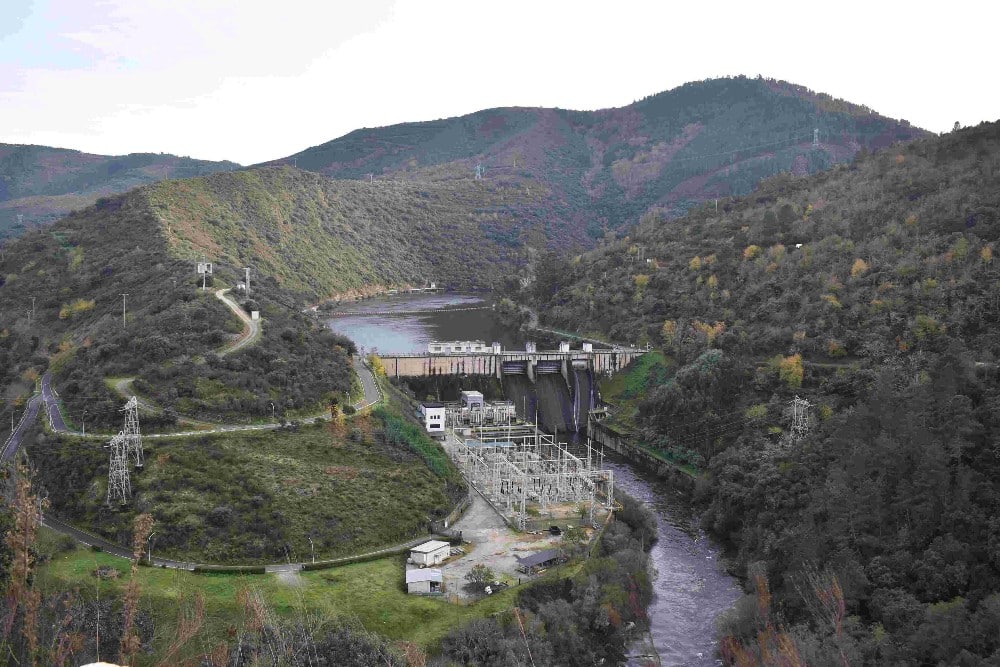
In Quiroga, Lugo Province, the Montefurado Hydroelectric Power Plant in the Galicia region needed intervention.
The facility is located on the Bibei River and sits on a dam holding 10.4 million cubic meters of water.
Its normal generation has been disrupted by heavy floating debris piling up on one side of the structure.
Floating innovation to overcome accumulating debris
Ecocoast supplied 47 Bolina Log Screen Boom modules to form a continuous barrier spanning about 623 feet.
Iberdrola added two concrete anchor points at each side to secure the barrier’s wall rails.
Steel mesh screens extending nearly 10 feet were connected below the waterline. The screens stopped submerged branches, logs, and trash.
Universal joints connect each floating module, enabling movement with river currents without breaking the boom.
The barrier also has specialized wall rails and pile floats that let it rise and fall with changing reservoir levels.
The Montefurado dam’s barrier is now fully completed and actively protecting the plant.
It has significantly reduced debris accumulated at the dam.
Ultimately, adding vital upgrades to hydroelectric plants is key to reduce maintenance downtime, improve overall efficiency, and maintain grid stability.

Anke Maree is a writer with a clear and engaging editorial style. Her work focuses on making complex topics accessible, informative, and relevant for readers across different areas of interest.
