
A North Sea oil well predicted to last 30 years went dry in two, and Penn State researchers finally found what was hiding inside the rock
 AI-made
A North Sea oil well was supposed to produce for 20 to 30 years. It ran dry in two.
Engineers had the seismic maps. The data said the oil was there. Yet the well came up empty, and no one could explain where the reserves had gone. It wasn’t a fluke — wells routinely go dry after recovering only a fraction of what the measurements promised, leaving companies and geologists asking the same question: if the oil is still in the ground, why can’t we reach it?
A 30-year well that died in two
The North Sea case was not a freak accident. Drilling began in 2008, and every measurement suggested the reservoir could sustain production for 20 to 30 years. Within two years, the well was dry. Penn State geophysicist Tieyuan Zhu put it plainly: the geology of the reservoir was simply more complex than anyone had mapped.
Bridges-2 has over a thousand CPUs, and each regular memory node carries between 256 and 512 gigabytes of RAM — eight to sixteen times more than a high-end laptop.
That complexity is a persistent industry problem. Wells routinely recover only a fraction of what their seismic surveys indicated — wasted capital, wasted energy, reserves left stranded underground. Zhu and his team of students and postdoctoral fellows set out to understand why this keeps happening and to build more accurate predictions of what a well will actually yield.
How seismic imaging finds oil — and where it falls short
Oil does not pool in open cavities beneath the surface. It saturates porous rock, and that saturated rock transmits sound more slowly than solid rock does. Geologists exploit this difference by sending sound waves underground and measuring how long they take to return, producing a 3D map of the reservoir — not unlike a medical ultrasound.
The technique is well-established, but it carries a built-in limitation. Traditional seismic analysis captures a single variable: travel time. One static snapshot, based on how fast sound moves through the rock. That single measurement, Zhu’s team suspected, was leaving significant structural detail invisible.
Adding time and amplitude to the picture
The Penn State researchers introduced two key changes to the standard approach. They took seismic measurements at multiple points in time, converting a static image into something closer to a 4D animation of the reservoir as it evolved. They also incorporated amplitude analysis — measuring not just how long sound takes to pass through oil-saturated rock, but how much the oil dampens the signal’s strength.
Both additions required substantially more computing power than a conventional analysis. The calculations demanded many fast processors working in parallel, along with large amounts of fast-access memory so the system wouldn’t stall repeatedly while retrieving stored data.
Hidden rock layers were blocking the oil all along
The answer was PSC’s Bridges-2 supercomputer, funded by the National Science Foundation. Bridges-2 has over a thousand CPUs, and each regular memory node carries between 256 and 512 gigabytes of RAM — eight to sixteen times more than a high-end laptop. Through an ACCESS allocation, Zhu’s team received 100,000 computing hours and enough memory to work directly with real field data from the North Sea. “That just cannot be achieved with our local resources,” Zhu noted.
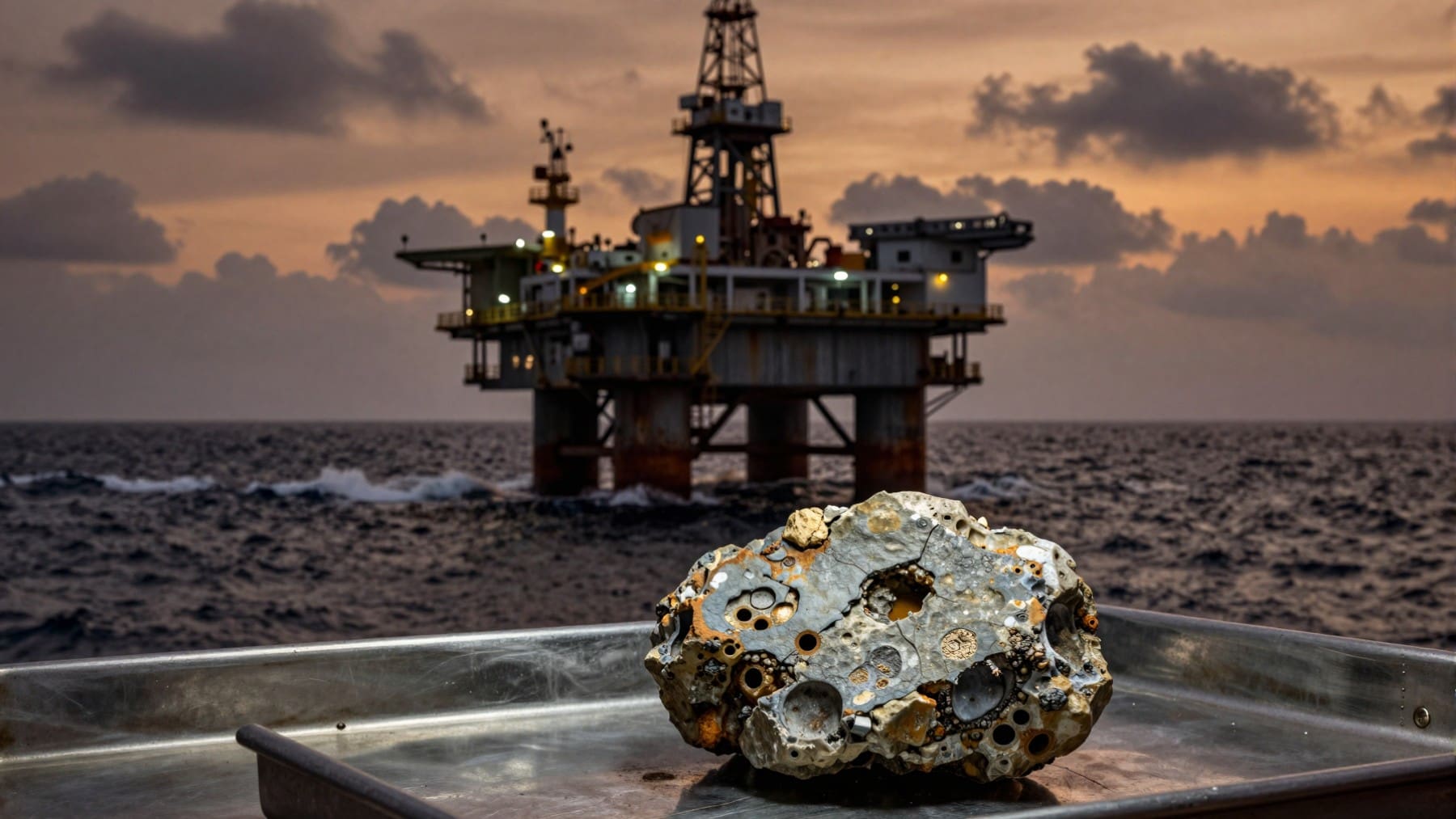
When the team applied their expanded analysis to the North Sea data, the picture shifted considerably. Structures inside the reservoir appeared that the time-only method had missed entirely — layers of denser, more solid rock embedded within the oil-bearing zone. These layers don’t slow sound enough to register in a traditional seismic map, but they function as physical barriers. A well drilled into the upper portion of the reservoir simply cannot draw up oil trapped beneath them. The reserves were never gone. They were blocked.
In some cases, the fix is straightforward: drill slightly deeper to bypass the barrier, and the remaining oil becomes accessible. The team published their findings in the journal Geophysics in September 2024, with a more extensive result in the same journal in April 2025.
Scaling up: from 9 square miles to entire oil fields
The current work is a proof of concept. The area analyzed covers roughly 9 square miles — limited in footprint, but sufficient to demonstrate that the method holds up against real field data.
Zhu’s team is already scaling their computations across more nodes to map much larger areas, potentially dozens of square miles. For the most demanding calculations, they may also draw on Bridges-2’s extreme memory nodes, each carrying 4,000 gigabytes of RAM. The next step is simply to expand what’s already been proven to work.
If hidden rock structures are routinely causing wells to underperform, better imaging could prevent future premature failures — and unlock reserves already written off as lost. Smarter drilling means less waste, fewer failed wells, and a more accurate accounting of what actually lies underground.

Carlos is an engineer with strong expertise in technical and industrial topics. He previously worked at international companies such as Siemens and is multilingual.
