
A microphone on a fishing boat logged 143 bat passes at sea, and the farthest came 104 miles from land before the floating turbines those bats may someday encounter have even been built
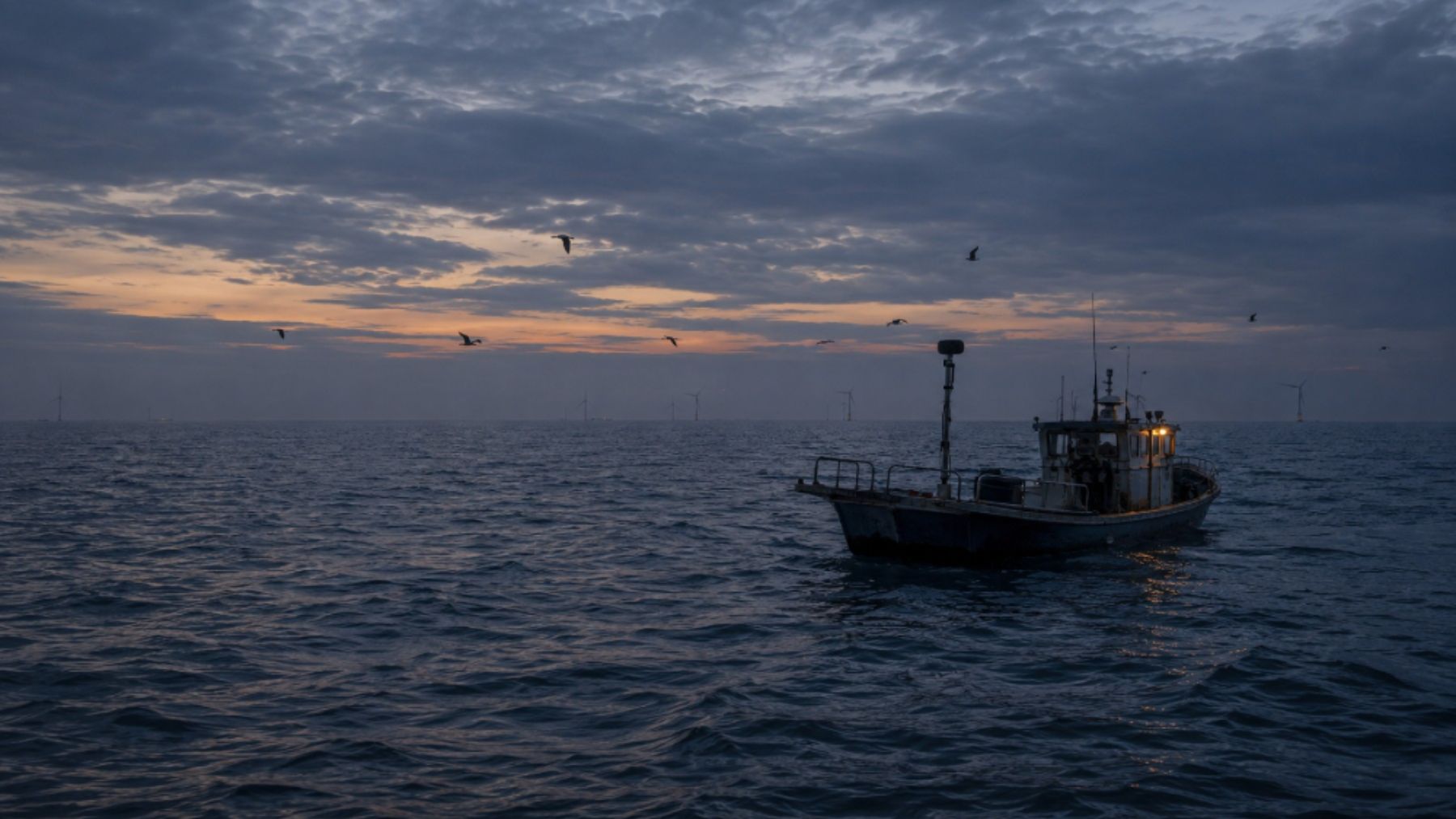 Image generated with artificial intelligence
Far off the coast of Maine, researchers found bats flying at sea near a planned location of turbines.
Globally, offshore wind infrastructure is rapidly expanding to serve a dual purpose.
However, these installations are limited at certain depths, losing out on stronger, more consistent winds deeper in.
The study’s results indicate that migrating bat species actively use open ocean spaces instead of strictly remaining along coastal shorelines.
As coastal nations invest more in floating offshore turbines worldwide, a crucial ecological gap comes to light.
Will understanding bats’ open ocean navigation help design effective mitigation strategies?
How traditional offshore wind potential is limited by depth
Coastal communities are highly reliant on offshore wind technology due to limitations on land.
For these densely populated regions, it has become the cornerstone for decarbonization and local energy independence.
Beyond addressing spatial barriers, it delivers utility-scale, carbon-free electricity thanks to steady, strong ocean winds.
High-demand coastal centers can be directly powered while lowering their dependence on imported fossil fuels.
By the end of 2025, the world’s offshore wind capacity reached 92.5 gigawatts.
Recent global estimations indicate that over 50 gigawatts of additional offshore projects are currently underway.
While these developments are crucial, traditional fixed-bottom turbines face physical limitations.
Standard foundations need shallow sea beds, usually under 160 to 200 feet deep.
Concurrently, more than 80% of the world’s adequate offshore wind is found in much deeper waters.
As a result, current projects are losing out on significantly stronger, more consistent wind speeds.
To boost total energy yields, floating turbines are being explored.
Unlocking wind potential in deeper water
Floating offshore turbines are rapidly rising in popularity worldwide.
The infrastructure overcomes depth restrictions by using platforms tethered to the seafloor with mooring lines.
This efficient deep water operation is vital for areas, like the Gulf of Maine, with steep offshore drop-offs.
The Bureau of Ocean Energy Management indicates that Maine’s lease areas hold almost 15 gigawatts of clean energy potential.
This is enough power to supply millions of homes.
Additional benefits of floating turbines include minimal visual impacts and reduced interference with commercial fishing and ocean traffic.
Despite these advantages, the deployment of this technology at large-scale enters uncharted territory.
Floating wind turbines are still relatively new, which means their long-term ecological footprint remains largely uncertain.
In general, blade collision risks with birds are high offshore, especially with installations overlapping migration corridors.
But the Government of Maine has recently discovered that bats are also potentially at risk.
Bats flying far off coast near potential wind turbine site
Baseline ecological data must be established before the construction of a wind project commences.
The Biodiversity Research Institute conducted acoustic monitoring research using specialized ultrasonic microphones.
The technology was installed onto commercial vessels operating far off the coast in the Gulf of Maine.
Multi-day trips across the Gulf recorded 143 bat passes far from the mainland.
The furthest observation occurred 104 miles out at sea, overlapping with zones targeted for future floating wind turbines.
Understanding bat migratory behavior at sea
Analysis of the acoustic calls confirmed migratory tree bats were present. This included hoary bats, eastern red bats, and silver-haired bats.
It was determined that the bats originate from mainland forests at the Eastern Seaboard.
During fall, they migrate south.
The study’s results indicate that migrating bat species actively use open ocean spaces instead of strictly remaining along coastal shorelines.
The detection of bats offshore demonstrates that maritime environments must be proactively managed.
Global floating turbine deployment is set to accelerate. This means it is vital to integrate wildlife data into project planning.
Developers can implement smart curtailment and acoustic monitoring systems. This will temporarily pause turbine operations during peak migratory periods.
Ultimately, resilient ecological safety measures must expand in line with offshore clean energy capacity. This will ensure deepsea wind scales responsibly while protecting vulnerable marine ecosystems.
Anke Maree is a writer with a clear and engaging editorial style. Her work focuses on making complex topics accessible, informative, and relevant for readers across different areas of interest.
