
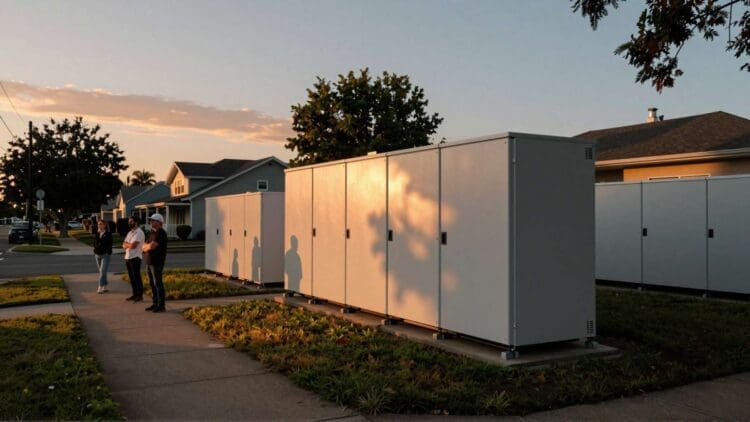

Community opposition to data centers is turning into a sales pitch for Bloom Energy. In a recent interview with Bloomberg News in San Francisco, CEO KR Sridhar said that mounting local resistance to data center construction is creating a direct business opportunity for the company’s fuel cell technology — which he describes as cleaner and quieter than conventional gas turbines. “It’s a business opportunity right now because nobody else is community friendly,” Sridhar said.
CEO Frames NIMBY Resistance as a Market Opening
Sridhar’s comments reflect a deliberate strategic pivot. Rather than treating community opposition as a liability, he frames it as a competitive advantage. “Rationally, our deployment should not be a community issue,” he told Bloomberg News, positioning Bloom as the only company currently offering a genuinely community-friendly power solution at scale.
Investor sentiment appears to agree. Bloom’s stock has climbed more than 200% since the start of the year, driven largely by expectations that data center demand will keep accelerating — a surge that suggests Wall Street sees real commercial weight behind what Sridhar is arguing.

Why Fuel Cells Draw Less Local Opposition Than Gas Turbines
The core technical distinction matters here. Bloom’s fuel cells generate electricity from natural gas through a chemical reaction, not combustion. That difference translates to less air pollution, less noise, and significantly lower water consumption compared to conventional gas turbines.
Each attribute addresses a specific community complaint. Noise and emissions rank among the most common grievances raised by residents near proposed data center sites, while water use has become a growing concern in arid regions where large-scale infrastructure competes with local needs. Sridhar identifies these advantages as central to why developers facing local pushback are increasingly turning to Bloom’s systems. The result is a technology that appeals not just on performance grounds, but on political ones.
Oracle and Nebius Switch From Gas Turbines to Bloom Systems
Two recent deals illustrate the dynamic Sridhar describes. Oracle’s Project Jupiter, a large data center campus in New Mexico, originally planned to use Siemens Energy gas turbines — and drew intense local protests over environmental impacts. In April, Oracle announced it would instead power the site with Bloom fuel cells, supplying 2.5 gigawatts of capacity and making it one of Bloom’s largest projects to date.
Dutch AI cloud provider Nebius Group made a similar move, swapping its original gas turbine plans for Bloom technology and citing fast delivery time and what it described as “clean, virtually non-polluting technology.” Both cases follow the same pattern: a developer encounters resistance, reassesses its power strategy, and lands on Bloom as the path of least community friction. Whether that holds across a broader range of projects remains to be seen.
Community Engagement Efforts and Remaining Limits
Bloom has not simply relied on its technology to win people over. Sridhar said the company has conducted outreach in New Mexico, meeting directly with local residents to explain how its systems work and how they differ from conventional gas plants. Some community members — including a local newspaper that initially opposed the Oracle project — have shifted their position after learning more.
That kind of on-the-ground engagement reflects an understanding that technical specifications alone do not resolve community anxiety. Trust-building takes time and direct conversation.
Sridhar is candid about the limits, though. “Nothing is NIMBY-proof,” he said, “because NIMBY-ism is not rational.” The acknowledgment is notable — Bloom does not expect its technology to eliminate opposition entirely, only to reduce it enough to make projects viable where they might otherwise stall.
Key Takeaways
Bloom Energy’s CEO sees community resistance to data centers as a genuine commercial opportunity, not just a talking point. The company’s fuel cell technology avoids combustion, uses little water, and generates less noise — directly addressing the concerns most commonly raised by residents near proposed sites. Two high-profile customers, Oracle and Nebius, have already switched from gas turbines to Bloom systems, at least partly for those reasons. Bloom’s stock has reflected that momentum, rising more than 200% this year. Opposition will not disappear, as Sridhar himself acknowledges, but it appears to be reliably sending new business his way.

Carlos is an engineer with strong expertise in technical and industrial topics. He previously worked at international companies such as Siemens and speaks Spanish, German, English, and Italian.