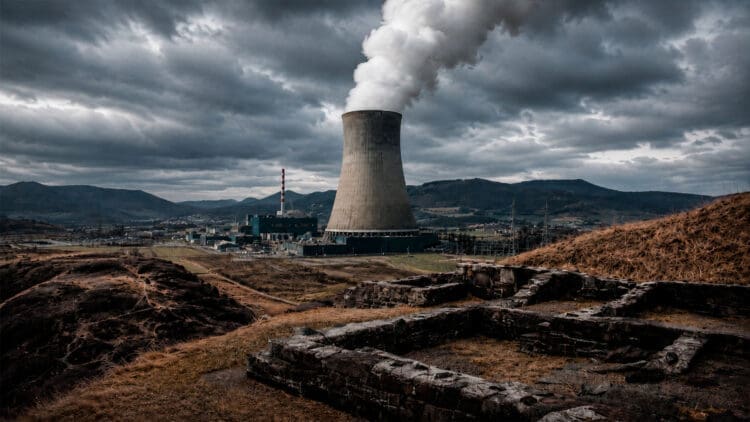

A nuclear power project was supposed to change the future of energy, but it uncovered history instead.
Global energy strategies are shifting as climate mandates tighten and supply chains fracture.
A massive UK nuclear project aimed to power six million homes, but site preparation triggered an emergency shutdown.

The team began digging up the past.
What does it mean for the future of the nation’s energy security?
How decarbonizing and decoupling became one strategy
The UK reached a historic milestone in 2024 by closing Ratcliffe-on-Soar, its final coal-fired power station.
Once the nation finally decommissioned its last coal-fired power plant, natural gas was next on the agenda.
With 50% of gas imported, the UK must decouple from volatile markets to ensure price stability.
Geopolitical instability and ever-changing trade alliances are why markets continue to fluctuate.
This has made fossil fuel imports a liability that vulnerable nations are no longer willing to accept.
To resist this, the UK is actively investing in more diverse and cleaner energy sources. A diversified energy portfolio will help to protect them against global shocks.
Beyond national security, it is also a direct response to the stricter international climate directives.
Shifting toward a mixture of renewables and utility-scale low-carbon electricity is fundamental to meet net-zero goals.
Now, a massive wave of infrastructure expansion is occurring across the country in hopes of securing the nation’s power future.
Nuclear power as the anchor of the grid
The UK government has been actively auctioning record volumes of newly contracted renewable capacity.
Renewables hit record peaks in 2023, yet their intermittency requires a “baseload” to prevent blackouts.
For this reason, the government is strongly leaning toward nuclear energy to provide “baseload” power.
It also offers a way to generate low-carbon electricity on a relatively small physical footprint compared to expansive solar farms.
By replacing aging fossil-fuel plants with nuclear power, the demands of a modern, electrified economy can be supported nationally.
The £33 billion Hinkley Point C was designed as the grid’s low-carbon anchor.
But before any construction could occur, archaeologists had to “green-light” the site.
Construction froze as Cotswold Archaeology launched one of Britain’s largest ever 450-acre excavations.
The British Archaeology Jobs and Resources publicly exhibited the historical Hinkley Point findings.
Powering the future or preserving the past? A mega-nuclear site uncovered a lost Bronze Age world
The UK has many buried secrets from the past. With so many clean energy projects in the pipeline, more of these ancient secrets are being uncovered by accident.
This was the case with Hinkley Point C. The site became a “time machine” when microliths—razor-sharp flint fragments—emerged.
These date back 10,000 years to the Mesolithic era.
These tools reveal a post-Ice Age landscape where hunter-gatherers tracked aurochs (extinct giant wild cattle) across the Somerset levels.
But that was not all that the excavators discovered.
From nomadic traces to a world of permanent settlement
The team discovered:
- Bronze Age ritual site and burial mounds
- Bronze Age roundhouses with well-preserved drainage gullies and post-holes
- Remains of a Roman-period cereal crop drying stone building
- Remains of a sunken-floored building, dating back to the Sub-Roman period or Dark Ages
- Iron Age and Roman period farmland evidence
The Hinkley Point C project proves that the race to secure a carbon-free future often runs over the deepest pasts.
Unearthing 10,000 years of human resilience proves that while Hinkley Point C secures our energy future, it first had to rescue our forgotten history.
Without it, the push toward a greener, modern world could come at the risk of losing valuable pieces of the past.
It’s imperative that global renewable advancements align with historical preservation.
Anke Maree is a writer with a clear and engaging editorial style. Her work focuses on making complex topics accessible, informative, and relevant for readers across different areas of interest.