
A California field seemed perfect for a wind farm until a flock of cranes blocked every turbine because they need the open space to fly low during storms
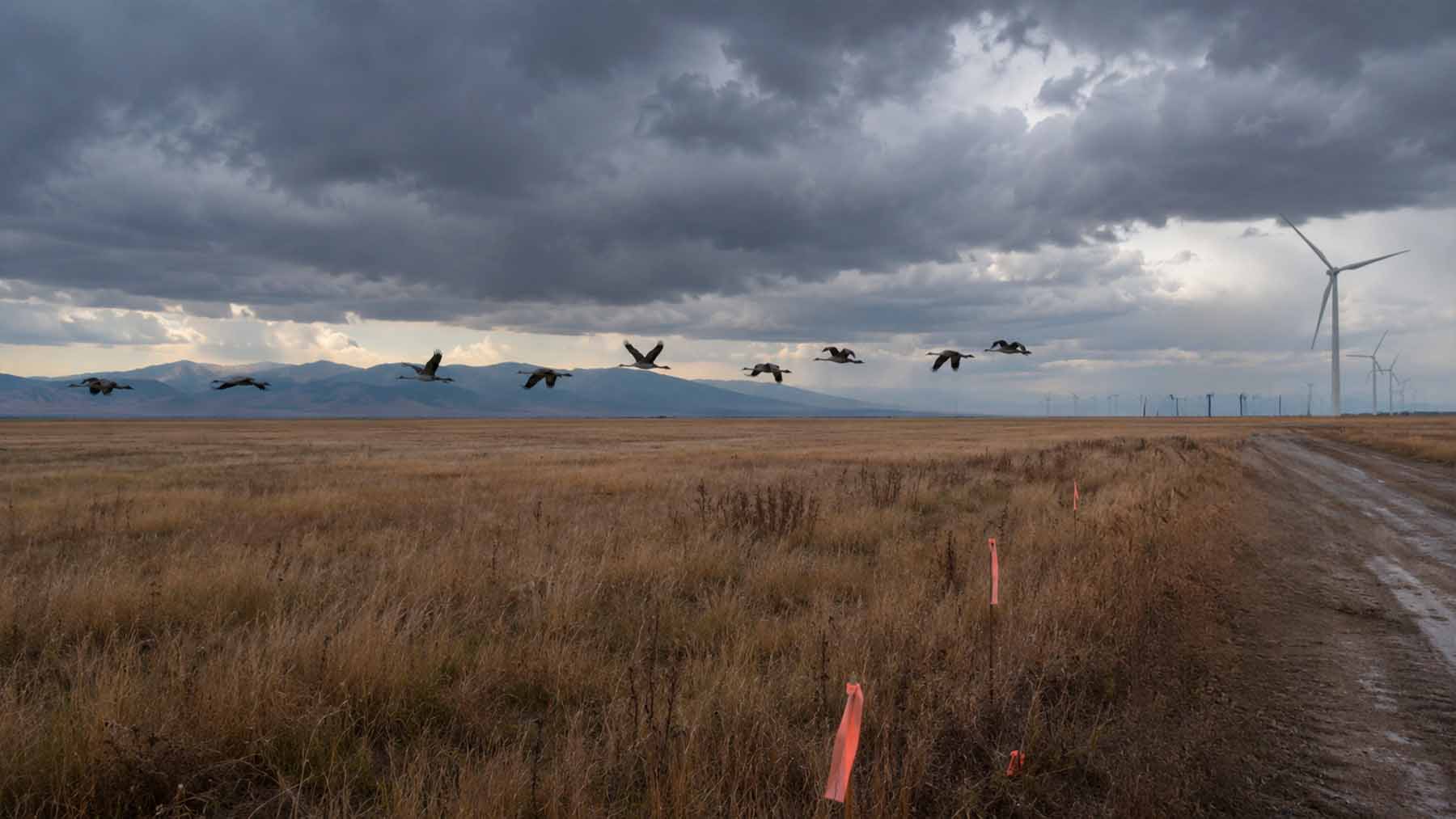 Image generated with artificial intelligence
A giant wind farm was proposed for California until local wildlife came onto the radar – among other things.
Worldwide, nations are targeting highly ambitious clean energy goals.
These targets are extremely vital to mitigate the effects of climate change, a process that has accelerated in recent years.
While the Fountain Wind Project would have significantly lowered the state’s carbon footprint, the additional risks were too great.
While U.S. regulators often fast-track renewable projects, developers still face major challenges.
What can be done to ensure that complex ecological and cultural dynamics are not overlooked?
How green ambitions can revive the planet
Earth’s natural cycles have significantly shifted over the past few decades.
Rapid industrialization, widespread digital adoption, and a bigger global population are key stressors driving this shift.
As temperatures continue to increase, the planet is straining under this unprecedented stress.
Climate tracking indicates that average global temperatures are nearing the set limit above pre-industrial levels.
Worldwide, nations are facing extreme heatwaves, droughts, and rapidly changing weather patterns.
These changes are highly disruptive to the globe’s ecosystems.
As a result, humanity must deal with declining freshwater supplies, crop yields, and biodiversity.
The primary tool to mitigate these devastating effects is to lower energy-related carbon emissions.
Presently, atmospheric carbon levels are 50 percent higher than pre-industrial benchmarks.
Ambitious green energy goals are essential to undoing this damage.
Tripling global renewable energy capacity by 2030 will prevent up to 7 billion metric tons of emissions.
Consequently, utility-scale wind is set to lead this shift.
The primary driver of America’s transition in modern times
Modern American society is experiencing a significant surge in electricity usage.
As U.S. infrastructure becomes more digitized and rapidly expands, national grids are bound to buckle under the pressure.
To eliminate the reliance on fossil fuels to bridge the growing energy gap, large-scale wind has become fundamental.
Currently, turbines supply more than 10 percent of America’s total electricity production.
In many states, they contribute to over 30 percent of the local power mix.
This infrastructure is prioritized by several utilities due to its quick deployment and affordable operational costs.
Furthermore, its carbon debt payoff is equally compelling.
Nationally, operating turbines offset over 100 million metric tons of emissions annually.
These factors are why wind power is favorably positioned to accelerate the U.S.’s transition to renewable energy.
Recently, a proposed wind farm in California tried to fast-track approval by applying to the California Energy Commission.
However, things did not go as planned.
The unsuccessful story of the Fountain Wind Project
In theory, California’s Fountain Wind Project would have been ideal.
Shasta County’s proposed site spanned roughly 2,855 acres of leased forest space.
It would consist of 48 turbines, generating a total of 205 MW of clean electricity.
Under state opt-in laws, applying to the California Energy Commission (CEC) would help bypass local opposition.
Yet the location led to immense environmental and cultural criticism.
The local concerns that led to a unanimous rejection
The wind farm posed major risks to local birds, including the threatened sandhill crane.
These large birds fly low during storms to navigate turbulent air and maintain visibility.
Operating turbines in their flight paths creates significant collision hazards.
Native tribes, such as the Pit River Tribe, also opposed the project to protect sacred ancestral lands.
On December 19, 2025, the proposed development was rejected, marking the state’s first denial under this program.
While the Fountain Wind Project would have significantly lowered the state’s carbon footprint, the additional risks were too great.
The proposed project’s rejection underscores the tensions that are growing in modern infrastructure planning.
It is essential to accelerate renewable energy deployment. But it should not come at the expense of cultural heritage and local wildlife.
Ultimately, developers must conduct comprehensive siting evaluations to ensure that green projects protect ecosystems and communities.
Anke Maree is a writer with a clear and engaging editorial style. Her work focuses on making complex topics accessible, informative, and relevant for readers across different areas of interest.
