
Ten of the EU’s 27 member states have jointly written to the European Commission calling for nuclear power to be classified as sustainable energy under a new regulatory framework governing how data centers and AI infrastructure are powered. The letter signals a coordinated push to shape rules that could influence how — and with what energy sources — Europe builds out its digital economy.
Ten EU states formally request sustainable label for nuclear
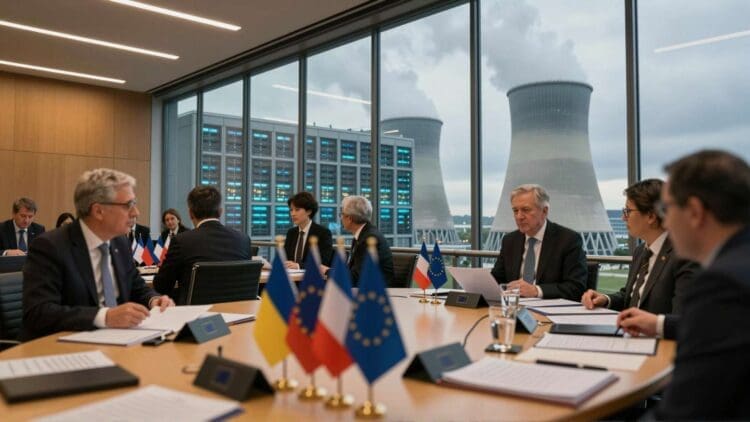
The joint letter was sent to the European Commission by ten EU member states, representing more than a third of the bloc’s membership. The signatories called specifically for nuclear power to receive a sustainable classification under new rules the Commission is developing around energy use for data centers and artificial intelligence infrastructure. That ten governments acted in concert makes clear this is not a fringe position — it is a meaningful political alignment within the EU.
The timing is deliberate. The Commission is actively working on this rulemaking right now, meaning the window to influence the outcome is still open. Submitting a joint letter at this stage lets the signatory states shape the framework before it is finalized, rather than contesting it after the fact.

Why the request was made: the new EU rulemaking explained
The European Commission is developing regulatory rules that will govern which energy sources qualify to power data centers and AI infrastructure across the bloc. At the center of this process sits a straightforward but consequential question: what counts as “sustainable”?
That classification carries real practical weight. For data center operators and technology companies building AI infrastructure in Europe, it directly affects procurement decisions and long-term investment strategies. If nuclear qualifies, it becomes a viable — and potentially preferred — option for powering large-scale digital infrastructure. Proponents argue that nuclear meets the low-carbon criteria consistent with how sustainability is defined in EU policy contexts, since nuclear generation produces minimal greenhouse gas emissions over its lifecycle — a fact supporters say makes exclusion difficult to justify on scientific grounds.
Excluding nuclear could steer investment toward other energy sources by default, regardless of whether those sources can reliably meet the scale of demand that data centers and AI systems require.
Potential consequences for nuclear deployment across Europe
The stakes of the Commission’s decision extend well beyond a single regulatory label. A positive ruling — one that classifies nuclear as sustainable under the new framework — could accelerate nuclear energy deployment across member states by making it easier to finance, permit, and procure nuclear power for large energy consumers.
Data center and AI energy demand is growing rapidly across Europe, with no sign of slowing. The electricity consumption involved means that energy sourcing rules attached to this infrastructure will have a measurable effect on the broader European energy mix over time. For nuclear specifically, inclusion in a sustainable classification would place it on equal footing with renewables in relevant policy frameworks. Exclusion would not prohibit nuclear outright, but policy incentives and corporate sustainability commitments increasingly follow these classifications — and that difference, in practical terms, could significantly shape investment flows into new nuclear capacity across the continent.
Broader shift: nuclear’s improving standing in European energy policy
The joint letter does not emerge from a vacuum. It reflects a wider reconsideration of nuclear power that has been building across Europe for several years, with member states that previously held firm anti-nuclear positions reversing or softening those stances in response to climate commitments and energy security pressures.
A significant marker came in 2022, when the European Commission controversially included nuclear power in the EU taxonomy for sustainable finance. That decision — contested at the time — effectively opened the door to nuclear being treated as a sustainable investment under EU financial rules, a precedent the current letter’s signatories are now seeking to extend into energy rules for digital infrastructure.
The 2022 energy crisis, triggered in large part by disruptions to natural gas supply, accelerated interest in nuclear as a reliable, low-carbon domestic energy source. Energy security concerns gave political cover to governments reconsidering their positions. Some of those governments are now among the ten signatories.
The current request is, in that context, the latest step in a gradual but consistent rehabilitation of nuclear power within EU energy policy — one that ten member states are now actively working to advance.

Carlos is an engineer with strong expertise in technical and industrial topics. He previously worked at international companies such as Siemens and speaks Spanish, German, English, and Italian.