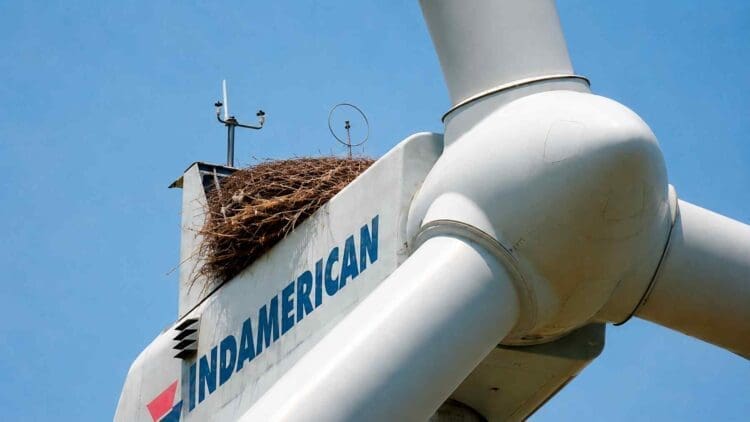

Concerns about the impact of wind energy developments on grassland birds may subside after the latest findings.
Wind power is a vital part of the global transition to renewable energy sources. It provides high-capacity clean electricity demanded by the world’s ever-rising power needs.
Conservationists have long expressed deep apprehensions regarding the environmental impact of large-scale wind projects.



Will the discoveries made by a multi-year study resolve these long-held ecological fears?
How expanding wind capacity is a dual-strategy
Cloud computing, automated manufacturing, and smart-city infrastructure are shifting the world forward.
This has led global businesses and populations to accelerate their digitalization.
With this rapid technological evolution comes an unprecedentedly high global demand for electricity.
This year, data centers alone are expected to consume over 1,000 TWh of power.
As billions of newly connected personal devices increase, the strain on existing power grids continues to worsen.
Wind capacity growth is essential to meet surging demands while adhering to international climate mandates.
Modern, large-scale farms are a scalable alternative to fossil fuel power plants.
Furthermore, wind power rapidly offsets carbon emissions.
A wind strategy ensures that digital economies remain operational while meeting legally binding net-zero targets.
However, some environmental impact studies have unveiled unexpected consequences of large-scale wind farms.
In open plains, intense conflict with native wildlife is often triggered.
Renewable energy technology versus local biodiversity
The deployment of utility-scale wind turbines is often quicker than other infrastructure.
Nonetheless, the development process is extremely environmentally invasive.
The construction of access roads, installation of power lines, and heavy equipment traffic are highly disruptive.
Experts argue that the physical disruptions drive vulnerable species away from their natural habitats.
This often leads to habitat fragmentation and lower breeding populations.
Furthermore, migrating birds and bats are directly threatened by tall rotating blades.
These concerns have frequently delayed green energy approvals.
However, the Renewable Energy Wildlife Institute conducted a study on the Meridian Way Wind Power Facility.
The study took place over seven years and focused on the impact on birds before, during, and after construction.
The Department of Energy funded the study. Researchers from Kansas State University were commissioned to track the process’s results.
Their field research unveiled surprising ecological advantages of the wind farm.
A unique relationship between wind turbines and the Greater Prairie-Chicken
Researchers have found that wind farms are quietly shaping animals. At the Meridian Way facility, the Greater Prairie-Chicken was expected to avoid the wind farm.
Instead, the birds remained unbothered by the turbines.
They proved to be more resilient to renewable infrastructure than originally predicted.
The Greater Prairie-Chicken defied expectations
The study measured reproductive factors, which remained unchanged. This includes clutch size and egg hatchability.
The impact on female survival rates was also surprisingly positive. This is attributed to the tall wind turbines disrupting the hunting patterns of bigger birds of prey.
Apex predators tend to avoid flying close to the giant rotating blades. This led to a substantial drop in natural predation.
The unprecedented safe zone allowed the ground-nesting birds to raise their young with a lower risk of attacks.
However, the females were more likely to move away from the turbines during their routine travels.
The study suggests increasing dense grass cover for nesting to accelerate species recovery.
Many environmental impact studies have found negative effects resulting from green energy infrastructure.
However, the seven-year Meridian Way study demonstrates that the opposite can also be true. Some vulnerable species can adapt to utility-scale facilities that change their environments.
This means that clean energy goals do not inherently cause wildlife destruction.
By understanding ecosystem dynamics, developers can create blueprints that support the local biodiversity. Responsible management of wind projects can fuel digitalization while preserving nature.
Anke Maree is a writer with a clear and engaging editorial style. Her work focuses on making complex topics accessible, informative, and relevant for readers across different areas of interest.