
Every morning they power the city and pull heat from the air until the sun goes down and something completely unexpected begins
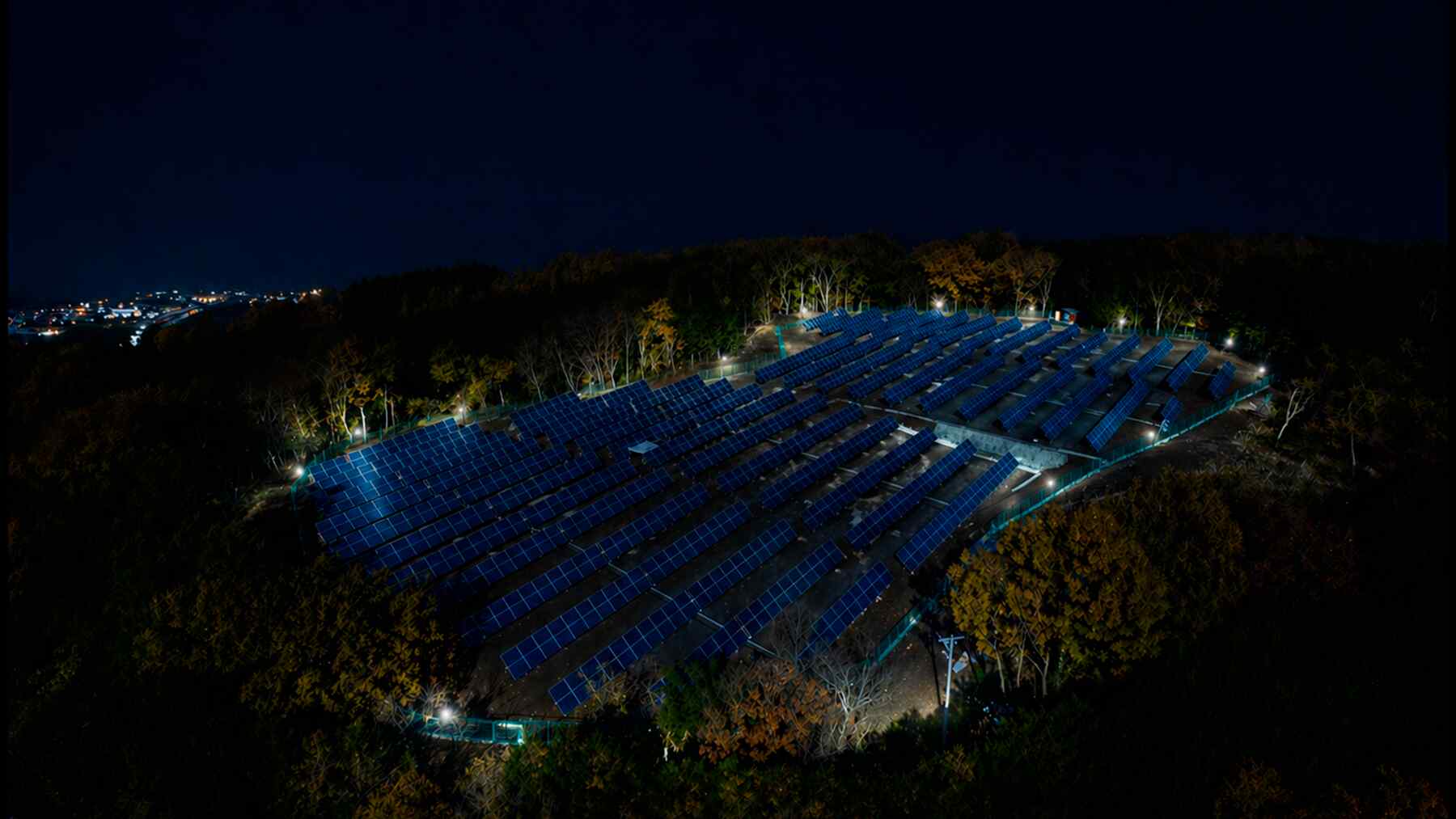 Credits: Energies Media Internal edition
Solar power was meant to help mitigate the effects of climate change, but an invisible footprint tells a different tale.
Large-scale installations have been the soul of the global green energy transition, lowering carbon emissions by vast amounts.
But experts are now realizing that these arrays interact with the environment in a unique way through exchanging air.
The technology became essential for space exploration and remote satellite use, preserving its reputation as a high-cost luxury.
Some believe that this silent interaction could change the surroundings, but could it truly?
How silicon became the belle of the ball
Solar power had an extremely long journey before it came to dominate the world’s renewable energy capacity.
In 1954, Bell Labs was actively pursuing a way to convert sunlight into a moving current. Eventually, a silicon strip helped to achieve this goal, paving the way toward a new era.
The technology became essential for space exploration and remote satellite use, preserving its reputation as a high-cost luxury.
Its futuristic appeal as a clean, silent, and nearly limitless power source was great. Yet, this ideal invention was not economically feasible in powering the average city grid.
By the 21st century, things took a dramatic turn.
Production was scaled, semiconductor efficiency improved, and global policy shifts suddenly were in favor of solar technology.
Just like that, solar became the fastest-growing energy source on Earth.
The transition from mere watts to terawatts has made solar energy key to decoupling economic growth from carbon emissions.
But will the world’s solar “high” last?
The bigger they become, the harder they could fall
Solar’s rapid rise soon created a need for additional, utility-scale installation space.
This need stemmed from the data-driven modern society’s fast-growing energy needs. Scaling solar was the simplest solution to meet these needs while keeping emissions low.
However, the consequences of large-scale solar plants soon became apparent.
The physical footprint of replacing traditional power facilities with solar is substantial. City centers do not have the space for solar arrays, and vast stretches of natural landscape must be transformed.
Thousands of miles of new high-voltage lines are needed to transmit the power to urban regions. Beyond the displacement of habitats and wildlife, this approach is also expensive.
Intermittency is also a major issue. This obstacle is addressed by combining battery energy storage systems with large-scale solar plants.
The production of these systems is energy- and resource-intensive, worsening the environmental impact.
Now, researchers have identified another surprising hidden impact on the surroundings.
The night shift of solar panel power plants
Solar panels may have well-documented daytime operations, but they also perform at night, just in a different way.
A research team from the University of Arizona decided to study this nighttime performance. The team collaborated with the University of Wisconsin-Madison and the University of Maryland.
Their findings are detailed in the study “The Photovoltaic Heat Island Effect: Larger solar power plants increase local temperatures,” published in Nature.
Solar efficiency peaks during daylight hours, but the panels also absorb a great amount that is not converted into power.
The PVHI effect creates a persistent heat bubble
The team studied a solar plant in the Arizona desert. They discovered that solar arrays impact the microclimate through the Photovoltaic Heat Island (PVHI) effect.
At night, the non-converted solar energy is released into the atmosphere as heat. This increases the plant’s air temperature by 5.4-7.3°F.
This unique nighttime phenomenon has become yet another hurdle for the industry to overcome.
Solar power may play a vital role in global decarbonization. However, the local thermal footprint must not be ignored, as the risk of losing local species is too great.
It is important to manage these plants in a way that strikes a balance with nature. These insights present the opportunity to create smarter installations that improve space or integrate vegetation.
Anke Maree is a writer with a clear and engaging editorial style. Her work focuses on making complex topics accessible, informative, and relevant for readers across different areas of interest.
