
Halliburton deployed six fiber optic monitoring wells on a single Bakken pad and captured real-time subsurface data no conventional tool had ever delivered at that scale
Beneath the Bakken Formation, an operator was preparing to pump hydraulic fracturing treatments across a multi-well pad — millions of dollars committed to splitting rock in ways no surface instrument could fully confirm. Two competing frac design philosophies were on the table, and the pressure to validate the right one, stage by stage, was real.
Conventional tools could only go so far. Surface flow meters, pressure gauges, production tests — each offered a partial view, each carried blind spots. What was actually happening downhole, in real time, remained largely out of reach.
The problem with not seeing underground
There’s no established playbook for a true drainage test in a multi-well Bakken pad environment. The closest approximation — production shut-in and interference tests — relies on surface flow meters, which are endpoint measurements. Those meters struggle with multi-phase flow, limiting the warmback analysis that could otherwise reveal how much each cluster is actually contributing.
As tight-rock pad development grows in complexity, the case for deploying this level of subsurface visibility earlier and more broadly will likely only strengthen.
Production studies offer another angle but carry a structural weakness: they ignore system effects and well-to-well interactions. Without understanding those interactions, isolating which sections of a completion are genuinely driving output becomes difficult.
Pressure gauges fill part of the gap. They’re commonly used for in-treatment diagnostics and provide accurate data on the first interaction between wells — but any subsequent interaction becomes unreliable. The signal degrades, and confidence in the reading drops with it.
For this operator, the diagnostic challenge was layered. They needed to simultaneously evaluate two competing frac design philosophies, understand what micro-proppants were doing in the far-field, assess the impact of increasing well entry points, and track how heel and toe positioning affected completion outcomes. No single conventional tool could address all of that at once.
What SmartFleet brings to the wellsite
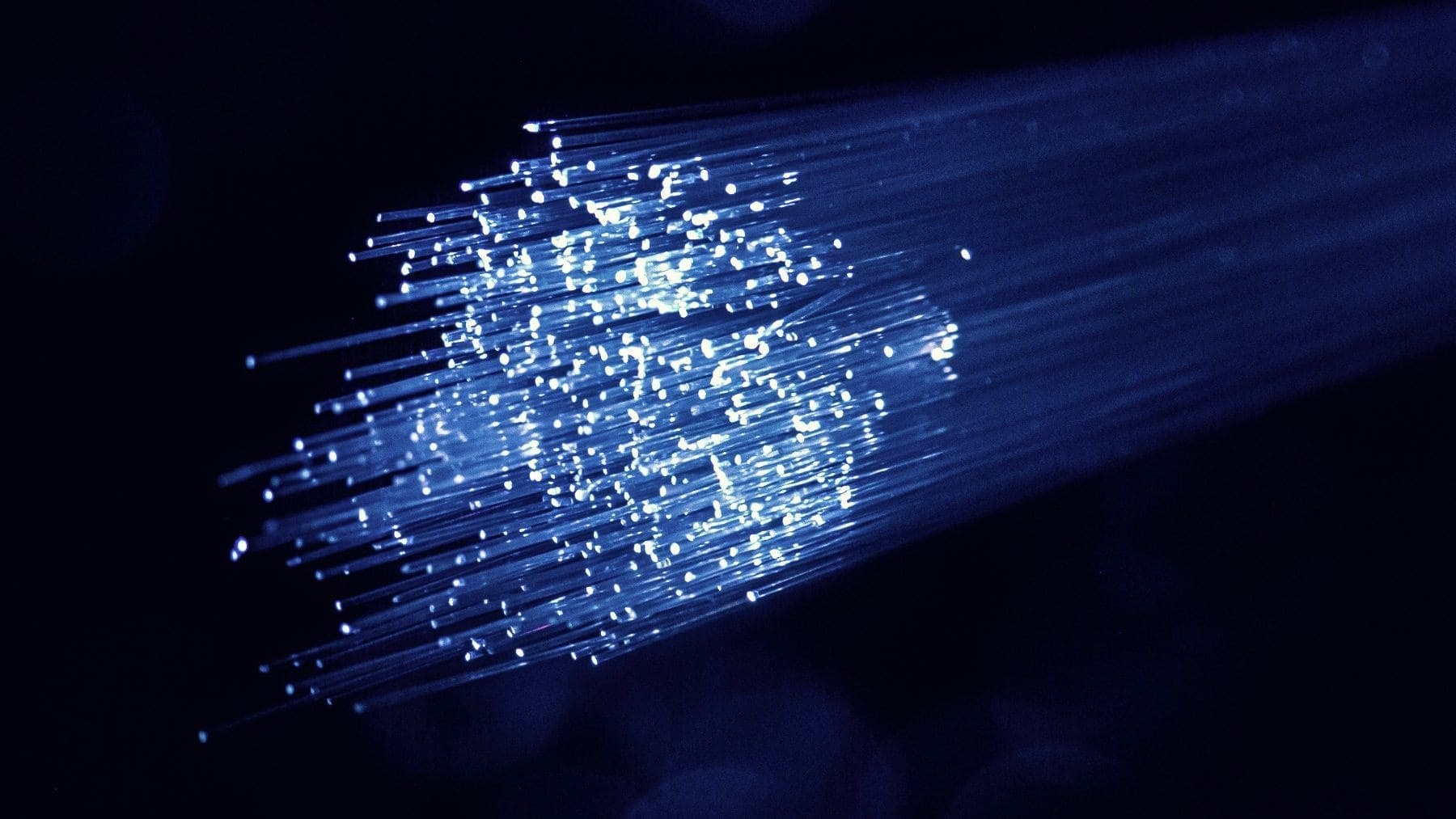
Halliburton’s SmartFleet system is built around scalable fiber optic monitoring. Its core function is direct measurement of fluid distribution along the near-wellbore, delivered in real time while pumping is actively underway. That distinction matters — operators aren’t waiting for post-job reports. They’re watching subsurface behavior as it unfolds.
The system provides live 3D visualization of critical subsurface measurements, giving engineers a connected view spanning both near-wellbore cluster uniformity and cross-well interactions simultaneously. That dual visibility — what’s happening inside a single wellbore and what’s happening between offset wells — is what makes pad-level optimization possible rather than theoretical.
Fiber alone, however, doesn’t capture everything. On this project, downhole pressure gauges were deployed alongside the fiber to track stress-shadowing progression and to observe a wave-effect response along the wellbore as offset fracs reached it. That wave effect, according to Halliburton, couldn’t have been detected through fiber measurements alone.
The largest SmartFleet deployment yet
Six fiber optic monitoring wells on a single pad. That figure represents the largest SmartFleet deployment to date, and the scale was deliberate. This pad was part of a broader series of projects sharing a unified mission: faster validation, faster decisions, and continuous optimization across every dollar committed to completions.
Before any pumping began, the team developed a structured design-of-execution with decision trees built in from the start — specifically to prevent scope creep and keep fiber measurements focused on what mattered most: uniformity near the wellbore and morphology effects. That framework gave the operator a consistent, quantifiable baseline for comparing performance across each design experiment.
The six fiber wells were assigned to frac hit classification. As offset fracs were pumped, the fiber data allowed the team to determine whether a given hit was a direct frac hit, an approaching frac, or a reactivation of a previous stage. That level of classification hadn’t been available at this scale before.
Real-time decisions, stage by stage
Permanent fiber made cluster uniformity a continuous, measurable variable rather than an assumption. A firm rule governed the project: no design change could be implemented that would sacrifice stage uniformity. That constraint kept optimization disciplined and prevented short-term adjustments from undermining pad-wide consistency.
Fiber data was also applied dynamically to the proppant schedule. As measurements came in, the team used them to improve and maintain optimal uniformity across the pad — adjusting in response to what the subsurface was actually showing, not relying on pre-job modeling alone.
The combined fiber and gauge dataset allowed the operator to observe stress shadowing in real time — not just that it occurred, but why, and how it progressed from stage to stage. Both frac designs could be evaluated mid-job, with drainage impact assessed and optimization decisions made without waiting for production data weeks later.
What this means for Bakken completions
The Bakken project suggests that real-time subsurface visibility can meaningfully compress the learning curve across a pad series. Instead of running a design, waiting for production results, and adjusting on the next project, operators can validate and refine within the same job — with direct capital implications.
Well interactions are becoming harder to ignore as pad drilling intensifies and offset wells multiply. Understanding those interactions — not just individual stage performance — is increasingly central to how operators characterize drainage and allocate future spending.
Validating frac design effectiveness mid-job, rather than post-production, represents a shift in when decisions get made and how much confidence backs them. SmartFleet’s demonstrated scalability to six simultaneous fiber wells on a single pad suggests the approach isn’t a one-off. As tight-rock pad development grows in complexity, the case for deploying this level of subsurface visibility earlier and more broadly will likely only strengthen.
Daniel García is an Editor-in-Chief with strong expertise in structural work and engineering principles. He combines this technical foundation with deep knowledge of energy, spatial design, and emerging technologies, bringing a forward-thinking and analytical approach to editorial leadership.
