
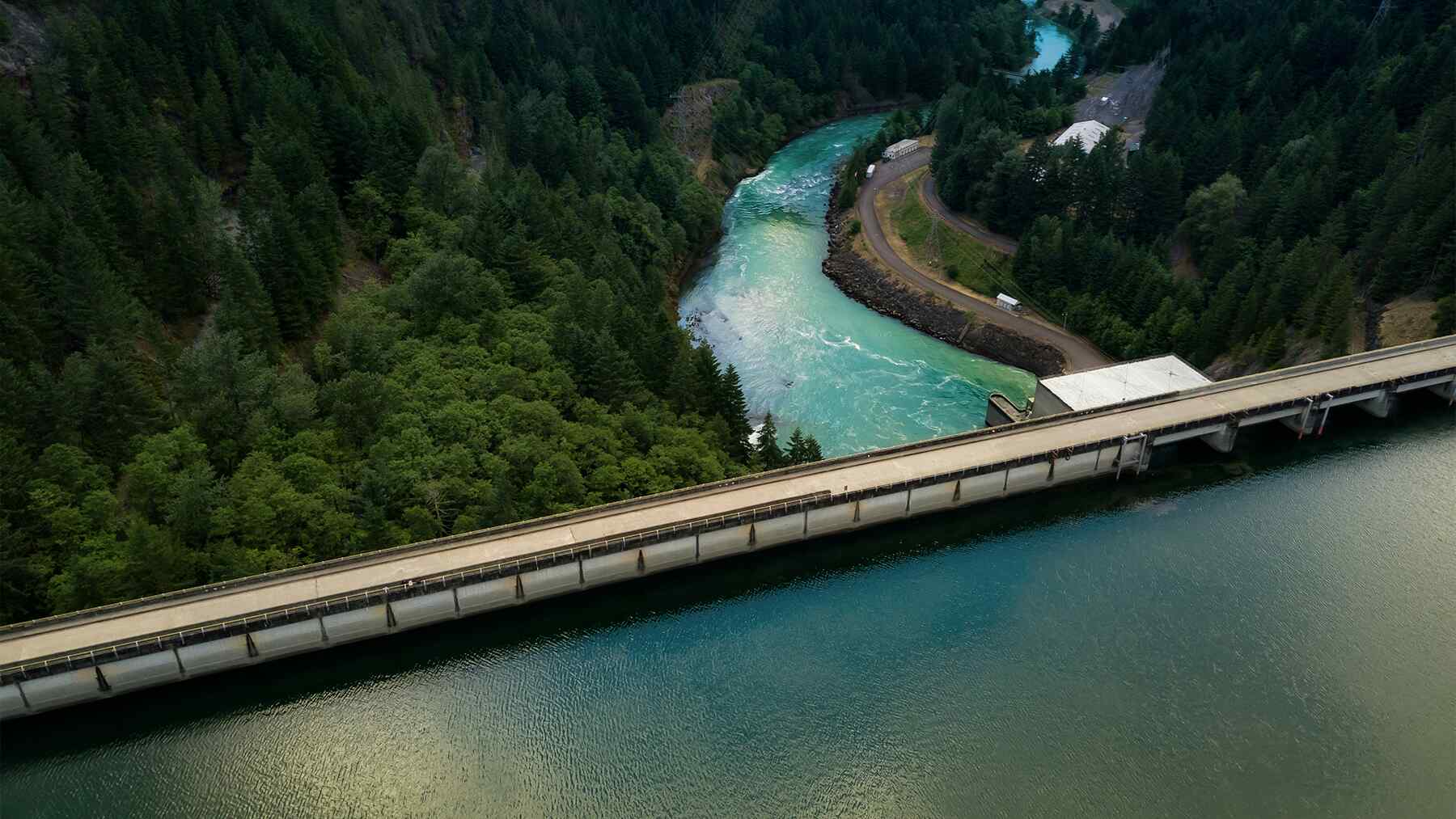
This hydroelectric dam “taught” thousands of salmon to wait for the correct gate to open before entering the river
 Credits: Energies Media internal edition
Hydroelectric dams can be less disruptive to nature by using smart management strategies.
Globally, renewable electricity is essential to meet ambitious climate goals and ever-rising energy demands.
Hydropower plays an integral role by supplying baseload electricity when power grids become strained. However, these facilities have a major impact on the world’s fragile river ecosystems.
The findings are detailed in the study “Hydropower-induced selection of behavioural traits in Atlantic salmon (Salmo salar)” published in Nature.
Will a better understanding of these environments help to adapt the infrastructure to become more eco-friendly?
How hydroelectricity prevents grid failures
Worldwide, electrical grids are under significant operational pressure.
This pressure is driven by a disparity between the world’s energy generation and surging consumer consumption.
More electricity is needed for heating, heavy industry, and transportation. This has spiked demand higher than ever before.
Renewable sources can help address this growing energy gap.
However, intermittent options such as wind and solar fall entirely short in the process.
Their inherent intermittency results in fluctuating power output.
During peak demand, they cannot increase production on command.
This increases the risk of grid frequencies plummeting and widespread equipment damage.
Hydropower becomes essential in such events by preventing grid failures and global blackouts.
Hydroelectric dams are massive, reliable “batteries” that store energy.
As consumption peaks, these facilities can provide baseload power on demand.
Likewise, when grid capacity is high, the intake gates are shut, ensuring stability.
Yet, concerns are growing about the impact of these dams.
Clean power production versus preservation
Hydroelectric dams have always been seen as a sustainable practice due to their clean power production.
However, these installations change the natural flow of river systems.
Tensions with local communities are particularly growing. Dams dry out the ecosystems they were supposed to protect.
Many cultures rely on rivers for hunting, trapping, and fishing grounds. When their natural flow is altered, communities lose their historic access to a “living entity.”
Furthermore, hydropower facilities create severe bottlenecks for aquatic life.
Giant concrete dams block the upstream migration paths of fish.
Without access to their natural spawning habitats, fish populations quietly begin to decline.
Additionally, the plant’s water cycles trigger quick temperature shifts and turbulence downstream.
Vulnerable species like the Atlantic salmon cannot adapt. They frequently become trapped in dead-end currents near water outlets.
Now, researchers are trying to mitigate these ecological impacts.
The answer may lie in a better understanding of behavioral traits.
The Rygenefossen plant: Overcoming structural traps
Fish ladders became a key solution to assist migrating wildlife. Norway’s Rygenefossen Hydroelectric Power Plant features these specialized stepped pools.
Ideally, strong-swimming Atlantic salmon use the ladders to bypass the concrete dam safely.
But a study found that the salmon were inclined to choose the less safe route.
The findings are detailed in the study “Hydropower-induced selection of behavioural traits in Atlantic salmon (Salmo salar)” published in Nature.
Using an advanced guidance system to direct Atlantic salmon
A long underwater outlet tunnel (tailrace) discharges strong water currents.
Salmon instinctively choose strong currents for upstream navigation, turning away from the main river channel.
They end up completely missing the fish ladder’s open gates.
Engineers partnered with Smith-Root and installed an electric fish barrier at the mouth of the tailrace.
Surface-mounted pulsators fire non-lethal electrical pulses into the water that deter the salmon.
Over 99 percent of the fish successfully avoided the tunnel and chose the safe ladder gate instead.
The impact of hydroelectric dams on fragile ecosystems increases the risk of biodiversity loss.
A better understanding of the behavioral traits of affected species can help navigate safe and viable interventions.
The International Energy Agency and SINTEF Energy Research are working together to improve fish welfare.
It is important to keep in mind that not all management methods are appropriate for all environments. Establishing an approach based on the environment is key to successful preservation.
Anke Maree is a writer with a clear and engaging editorial style. Her work focuses on making complex topics accessible, informative, and relevant for readers across different areas of interest.
