
IAEA to launch ATLAS initiative in August to support small modular reactors for maritime and offshore energy use
 AI-made
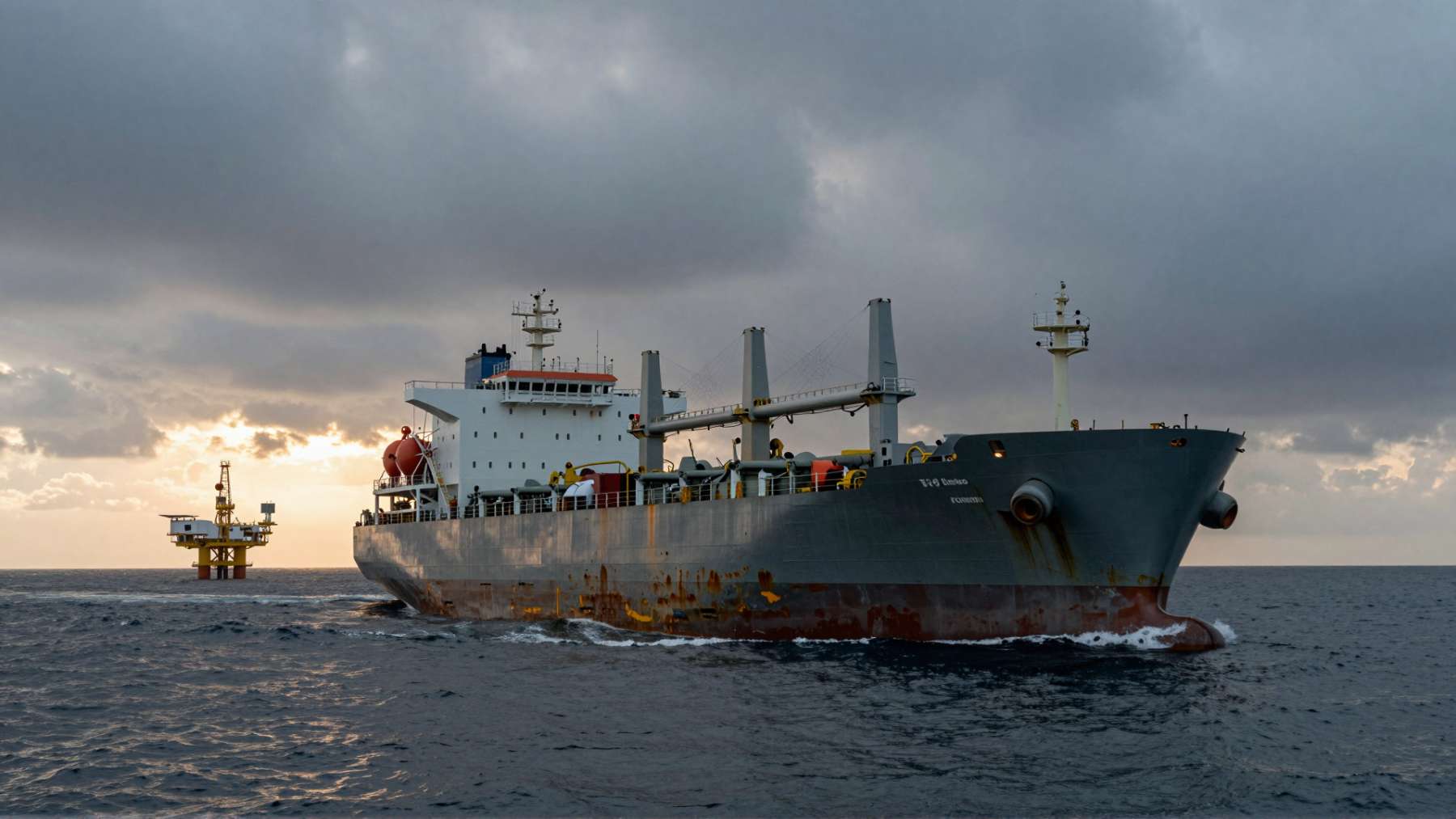
The International Atomic Energy Agency has scheduled the launch of a new maritime nuclear initiative for its ministerial conference in Washington, D.C. on August 26–27. Called Atomic Technologies Licensed for Applications at Sea — ATLAS — the initiative is designed to support the maritime industry’s exploration of small modular reactors to power civilian ships and provide offshore energy.
IAEA Announces August Launch of ATLAS at Washington Ministerial
The IAEA plans to make the launch official at its ministerial conference in Washington, D.C., scheduled for August 26–27. The event will serve as the formal introduction of ATLAS to member states, industry stakeholders, and international partners.
The ministerial conference setting carries real weight. These gatherings bring together senior government representatives from across the IAEA’s membership, giving any new initiative immediate visibility and political standing — a reception that a technical working group announcement simply would not get. Launching ATLAS there signals that the agency views maritime nuclear energy as a serious policy priority, not a peripheral research subject.
The problem is that existing regulatory and technical frameworks governing nuclear energy were built around land-based power plants, not ships or floating platforms.
The initiative targets two distinct application areas: powering civilian commercial ships and supplying energy to offshore platforms. Both represent emerging markets where compact nuclear technology could play a meaningful role over the coming decades.
Why the IAEA Is Creating a Dedicated Maritime Nuclear Framework
The maritime industry has been searching for low-carbon alternatives to conventional heavy fuel oil and diesel propulsion. Small modular reactors have emerged as one candidate, offering zero-emission propulsion without the range constraints that affect battery or hydrogen-based systems on long ocean voyages.
Offshore energy platforms present a separate but parallel opportunity. Remote platforms — whether for oil and gas operations, wind farm support, or other uses — typically rely on diesel generators or subsea cables for power. A compact reactor could provide a more reliable, lower-emission energy source in those environments.
The problem is that existing regulatory and technical frameworks governing nuclear energy were built around land-based power plants, not ships or floating platforms. That gap creates real uncertainty for developers, operators, and governments trying to assess whether maritime SMR projects could realistically move forward — and under what conditions.
The IAEA’s role is not to regulate directly; that responsibility stays with member states. Its function is to provide guidance, develop standards, and coordinate across national bodies. ATLAS is intended to give that work a dedicated structure rather than leaving it scattered across existing programs.
What ATLAS Is Expected to Deliver for the Maritime Sector
ATLAS aims to provide structured support for both governments and industry as they explore maritime SMR applications. Rather than functioning as a research program, the initiative is oriented toward practical deployment — helping move projects from concept toward actual operation at sea.
One key expected output is coordination among member states on licensing and safety standards. Without some degree of harmonization, a reactor design approved in one country could face an entirely separate review process in another, slowing development and raising costs considerably. Shared frameworks developed through ATLAS could reduce that duplication.
The initiative may also help compress timelines for commercial maritime nuclear projects. When developers can point to internationally recognized guidance and a coordinating body at the IAEA, engaging regulators, insurers, and port authorities becomes considerably more tractable — and all of them need to be part of any realistic deployment plan. The IAEA has stated that it hopes ATLAS will help advance actual maritime deployment of small modular reactors, not simply generate studies or reports.
Background: SMRs and the Push for Nuclear-Powered Shipping
Small modular reactors are compact, factory-built nuclear reactors. Unlike traditional large-scale nuclear plants, which are constructed on-site over many years, SMRs are designed to be manufactured in controlled factory environments and assembled at their destination — a flexibility that makes them attractive for ships or offshore platforms where a full-scale plant would be impractical.
The shipping industry’s interest in cleaner propulsion is driven partly by emissions pressure. The sector accounts for roughly 3% of global CO₂ emissions, and international bodies have been tightening decarbonization targets for years.
Nuclear propulsion itself is not new. Military submarines and surface vessels have used it for decades, and nuclear-powered icebreakers have operated in Arctic waters for years. Civilian commercial shipping, though, has seen almost no adoption, largely due to regulatory complexity, public perception, and cost. Several companies and countries are now developing SMR designs with maritime applications specifically in mind, and ATLAS would give those efforts a coordinating body and an internationally recognized framework to work within.
Key Takeaways
The IAEA will formally launch ATLAS — Atomic Technologies Licensed for Applications at Sea — at its ministerial conference in Washington, D.C. on August 26–27. The initiative is designed to support the use of small modular reactors in civilian shipping and offshore energy, two sectors where existing regulatory frameworks offer limited guidance. ATLAS aims to coordinate member states on licensing and safety standards, provide structured support for industry and governments, and help advance actual deployment of maritime nuclear technology. The launch reflects growing institutional recognition that the maritime sector’s decarbonization challenge may require nuclear solutions — and that a dedicated international framework is needed to make them viable.

Carlos is an engineer with strong expertise in technical and industrial topics. He previously worked at international companies such as Siemens and is multilingual.
