
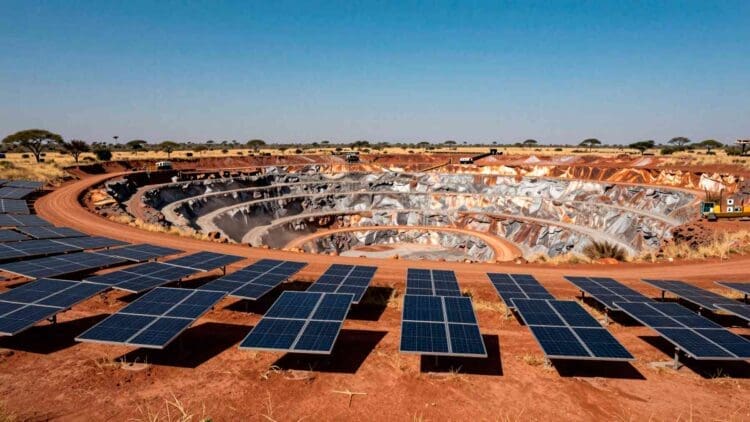

Deep in the Botswana savanna, about 20 kilometers from the small town of Letlhakane, the Karowe Diamond Mine has spent years pulling some of the world’s largest diamonds from the earth. Today, it runs on a mix of national grid power and diesel generators — an energy setup that made sense once, but looks increasingly fragile for an operation planning to dig deeper and keep running until 2040.
Now, Lucara Botswana is moving to change that. The company has launched a formal search for developers to build a 30 MW solar plant on site. The question is what that shift actually takes — and what it signals for the mines that may follow.
A mine built for the long haul
Karowe is not a typical mining operation. Its reputation rests on producing large, high-quality Type IIA diamonds — a category that includes some of the most valuable stones ever recovered anywhere in the world. That standing makes the ongoing underground expansion more than routine. Designed to extend Karowe’s operational life all the way to 2040, the project turns the site into a long-duration asset, one that demands reliable, cost-stable infrastructure at every level.




Right now, that infrastructure has a weak point. The mine draws from Botswana’s national grid but also depends on diesel-powered generation — expensive, logistically demanding, and vulnerable to price swings no operator can control. For a mine planning to dig deeper and run for another decade and a half, that exposure is a genuine financial risk, not just an environmental one.
What 30 megawatts of solar actually means for a diamond operation
The proposed solar plant would cover 20 to 30 hectares already within the mine site, putting it firmly in utility-scale territory — large enough to meaningfully shift where Karowe’s power actually comes from.
Lucara Botswana has structured the project in two phases. The first would deliver a 20 MWp grid-connected solar PV system. The second could add another 10 MWp of solar capacity alongside a 20 MW Battery Energy Storage System (BESS), bringing total solar capacity to 30 MWp. Commercial operations are targeted to begin in 2027 or 2028, timed closely with the deepening underground program.
The BESS component is what elevates this beyond a simple grid supplement. A hybrid configuration — solar plus storage plus grid backup — means the mine is less exposed to outages or supply disruptions, which grow more costly as underground operations expand.
The business case behind the solar push
The financial logic is straightforward. Diesel costs fluctuate. Grid electricity tariffs in southern Africa have risen steadily and may keep climbing. A solar plant backed by a long-term Power Purchase Agreement locks in more predictable energy costs, which matters considerably when modeling finances across a multi-decade mine life.
Energy security is the second driver. Underground mining is more sensitive to power disruptions than surface operations — equipment, ventilation, and worker safety systems all depend on consistent supply. Solar and storage reduce the variables that could interrupt production. On top of that, Lucara Botswana has stated the project supports its decarbonization commitments, and reducing diesel consumption aligns the operation with sustainability benchmarks that investors, insurers, and offtake partners increasingly require. Structuring the deal as a PPA shifts capital risk onto a developer whose core business is energy project development.
Who Lucara is looking for — and what comes next
The Expression of Interest targets qualified Independent Power Producers with demonstrated experience in utility-scale solar projects above 20 MW. That threshold is deliberate — it filters for developers who have already navigated the complexity of large installations, not those with only smaller commercial systems on their résumé.
Applicants must submit audited financials covering the past three years, tax clearance certificates, project track records, and details on their funding approach. Commitments to local content and community development are also required, reflecting Botswana’s broader expectations around economic participation in extractive industries.
The clarification deadline is July 3, 2026. Full EOI submissions are due at the Karowe Mine office in Letlhakane by July 10, 2026, with shortlisted candidates advancing to a formal Request for Proposal stage where PPA terms and technical specifications will be finalized.
How that RFP process unfolds — and which developers make the shortlist — will be worth watching closely. Karowe won’t be the last mine in the region facing this same energy calculation. The decisions made here could help define what the next round of mining energy transitions looks like across southern Africa.

Carlos is an engineer with strong expertise in technical and industrial topics. He previously worked at international companies such as Siemens and speaks Spanish, German, English, and Italian.