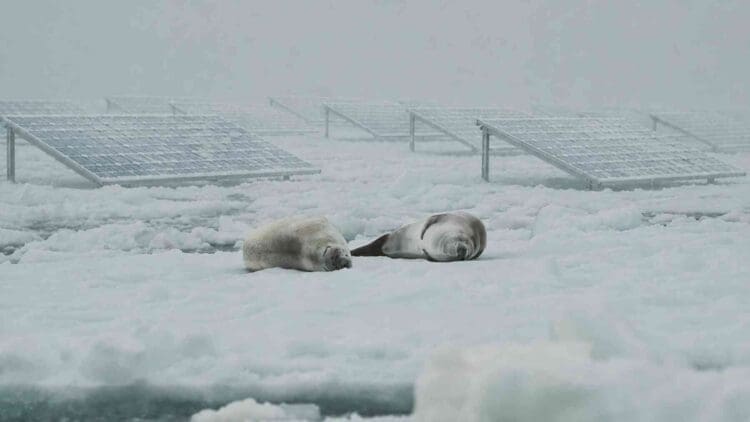

The most remote corners of the world are shifting toward solar energy, attracting local wildlife.
Global climate change is worsening as temperatures continue to rise.
For researchers based at the frozen poles, expanding green infrastructure is now more important than ever.



Not only does it lower carbon footprints, but it also creates unique encounters with undisturbed wilderness.
How do Antarctic animals truly react when modern solar technology appears in their frozen habitat?
How the green energy transition has become vital at the poles
The world’s main climate regulators are the polar regions.
In these regions, scientists can unlock crucial data about Earth’s past and future.
This is done by mapping deep ice sheets, tracking ocean currents, and measuring sea-level rise.
Changes in these remote zones directly impact weather patterns, coastal stability, and climate models for lower latitudes.
Polar research has historically relied on fossil fuels for power and heating.
These sub-zero environments have therefore burned substantial amounts of diesel.
It creates a jarring paradox.
Global warming is being studied while greenhouse gases are emitted to maintain operations.
The British Antarctic Survey has an annual carbon footprint of 50,018 tons of carbon dioxide equivalent.
Local combustion poses direct threats to the delicate polar ecosystem.
Soot from diesel generators settles onto nearby ice sheets, accelerating localized warming.
To preserve pristine polar data, transitioning to renewable capacity is essential.
The solar panel solution to a looming threat
By continuing the reliance on fossil fuels at the poles, a dangerous feedback loop is created.
When localized warming accelerates, glaciers and pack ice melt quickly.
As white ice disappears, the dark ocean water is exposed beneath.
The ocean absorbs solar heat instead of reflecting it.
Consequently, regional temperatures rise even faster.
Earlier this year, NOAA warned that atmospheric changes are becoming more volatile.
This destructive cycle threatens the survival of many vulnerable ecosystems.
Solar energy is the key to breaking it.
During polar summers, daylight continues for 24 hours.
Furthermore, cold, dry polar air combined with reflective snow enables high solar efficiency.
Solar power from abundant summer daylight will drastically reduce the research stations’ generator use.
That is why the British Antarctic Survey is actively installing solar panels to lower its carbon footprint.
However, Antarctic Glaciers indicate that wildlife tends to interact with these stations.
Antarctica’s southernmost mammal meets modern tech
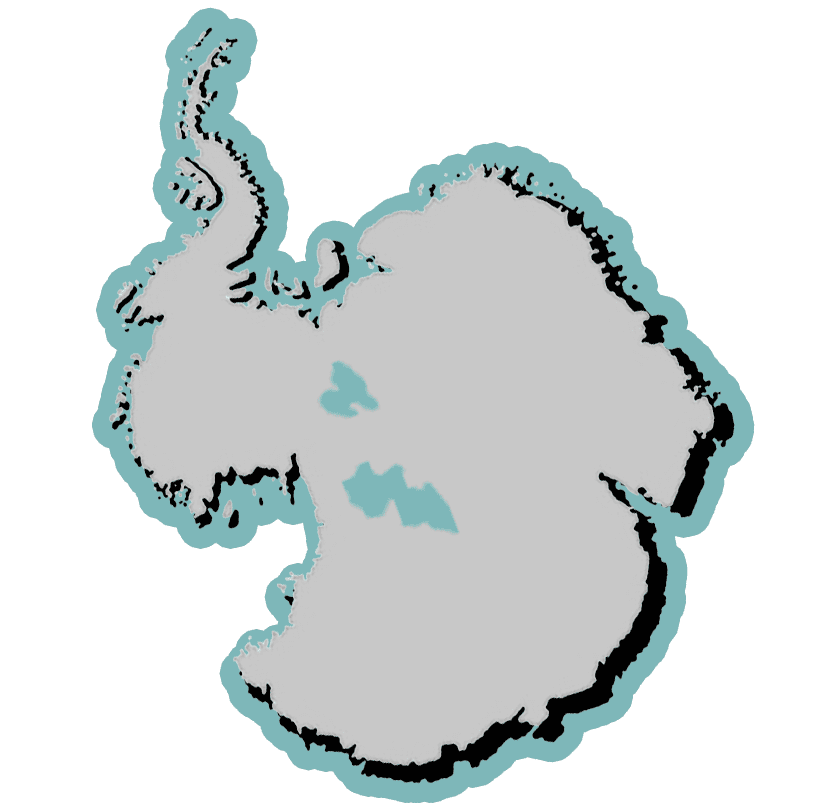
The Antarctic region is home to several species uniquely adapted to the harsh polar land.
This includes the world’s southernmost breeding mammals, the Weddell seals.
These animals spend the majority of their existence beneath the solid pack ice.
They breathe by chewing air holes through thick ice sheets.
Yet, they must regularly haul out of the freezing water to rest, digest, and molt.
At the British Antarctic Survey’s Rothera station, the boundary between nature and human infrastructure becomes narrow.
The impact of solar panels on Weddell seals
By deploying solar energy at Rothera Research Station, the researchers can actively lower their carbon footprint.
Furthermore, the green shift proves that modern solar technology can coexist with pristine wilderness.
The vulnerable environment can be preserved while local wildlife can continue their routines completely undisturbed.
Our planet’s vital climate regulators can be protected with innovative and responsibly managed clean solutions. This successful integration serves as a hopeful blueprint for the future.
Anke Maree is a writer with a clear and engaging editorial style. Her work focuses on making complex topics accessible, informative, and relevant for readers across different areas of interest.