
Falling raindrops can now generate electricity through a tiny tube, and scientists say rooftops could be next
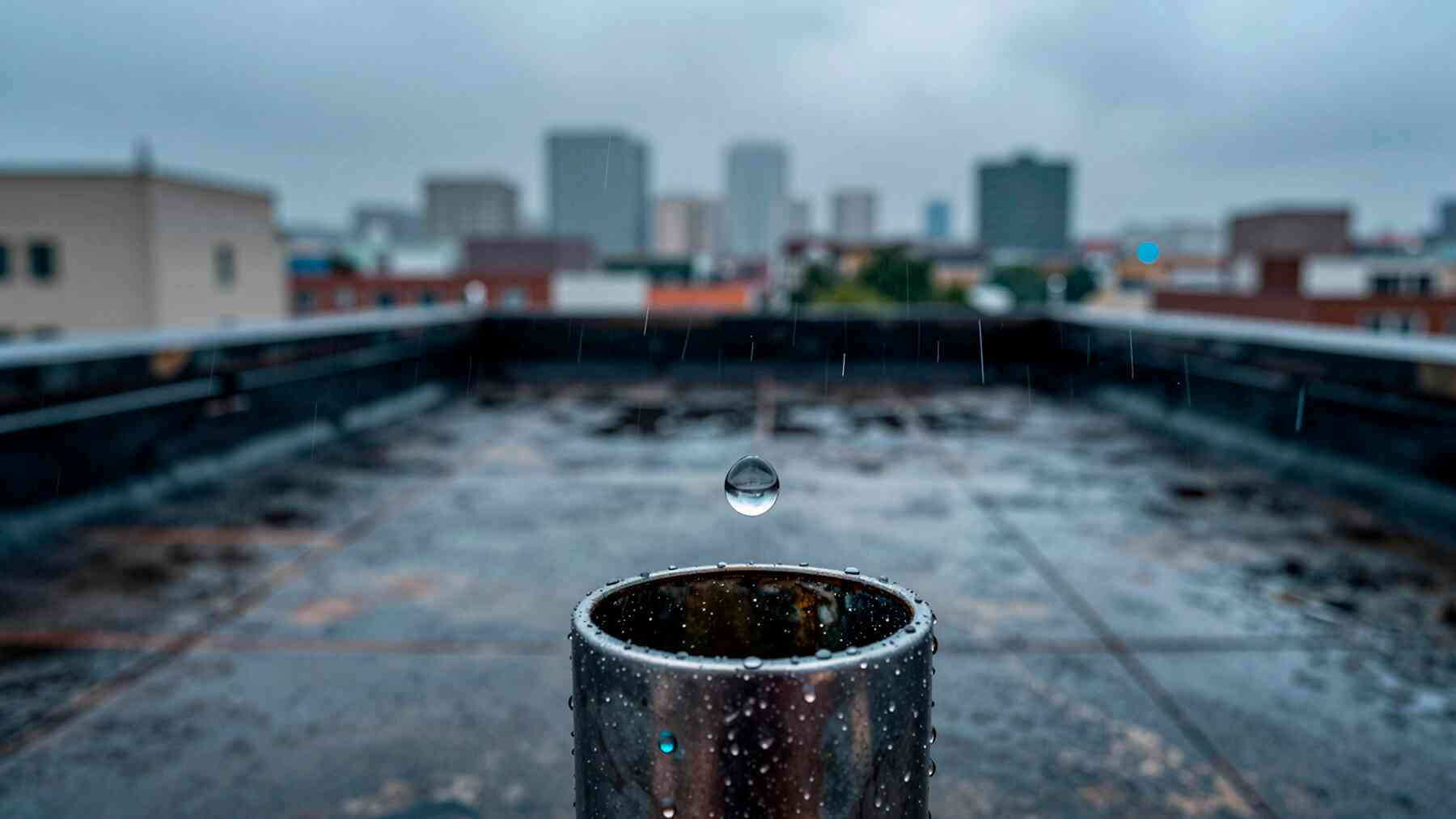 AI made
Every time rain hits a rooftop and runs off, it carries something most people never think about: a faint electrical charge, born the moment water touches a surface. For years, researchers have known that moving water can separate electrical charges — but capturing that energy at a useful scale has remained stubbornly out of reach.
Now, a small team of scientists says it has found a way to change that, using nothing more than falling droplets and a narrow tube.
The hidden electricity in everyday water
When water moves over certain surfaces, electrical charges shift — positive charges accumulating on one side, negative on the other. It’s the same basic physics as rubbing a balloon against your skin to create static electricity. Scientists have understood this charge-separation effect for a long time, but turning it into a reliable power source has proven far more difficult than the underlying principle suggests.
“Water that falls through a vertical tube generates a substantial amount of electricity by using a specific pattern of water flow: plug flow,” Soh said.
Conventional hydroelectricity sidesteps the problem by using sheer volume. Rivers and dams move enormous amounts of water to spin turbines. That works well — but only where geography and water supply cooperate. You can’t install it on a city rooftop.
Smaller-scale attempts have focused on micro- and nanoscale channels, where water flowing over a conductive surface separates charges continuously. The catch: water doesn’t naturally pass through channels that tiny. When researchers pumped it through, the system consumed more energy than it produced, the efficiency ceiling stayed low, and no one had found a way past it.
A new kind of flow changes everything
The breakthrough came from rethinking the flow itself. Instead of pushing a continuous stream through a narrow channel, the research team — led by Siowling Soh at the National University of Singapore — created what is known as plug flow. When rain-sized droplets collide head-on at the entrance of a vertical tube, they naturally form short columns of water separated by pockets of air, and that alternating pattern behaves very differently from a solid stream.
The physical setup is deliberately simple: a metallic needle releases droplets into the top of a polymer tube — 12 inches tall and just 2 millimeters wide. Wires at the top of the tube and in a collection cup below harvest the electrical charges as water moves down the inside wall.
The performance gap is considerable. Plug flow generated five orders of magnitude more electricity than a conventional continuous-stream approach. The system also converted more than 10% of the falling water’s kinetic energy into usable electricity — well ahead of previous charge-separation methods.
From lab bench to 12 glowing LEDs
One tube producing electricity is a proof of concept. The team needed to show the effect could scale, so they ran water through two tubes simultaneously and sequentially. In both cases the energy output doubled — a clean, linear relationship suggesting that adding more tubes adds more power in a predictable way.
The four-tube demonstration made the results tangible. Channeling water through four tubes at once, the setup powered 12 LEDs continuously for 20 seconds. Modest by household standards, but it confirms the physics translates into real, sustained electrical output rather than a brief spike on a sensor.
There’s also room to grow. The droplet speeds used in the lab were slower than actual rainfall. Soh notes this suggests the system could harvest even more electricity from real raindrops, which hit faster and carry more energy. “Water that falls through a vertical tube generates a substantial amount of electricity by using a specific pattern of water flow: plug flow,” Soh said. “This plug flow pattern could allow rain energy to be harvested for generating clean and renewable electricity.”
Why rooftops could become power generators
Hydroelectric plants require dams, turbines, transmission lines, and geography that most cities simply don’t have. This system needs a tube, some wire, and rain. That gap in complexity is part of what makes the concept appealing for urban environments, where rooftops and gutters already collect and channel rainwater as a matter of routine.
No pumps are required. Rain falls on its own, and gravity does the rest — eliminating the external energy input that defeated earlier micro-channel designs entirely.
The researchers are candid about where the work stands, though. The system is early-stage, and scaling it from a four-tube laboratory demonstration to meaningful power generation remains an open challenge. The path from 12 LEDs to powering a building is long.
Still, the next steps are worth watching. As the team explores larger arrays of tubes and tests the setup under real rainfall conditions, the question shifts from whether the physics works — it does — to how far practical engineering can take it.

Carlos is an engineer with strong expertise in technical and industrial topics. He previously worked at international companies such as Siemens and is multilingual.
