
MATRIX outlines field-integrated approach to reduce execution gaps in nuclear construction projects
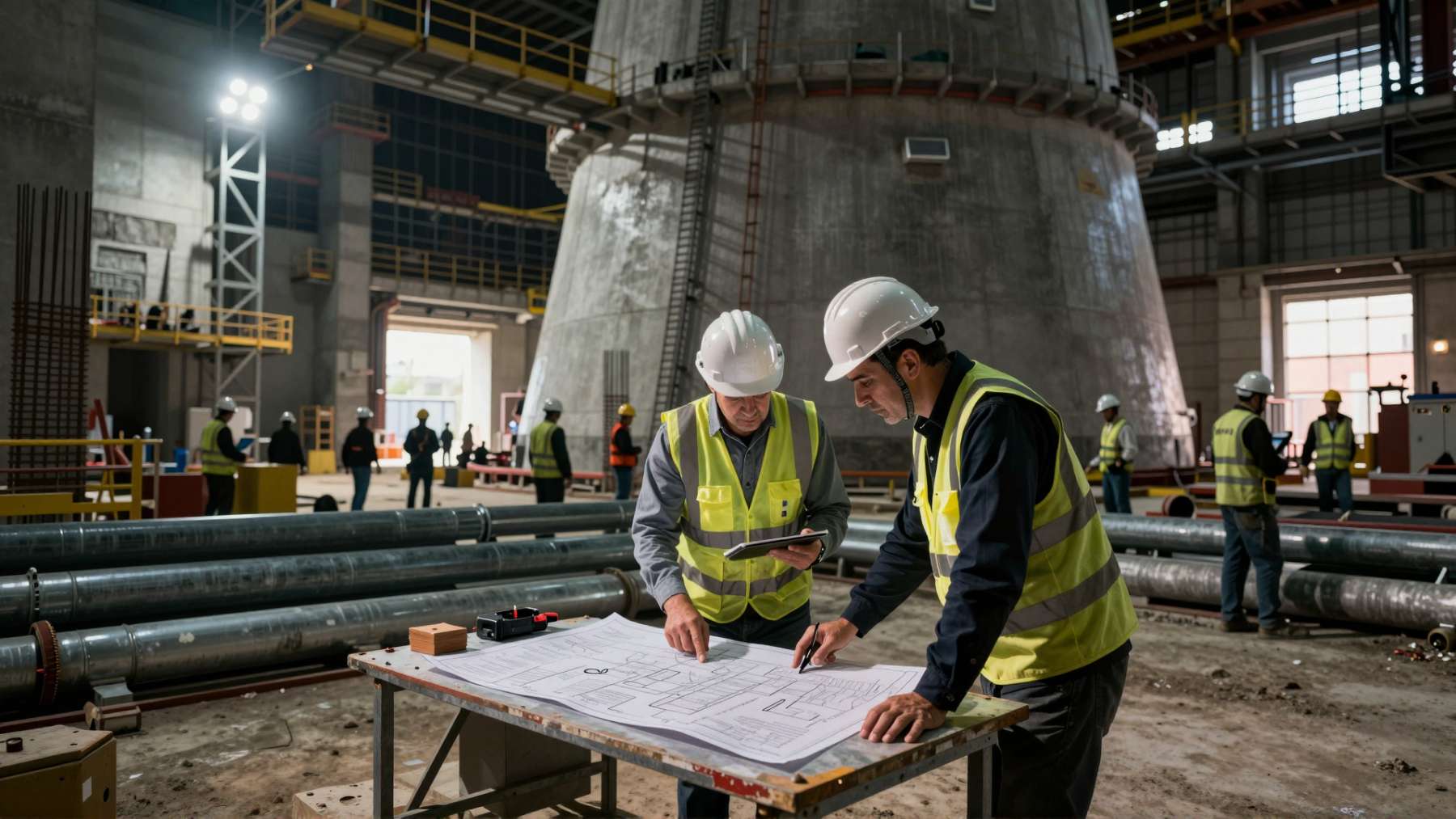
In June 2026, nuclear project management firm MATRIX published guidance on what it calls the “execution gap” — the persistent disconnect between how nuclear construction projects are planned and how they actually unfold in the field. The firm’s central claim: embedding field-experienced professionals directly into client and vendor teams can improve coordination, safety, scheduling, and cost outcomes in an industry where that gap has long been a recurring problem.
MATRIX publishes methodology for nuclear project execution
The June 2026 publication from MATRIX describes a structured approach to a problem the firm argues is endemic to nuclear construction. The document, titled From Plan to Reality: Closing the Execution Gap in Nuclear Projects, outlines how the firm functions as an embedded project management office — working alongside client and vendor teams rather than operating as a conventional outside consultant.
The intended audience spans nuclear project owners, vendors, and construction stakeholders who recognize the pattern MATRIX describes. The firm positions its model as a direct response to the recurring failure mode in which well-constructed plans deteriorate once field execution begins.
Monthly reporting cycles, standard practice on large projects, mean that by the time a problem surfaces in a status report, it has often already compounded.
Why execution gaps form in nuclear projects
The source material opens with a scenario familiar to many in the industry. A project launches with a defined schedule, cost projections within range, and engineering milestones aligned with procurement and construction plans. On paper, the conditions for success are in place. Then construction starts.
Field conditions diverge from the assumptions made during planning. Coordination between client and vendor stakeholders breaks down, creating delays in critical work sequences. Information from the field moves slowly — or incompletely — back to the teams responsible for making decisions.
The result is a structural lag. Monthly reporting cycles, standard practice on large projects, mean that by the time a problem surfaces in a status report, it has often already compounded. Real-time correction becomes harder as the gap between actual conditions and documented conditions widens, productivity drops, and both schedule and cost come under pressure.
MATRIX frames this not as a failure of individual projects or teams, but as a systemic pattern across the nuclear industry.
How MATRIX integrates into project teams to address the gap
The firm’s response centers on direct integration. Rather than providing advisory services from a distance, MATRIX deploys field-experienced professionals who embed within client and vendor teams early in the project lifecycle — establishing alignment, transparency, and shared accountability from the outset.
Personnel conduct routine safety observations in the field, engaging directly with craft workers and supervisors and maintaining a consistent physical presence at the work site. When issues arise, corrective action reports are issued to surface and resolve problems before they escalate into schedule or safety events.
Critically, MATRIX connects field-level activity to project controls systems — eliminating the lag between what is happening on the ground and what project leadership is seeing. Rather than waiting for a monthly cycle to surface a developing problem, project teams receive current, accurate visibility into performance. The firm’s service offerings are deliberately broad: contingent staffing, direct hiring, consulting, project management, project controls, planning, scheduling, managed tasks, field oversight, cost support, and outage-focused resources.
Context: execution challenges are widespread across the nuclear industry
MATRIX frames the execution gap as an industry-wide phenomenon rather than a symptom of poor planning by any particular team. That framing matters. It shifts the conversation from blame toward structural diagnosis — and positions embedded project management as a systemic solution rather than a corrective measure applied after something has already gone wrong.
Nuclear projects carry requirements that amplify the consequences of execution failures. Safety compliance, regulatory oversight, and cost discipline operate at a level of rigor that few other construction environments match. A coordination failure that might be absorbed quietly in a commercial construction context can trigger regulatory review, schedule cascades, or significant cost exposure in a nuclear environment.
Cost overruns and schedule slippage in nuclear construction have been documented globally over recent decades, affecting new-build projects and major maintenance or upgrade programs alike. The causes vary and are often project-specific, but coordination failures and the disconnect between planning assumptions and field reality appear consistently in post-project analyses. Firms offering embedded or integrated project management services represent a growing segment of the broader nuclear support market — reflecting wider industry recognition that conventional oversight structures may not be sufficient for the pace and complexity nuclear projects demand.
Key takeaways
MATRIX has published a methodology identifying the execution gap as the central challenge in nuclear construction project delivery. The firm argues the gap forms when field conditions diverge from planning assumptions, coordination between stakeholders breaks down, and reporting cycles prevent real-time correction.
Its proposed solution is direct integration: field-experienced professionals embedded within client and vendor teams, conducting safety observations, engaging with site personnel, issuing corrective action reports, and feeding real-time data into project controls. That model is offered across a broad range of services tailored to nuclear environments.
The publication targets owners, vendors, and construction stakeholders across the nuclear industry — framing the execution gap not as an exception, but as a recurring industry condition that requires a structural response.

Carlos is an engineer with strong expertise in technical and industrial topics. He previously worked at international companies such as Siemens and is multilingual.
