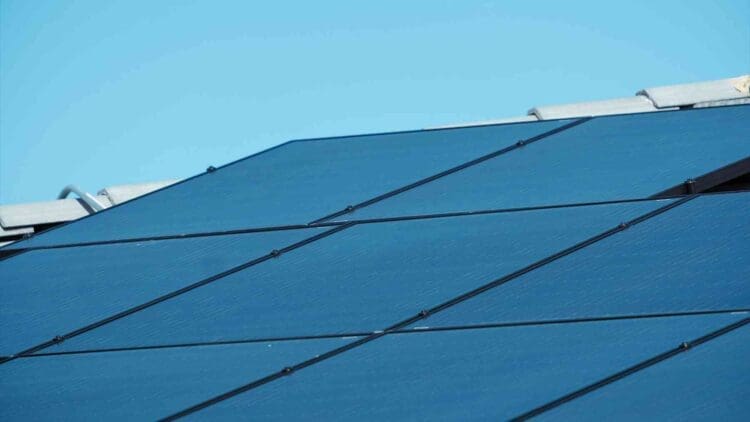

With every year that goes by, the solar energy industry grows rapidly, which means companies within the sector have the opportunity to generate more revenue. In the contemporary landscape, countries are actively going through the green revolution, which means they are aiming to lessen the use of fossil fuels. On that note, renewable energy sources are prospering, and there is an abundance of new companies that are entering the scene. Among those is PG&E, which has surpassed one million customer solar interconnections.
PG&E makes massive strides in advancing the solar energy sector
PG&E is an abbreviation for Pacific Gas and Electric Company. It is a well-respected entity because it is one of the largest combined natural gas and electric utilities in the United States. It is headquartered in Oakland, California, and serves an estimated 16 million people across a 70,000-square-mile service area in Northern and Central California.
Building on its success and momentum, Pacific Gas and Electric Company (PG&E) has reached a historic milestone, surpassing one million customer solar interconnections across its service territory in Northern and Central California. The achievement is one that makes PG&E the entity with the highest number of customer-connected solar systems in the United States.



The milestone is recognized as a huge success not just in the solar industry but also in the overall renewable energy landscape. California is also solidifying its position as a national leader in clean energy adoption. The state is the outright leader in solar energy production within the United States.
Understanding the lengthy journey it took for California to surpass the one million mark
A significant reason behind the state reaching the milestone is that solar technology is becoming increasingly combined with battery storage and smart grid solutions. As such, the landmark demonstrates a brand new chapter in the transformation of California’s electricity network.
PG&E publicly revealed that more than one million customer-owned solar systems are now connected to its electric grid. This reflects one of the largest concentrations of distributed solar generation in the world. The company also unveiled that solar adoption in its territory has transformed greatly over the past three decades.
It started as a niche technology in the 1990s before expanding during the 2010s. The speed at which the company is growing has increased. For instance, from 2020 and 2025, more than 500,000 new solar interconnections were added across PG&E’s network. In that time period, the utility recorded over 70,000 new solar installations per year during the last two years.
Understanding the effects of combined solar generation and battery storage
Among the people and entities that have contributed to the expansion of customer-generated renewable energy are residential homeowners, businesses, schools, agricultural operations, and community organizations. The achievement shows how rooftop and on-site solar systems have become an integral element of California’s energy transition.
Jason Glickman, executive vice President, strategy and growth, PG&E, stated the following:
“PG&E supports solar at every scale and has enabled more solar adoption than any utility in the country. Reaching one million interconnections is ultimately a story about our customers—but it’s also a story about what comes next.”
Analyzing how PG&E could spearhead future solar energy advancement
PG&E has amplified investments in grid automation, forecasting technologies, and streamlined interconnection processes with the aim of managing the ever-increasing number of distributed energy resources associated with its system. The entity has also encouraged customers to consider solar-plus-storage solutions.
Battery systems grant homeowners and businesses the ability to store excess solar generation during the day and use it later during evening peak demand periods or power outages. As such, industry experts believe battery storage is an essential part of solar energy progression.
Among the standout developments coming out of California’s clean energy transition is the rise of virtual power plants (VPPs). These programs introduce thousands of customer-owned solar and battery systems, enabling them to operate in unison as a flexible energy resource.