
They drilled miles into solid rock expecting heat underground until they realized it could work like a hidden radiator capable of warming an entire country
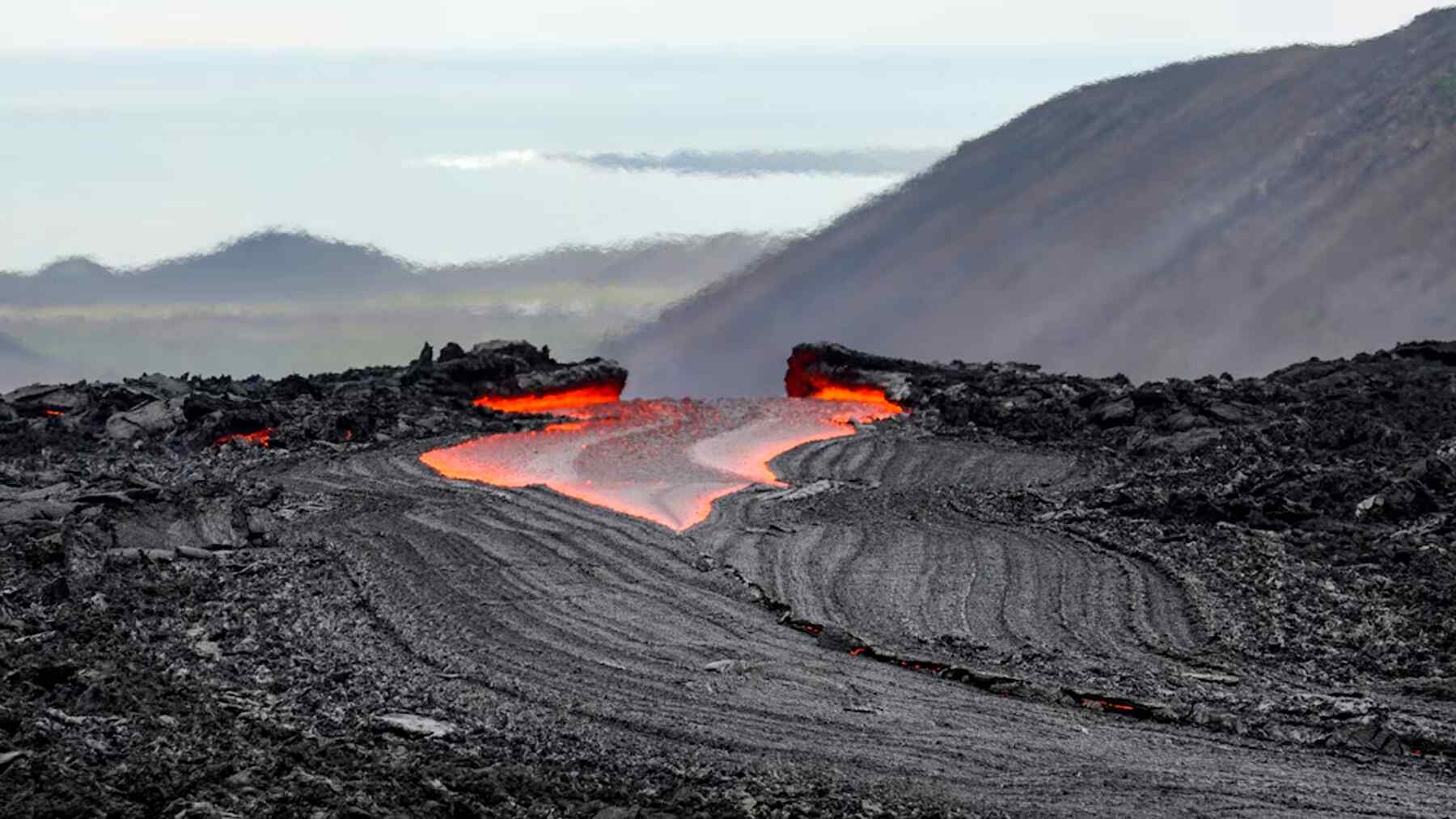 Credits: Energies Media Internal edition
Drilling for power from underground heat could now be replaced by employing an innovative radiator approach.
Earth’s interior is pulsing with energy, but it has always been limited to specific regions to exploit.
Furthermore, traditional harvesting methods have very specific requirements, which are time-consuming and intensively use an already scarce resource.
Reimagining the Earth’s valuable underground energy as a closed-loop “radiator” finally unlocks the dream of infinite baseload electricity.
Will this new subsurface technique to tap the planet’s hot, unlimited power change the way global electricity is generated?
How the search for a constant current lies underneath
Decoupling from fossil fuels is easier said than done.
Worldwide, it is common knowledge that renewable energy sources are integral to the global energy transition.
Yet, their limitations have placed the world between a rock and a hard place.
Traditional sources, such as solar and wind, can provide utility-scale power, but require additional infrastructure to overcome intermittency.
These additions present their own ecological and economic costs, making these solutions less than ideal.
To achieve true carbon-free energy resilience, some experts turned to literal rocks and hard places.
Beneath the feet of mankind lies the answer to global power stability: Earth’s infinite thermal energy.
Geothermal sources offer more reliable, emission-free electricity than traditional power plants.
As high-output demands intensify, tapping into the planet seems like the ultimate solution. Yet, not many nations enjoy this abundance of potential.
Confining fortitude to volcanic presence
For years, geothermal energy could diversify energy portfolios only if it was geographically possible.
Traditionally, three requirements have to be met to ensure the success of such a project.
Heat has to be intense enough, subsurface water has to be present, and the rock has to be permeable. These conditions rarely coexist outside volcanic regions or tectonic plate regions, limiting who can exploit geothermal resources naturally.
Extraction also presents significant problems, such as depleting underground reservoirs, which impact local communities.
Some experts have explored high-pressure hydraulic fracturing to expand geothermal energy. But these systems carry the risk of inducing minor tremors.
These obstacles have made an unlimited power source finite and risky.
Fortunately, Germany’s Eavor project involves a system that does not require a volcano.
The European Union backed this vision for its potential for true energy independence.
The hidden underground radiator that powers itself
With increasing concerns about a global freshwater “bankruptcy,” the Eavor-Loop system eliminates the need for subsurface water.
Engineers have manufactured a giant, closed-loop “radiator” 14,700 feet underground, which connects a series of horizontal wells.
Heat can be harvested from the rock directly using a sealed pipe circuit and conduction.
The project is located in Geretsried and recently achieved a historic milestone by producing continuous power. As of February 2, 2026, clean electricity was successfully sent to the local grid.
A natural heat conduction system to bring energy to the surface
The Eavor-Loop utilizes a harmless fluid that stays in the system, ensuring local aquifers remain unharmed.
It uses a thermosiphon approach. Underground temperatures exceeding 300°F heat the fluid, making it less dense and able to rise to the surface naturally.
Gravity pulls the surface’s cooled fluid back down, creating a self-circulating loop.
No external power is required to maintain the system, which increases net energy output.
The technology is scalable and breaks the geographical limitations on geothermal power.
The project’s recent success in Geretsried proves that this technique has real-world application potential.
Reimagining the Earth’s valuable underground energy as a closed-loop “radiator” finally unlocks the dream of infinite baseload electricity.
The system not only ensures a carbon-free future for the global grid but also keeps the environmental footprint minimal.
The future of sustainability is thus cemented in smart technological approaches that unlock the planet’s natural systems without disrupting them.
Anke Maree is a writer with a clear and engaging editorial style. Her work focuses on making complex topics accessible, informative, and relevant for readers across different areas of interest.
