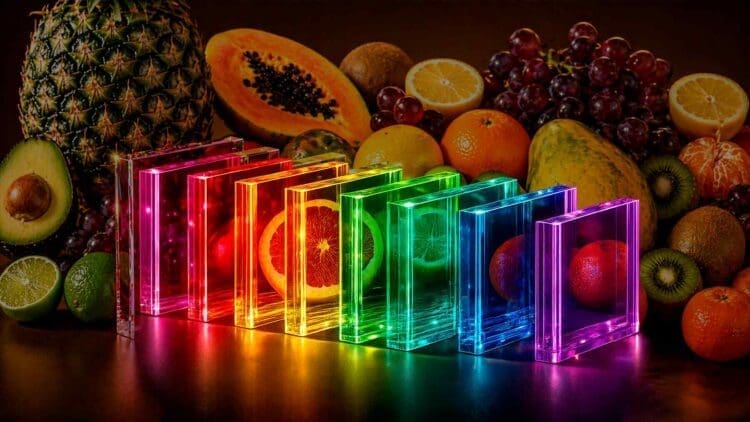

One man’s waste became the foundation of another’s unique solar panel design that feeds on stray light.
Solar power is the global number one alternative energy source, but access to efficient solar remains limited.
To ensure that even the most condensed regions worldwide can benefit from clean power, innovative approaches are being explored.



Perhaps an engineering student’s bio-inspired solution could be the answer to making solar energy more easily accessible?
How solar energy has nearly reached its physical limit
Solar transformed from a niche technology into one of the most crucial sources of clean power in the world.
Its role in the global transition to renewables has been pivotal, with capacity extending from rooftops to vast land arrays.
Yet, this significant, rapid expansion soon hit a barrier at the very regions where energy consumption is highest: cities.
The design of traditional solar panels has fixed installation specifications, which have limited accessibility in urban regions.
While it is possible to relay power from existing solar facilities to city centers, it is costly and logistically challenging.
Furthermore, using these conventional panels on tall skyscrapers is extremely inefficient.
They have been designed to capture sunlight directly at specific angles, which is blocked by the buildings’ shadow-casting.
Add the possibility of overcast weather, and then the drop in power efficiency becomes inevitable. For data-driven urban regions, this becomes problematic.
High-capacity clean solar power for a data-driven future
Power consumption in cities is through the roof due to real-time data processing, high-speed connectivity, and IoT networks.
This has made renewable power a critical infrastructure for data-driven environments.
To ensure continued operations and prevent blackouts, the physical limitations of traditional solar must be overcome.
An innovative solution introduced by the industry is building-integrated photovoltaics (BIPVs). However, there is a fundamental flaw presented by standard BIPVs.
They have been designed to harness visible light while protecting the building’s interior.
The protection is achieved by treating glass covers with specialized films to reflect UV radiation away from the structure.
As it prevents the overheating of interiors, it also results in significant “energy leakage.”
Fortunately, an engineering student designed an alternative BIPV that uses this wasted energy.
An “Aurora-like” system in the urban canyon
Various materials have been tried and tested to get BIPVs to absorb sunlight and generate record energy. But what makes a student at Mapúa University’s system stand out is that it is bio-inspired and upcycled.
Carvey Ehren Maigue’s system, the “AuREUS,” was inspired by the physics of the Aurora Borealis.
This light spectacle absorbs high-energy particles in the upper atmosphere and re-emits them as visible light.
Similarly, AuREUS absorbs high-energy UV rays that penetrate clouds and reflect off city streets. These rays are “down-shifted” into visible light, which is funneled to the panel edges and converted into electricity.
The key to this process stems from upcycling fruit and vegetable waste.
A bio-based material that creates a symbiotic solution
AuREUS’s absorption is attributed to luminescent particles extracted from oranges, bananas, and pineapples. These particles are used to create a resin that is applied to windows.
This approach also addresses an agricultural loss crisis. Climate change has increased the frequency of natural disasters.
The crops damaged by these disasters can then be used to create the material, creating a circular economy.
This innovation earned the first-ever James Dyson Sustainability Award, establishing solar’s future in capturing invisible UV rays.
It not only makes the integration of solar into urban regions easier but also more energy- and waste-smart.
Creating a symbiotic relationship between farms’ agricultural waste and data-driven cities bridges the gap. This way, the world can take a step forward into a more resilient and regenerative future.
Anke Maree is a writer with a clear and engaging editorial style. Her work focuses on making complex topics accessible, informative, and relevant for readers across different areas of interest.