
Swiss scientists mixed fresh and salt water in the lab until tiny slippery bubbles began unlocking a new way to generate blue energy
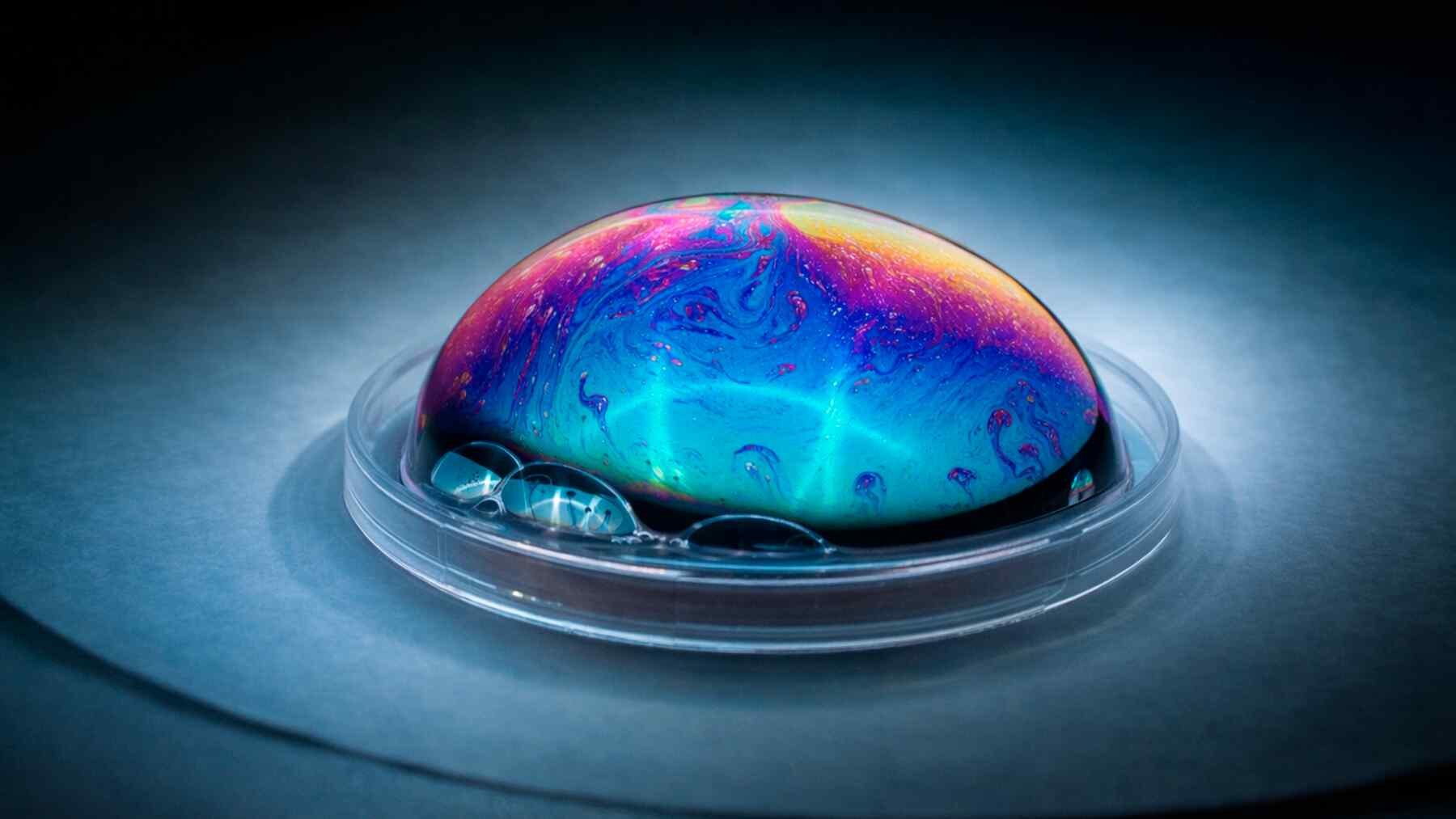 Credits: Energies Media Internal edition
Thanks to tiny bubbles, two extremes can now collide to create a burst of efficient blue energy.
Global power demands are exceeding what the grid can provide, necessitating alternative power solutions to address growing concerns.
Conventional renewable energy sources have been dominating the market, but another source could finally tip the scales.
Ions easily “slide” over the water film with nearly zero resistance, creating a rapid and constant “burst” of ion movement.
Will the future of sustainability finally be powered by a constant, renewable source locked in the microscopic world?
How global demands are turning sustainability into a pipe dream
Climate change has led the world to adopt a clear goal, which is to power the world with carbon-free energy.
This led to ambitious targets and rapidly approaching deadlines to achieve this shared dream.
Now, nations, along with the green energy transition, are forced to face a sobering reality. Global power consumption is growing much faster than the world’s ability to increase renewable capacity.
Technological advancements of the digital age are pushing energy usage levels into the red, resulting in significant constraints.
Generative AI and global data processing already require high-voltage electricity. Now, the push for electrification is also intensifying grid strains.
This leaves the energy sector between a rock and a hard place. The more it transitions away from fossil fuels, the more the existing renewable portfolio struggles to keep up.
A sustainable future will remain a “pipe dream” if the world cannot find another consistent power source.
Conventional renewable energy can barely keep “head above water”
The digital age has the power to make or break the world’s critical infrastructure and operations.
Currently, it is much closer to breaking point. Alternative power solutions such as solar and wind have been driving the green transition, but they now lack consistency.
These sources are weather-dependent, meaning performance can drop at any given moment. For power-hungry AI processing and data centers, a shortage of stable and efficient electricity is troublesome.
This intermittency creates a “baseload gap.” To bridge it, nations must turn to giant, expensive, and resource-heavy battery systems or maintain carbon-heavy backup plants.
The grid struggles to keep its head above water, and nations must juggle sustainability and energy security.
This highlights the need for other options to generate electricity while maintaining low carbon footprints.
Swiss researchers may have found the answer by turning to bubbles and blue energy.
Tiny slippery bubbles bursting with blue energy
These days, renewable energy comes in all shapes and sizes, but it rarely “bubbles up.”
Researchers at the École Polytechnique Fédérale de Lausanne (EPFL) in Switzerland invested time in the historically inefficient “blue energy.” When a river’s fresh water meets the saltwater of the ocean, it creates a salinity gradient that produces power.
Unfortunately, friction on traditional membranes has always suppressed the flow of electricity.
Now, the EPFL researchers have found a way to overcome this friction. It is detailed in the study “Scientists create slippery nanopores that supercharge blue energy,” published by the Ecole Polytechnique Fédérale de Lausanne via Science Daily.
Lubricating membranes with small, bubble-like layers
The Swiss scientists created a new membrane type inspired by a biological cell’s lipid bilayers.
Microscopic pores are coated with “bubbly” lipid molecules, which lubricate the membrane by attracting water.
Ions easily “slide” over the water film with nearly zero resistance, creating a rapid and constant “burst” of ion movement.
These “slippery” nanopores could transform blue energy into a strategic asset for the global grid.
The Swiss system achieves 1.4 watts per square foot, which is nearly triple the output of current polymer membranes.
The ability to create larger arrays with 1,000 nanopores means that blue energy is ready for utility-scale research. Soon, the world could be powered by the ocean’s constant chemistry to ensure energy resilience and true sustainability.
Anke Maree is a writer with a clear and engaging editorial style. Her work focuses on making complex topics accessible, informative, and relevant for readers across different areas of interest.
