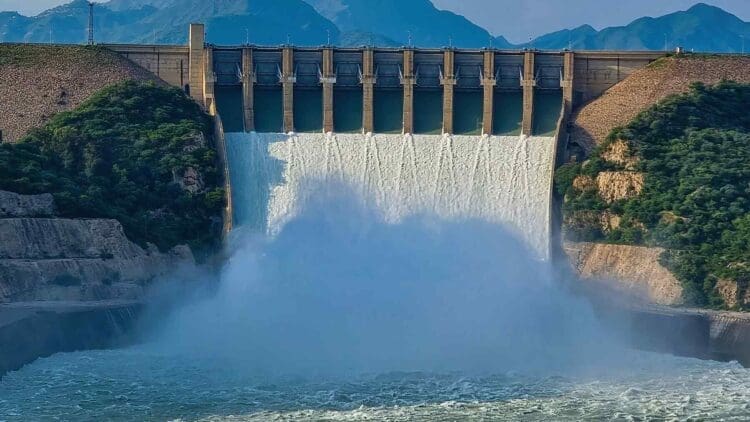

One spark unintentionally changed everything at a hydroelectric plant, with repercussions felt locally and internationally.
What began as routine maintenance at the facility eventually made way for an unprecedented and chaotic accident.
An invisible hazard had quietly accumulated, turning a typical workday into both a catastrophe and a global safety warning.

If there are never failures, experts may never learn, but is it worth waiting until fatalities occur before finding solutions?
How hydroelectric plants are gaining traction
Sustainability has become a central theme in daily life.
Globally, communities, governments, and industry are pushing renewable energy adoption to ensure that goals are met by the upcoming deadlines.
Hydroelectric power has become reputable as a reliable “baseload” source. For many nations, it is now integral to provide a steady flow of clean electricity to keep grids stable.
Investment is growing, with many new facilities under construction and upgrades taking place worldwide.
However, this sudden splurge in growth is adding a silent layer of complexity. The increasing number of operational plants is adding to the volume of maintenance tasks.
With rising energy demands pressurizing global grids, these routine tasks frequently become rushed. This is when precaution is sometimes thrown to the wind.
Even when “man-to-machine” interactions could follow the safety protocols down to the letter, invisible hazards can loom entirely undetected.
Cracks in the clean energy dream: The hidden risks of hydropower
Every commercial-sized power infrastructure faces daunting physical and technical difficulties.
This pressure intensifies when the industry tries to speed up construction and output, while safety monitoring trails behind.
The fact that hydroelectric power and dams have become synonymous inadvertently presents significant systemic risks.
Nations such as the U.S. have a great dependence on hydropower. However, the UN’s warning over “global bankruptcy” raises serious questions about this source’s global viability.
Beyond the risk of dams drying up worldwide, others are concerned with the rapid aging of hydroelectric power’s infrastructure.
One “crack” in the system could become devastating for those downstream, resulting in the displacement of millions.
However, the greatest obstacles to hydroelectric power are those that remain unseen.
As facilities are pushed to peak capacities, technical ignorance regarding internal hazards often proves fatal.
A ticking time bomb that only needed a spark
A recent tragedy at a hydropower plant in Chuzhou, China, demonstrated the lethality of unnoticed hazards.
When the infrastructure of these plants is pushed to maximum capacity, storage tanks and drainage galleries become more chemically active.
The organic matter and stagnant water silently undergo anaerobic processes, causing unstable gases to accumulate.
This turned a routine welding session into a catastrophe.
A maintenance team was working on top of the storage tank, and sparks ignited the trapped gas mixture. A flash explosion was triggered, claiming six lives.
This localized tragedy sent repercussions rippling through the scientific community. Gas-liquid dynamics have now become the focus of industrial explosions.
An opinion article, “Mitigating risk factors in hydropower operations: Lessons from the Sinanjiang hydropower station explosion,” published in Ecohydrology & Hydrobiology, elaborates.
The pressures of invisible gas mixtures in the renewable energy sector
The green energy transition necessitates that facilities have an upgraded level of “long-term governance” over chemical complexities.
Industry predictive monitoring is key to detect silent ticking “time bombs” to prevent additional tragedies.
A climate goal’s success story can easily become a nightmare.
China’s Sinanjiang Hydropower Station is the perfect example of why safety protocols must evolve along with renewable energy infrastructure.
The integration of advanced gas-liquid monitoring and increased insights of hidden chemistry is fundamental to prevent similar tragedies.
However, with the Asian Water Tower fading rapidly, is further investment in hydropower expansion worth it? Perhaps it is time to reevaluate global options to ensure maintained sustainability.
Anke Maree is a writer with a clear and engaging editorial style. Her work focuses on making complex topics accessible, informative, and relevant for readers across different areas of interest.