
The U.S. tech boom faces a critical power bottleneck.
AI data centers consume up to 10 times more energy than standard searches, heavily straining the aging grid.
Global climate mandates require a fast shift to 24/7 renewable power. To survive, massive solar arrays need an unlikely biological defense force.




In Texas, a unique “bio-integrated” strategy is now the frontline defense for this billion-dollar infrastructure.
Will this radical approach save our digital future?
How the U.S. tech industry is growing without cease
Worldwide, nations are trying to navigate historic technological growth.
The United States is no exception to this rapid expansion. U.S. data center power demand is projected to double by 2030, reaching 35 gigawatts.
These facilities process billions of data points per second, generating heat that requires constant cooling and massive electricity.
However, uninterrupted computation and keeping the world connected require significant amounts of power.
This continued demand has left the U.S. electrical grid significantly strained.
The pressure to supply high-volume electricity is heightened by the need to adhere to climate targets. It is no wonder there is an extreme need to increase renewable capacity.
To alleviate this strain, the U.S. tech industry has been investing in several projects to expand utility-scale solar plants.
By building dedicated utility-scale solar plants, tech giants bypass public grid congestion and maintain carbon-neutral goals.
But great investments come with great risks.
A million-panel investment on the line
Texas is home to Google’s growing data center operations, which have led to rapid expansion in solar projects.
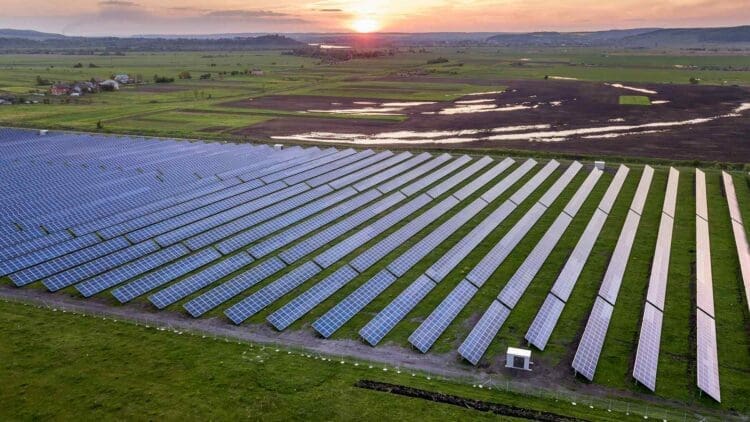
The 1.3-million-panel Orion solar cluster in Milam County is the crown jewel of this expansion.
A landmark 1.2-gigawatt PPA (Power Purchase Agreement) between SB Energy and Google powers this project.
This is a domestic supply chain triumph: Ohio-built modules, Californian trackers, and Nebraska steel.
First Solar in Ohio manufactured the ultra-low-carbon modules. The panels have solar trackers from California’s Nextracker, and structural components from Nebraska’s Sandhills Energy.
The steel was sourced from Pennsylvania and Texas, ensuring that the infrastructure remains true to its U.S. roots.
Despite 875 MW of clean capacity, the project faces a silent, relentless enemy that could shut down the entire operation.
To protect domestic resilience, SB Energy turned to thousands of sheep to address the project’s greatest threat.
3,000 sheep are solar panels’ best defense
Irrigation runoff and panel shading trigger ‘micro-climates’ where weeds grow at triple speed.
Overgrowth causes ‘shading loss,’ where a single weed can drop a panel’s output by 20% or trigger localized hot spots that melt wiring.
To prevent fire hazards and output drops, 3,000 sheep provide ‘precision vegetation management.’
As unconventional as it may sound, this approach has become preferred over the standard industrial mowers.
Heavy machinery can kick up rocks and debris that can damage the glass of the millions of panels. They struggle to navigate tight spaces beneath the trackers and around sensitive electrical components.
Additionally, using carbon-heavy maintenance machinery defeats the purpose of the renewable facility.
Sheep are the more sustainable choice
Sheep are ‘living lawnmowers’ that graze 24/7 without diesel emissions or soil compaction.
Rotational grazing improves soil organic matter by 1% to 3%, increasing carbon sequestration and water retention.
They do not contribute to the ;evel of noise pollution associated with traditional mowers and align with green energy goals.
The Orion project’s success proves that giant infrastructure needed for the Digital Age can exist in harmony with nature.
SB Energy and Google’s collaboration has created a blueprint for truly sustainable growth. This bio-integrated approach ensures that Texas can power the world’s most advanced AI while working with the environment.
This ‘Agrivoltaic’ model proves that feeding the AI revolution doesn’t have to mean destroying vital local ecosystems.
Anke Maree is a writer with a clear and engaging editorial style. Her work focuses on making complex topics accessible, informative, and relevant for readers across different areas of interest.