
China just switched on an underwater data center powered by the wind and cooled by the sea
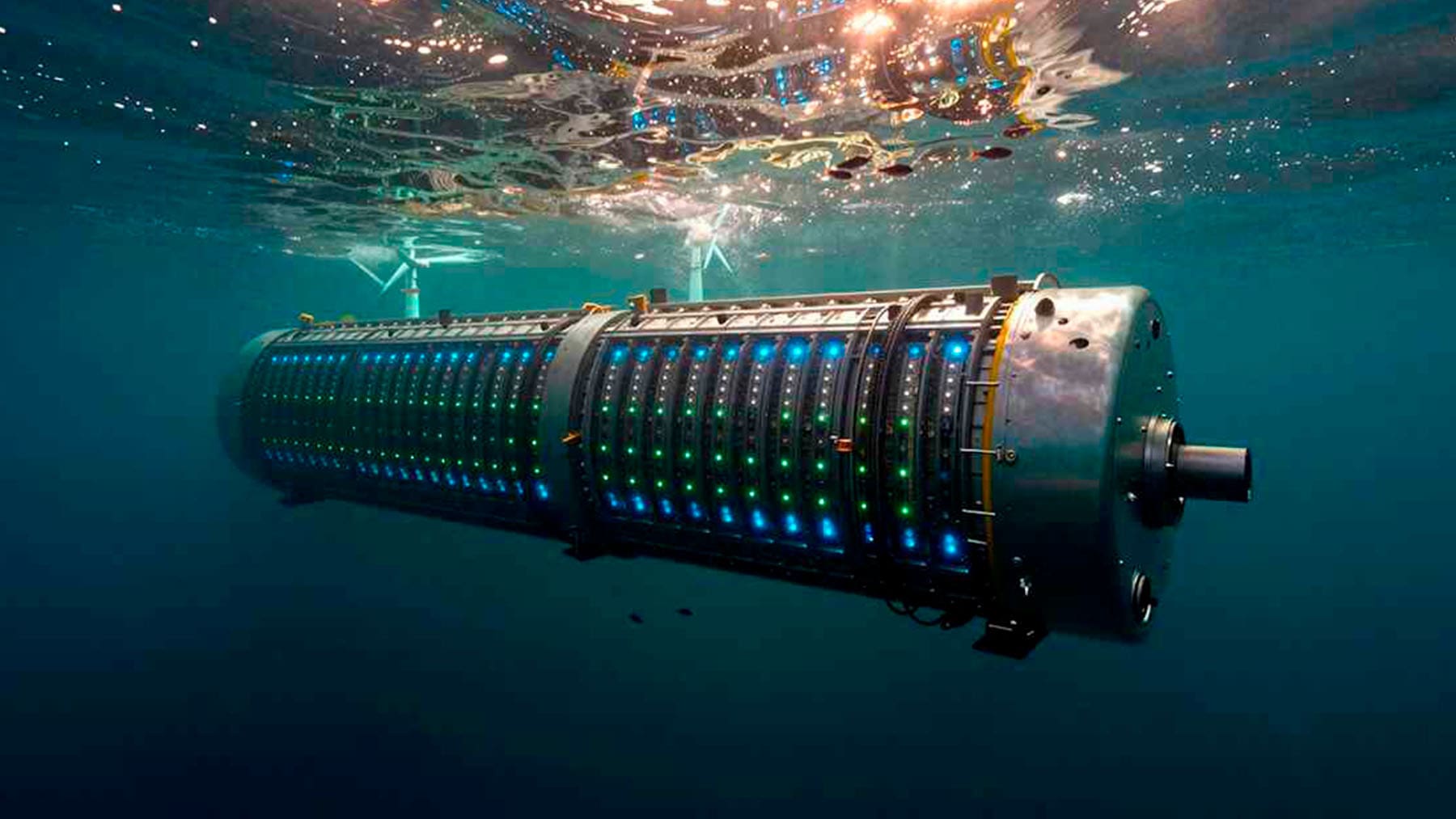 Credits: Edited, representative image. AI-made
China has developed a more sustainable data center to address global artificial intelligence (AI) growth.
The AI era is pushing worldwide electricity consumption beyond traditional grid capacity.
Wind power capacity expansion is stepping up to close the unprecedented power gap. Yet, conventional data centers remain highly resource-intensive in a time when scarcity is rising.
Industrial supply chains will be optimized, scientific discoveries will be accelerated, and complex workflows will be automated.
Will moving the infrastructure into the ocean offer a more efficient path toward next-generation global computation?
How the AI era is pushing massive energy demands
Breakthroughs in large language models and neural networks have shifted the world into the AI era.
This ever-evolving technology will transform society.
Industrial supply chains will be optimized, scientific discoveries will be accelerated, and complex workflows will be automated.
However, this systemic transition necessitates a major computing infrastructure to sustain operations.
Worldwide, data centers are the powerhouses of AI. They are also among the biggest annual electricity consumers.
Their annual consumption has reached an estimated 1,050 TWh.
AI applications drive the vast majority of this high-energy demand.
An advanced AI request consumes almost tenfold the power of a traditional search engine command.
Industry experts project that the sector’s energy demand will double by 2030. AI-specific workloads are expected to triple in power use.
This rapid, exponential increase creates an imbalance compared to annual electricity production.
As AI demand outstrips new generation capacity, the risk of massive regional power deficits increases.
The cooling bottleneck facing wind-powered grids
The wind energy sector plans to increase installation capacity to address these power deficits.
Wind power offers carbon-free, scalable solutions to relieve strained grids.
Presently, global wind infrastructure has already expanded at a historic pace. The total installed capacity increased by 165 GW to reach 1,299 GW.
However, despite this historic expansion, conventional data centers face a significant physical bottleneck.
High-density computing produces substantial heat.
These extreme temperatures can be highly destructive to the infrastructure, which is why cooling systems are vital.
To prevent overheating, air conditioning and chillers use immense amounts of electricity.
Traditional cooling systems consume nearly 40% of a data center’s total power allocation.
Furthermore, the cooling infrastructure utilizes millions of gallons of freshwater daily.
Global water resources are rapidly depleting. This intensive resource demand strains water-scarce regions.
To overcome this major cooling tax, China designed an underwater engineering solution.
Shanghai’s wind-powered underwater data center
To make the computing infrastructure management more sustainable, China deployed a commercial underwater data center.
This innovative approach is located 6.2 miles offshore in the Lingang Special Area. It sits 32 feet deep on the seabed.
It is situated directly next to Shanghai’s primary AI hub.
The submerged modules feature a specific cylindrical vertical structure.
This design increases durability to extreme wave impacts and high sediment levels. The internal server space is also maximized.
A direct offshore wind connection and marine cooling model
The data center is linked to adjacent offshore wind turbines with subsea photoelectric composite cables.
This bypasses traditional onshore grid-routing systems entirely.
95% of the facility’s server racks are powered by offshore wind.
The ocean cools the data center with a circulating copper-pipe heat-exchange system.
The system is sealed and transfers the produced heat directly into the sea.
This makes the cooling power one-tenth of the total power consumption of land-based facilities.
Overall, electricity usage is reduced by 22.8%, and the stable power usage effectiveness is 1.15.
China’s underwater data center project marks an essential shift toward sustainable infrastructure.
By moving servers to the ocean floor, the computing industry’s severe resource limitations can be overcome.
Fortunately, this is only the first step. Operators plan to scale the current 2.3 MW setup to a capacity of 24 MW.
If successful, the AI era could shift toward the next generation of powering the internet with the ocean.
Anke Maree is a writer with a clear and engaging editorial style. Her work focuses on making complex topics accessible, informative, and relevant for readers across different areas of interest.
