
An Argentine factory squeezes lemons, treats the wastewater left behind, and ends up generating enough electricity to power about 2,500 homes
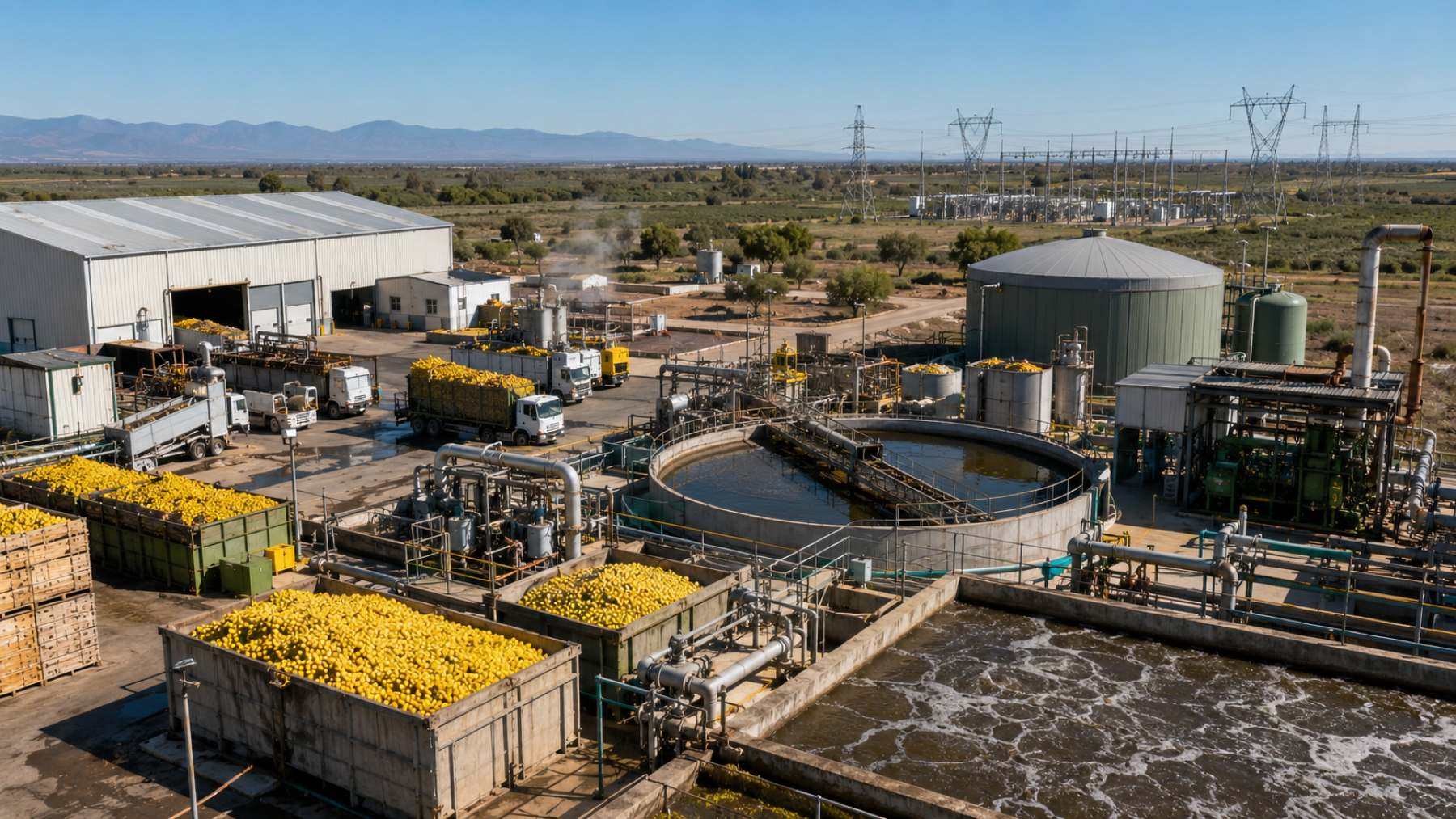
Argentina is producing clean electricity for thousands of homes using lemon wastewater.
Worldwide, the food processing industries are under pressure to adopt more sustainable practices.
Beyond the high volumes of potent greenhouse gases produced, unmanaged industrial effluent often contaminates local river basins.
Her work focuses on making complex topics accessible, informative, and relevant for readers across different areas of interest.
An Argentinian citrus facility is addressing this by converting organic waste into valuable clean energy.
Will this innovation help promote the adoption of circular economy methods across global industries?
How the pressure to go green is growing
Man-made greenhouse gas and carbon dioxide emissions are at an all-time high.
Global food processing is a major contributor to these greenhouse gas emissions.
Currently, it accounts for 34% and generates roughly 18 billion metric tons of carbon dioxide equivalent each year.
These high emissions are attributed to the need for immense thermal energy and electricity.
To maintain these energy-intensive operations at processing plants, fossil fuels are usually burned.
Furthermore, untreated biowaste and wastewater emit high amounts of methane.
This is a potent greenhouse gas with a global warming potential over 28 times higher than carbon dioxide.
The wastewater itself releases over 40 million metric tons of methane annually worldwide.
Consequently, climate change accelerates, costing global supply chains over $20 billion annually in climate-related losses.
This creates a devastating cycle where food systems drive global warming while also suffering from it.
Processing facilities are now facing increasing compliance penalties and market risks, making decarbonization essential.
The impact of accelerated climate change on food systems
Global food insecurity is a growing concern as the world’s weather becomes more unpredictable.
The higher the concentrations of greenhouse gases in the atmosphere, the more heat is trapped.
Earth’s temperature significantly increases as a result, disrupting historic patterns.
In recent years, regions have been experiencing severe heatwaves, droughts, and erratic rainfall.
As a result, soil quality degrades, leading to smaller crop yields across major agricultural nations.
Altered climate zones also enable destructive pests and plant diseases to spread into new growing territories.
This triggers sudden crop failures and challenges for food processing facilities.
Raw material shortages spike commodity prices and cause severe supply chain bottlenecks.
To maintain long-term business operations, Citrusvil in Argentina decided to repurpose its lemon wastewater.
Its plant generates 3 MW of clean energy, which is directly supplied to Argentina’s national power grid.
Bayer is a key partner, as its BayG.A.P. program is training smallholder growers to ensure sustainability standards are met.
Converting lemon wastewater into high-value energy
Increasingly more food processing facilities are converting leftover residues into clean power.
In Cevil Pozo, Tucumán, Argentina, Citrusvil processes up to 10,000 cubic meters of acidic liquid wastewater per day.
The plant consists of an advanced facility with anaerobic biodigesters to treat this wastewater.
The production of biogas during harvest season
There are microorganisms in the anaerobic biodigesters that break down the biowaste in the effluent.
The produced methane gas is captured before it releases into the atmosphere.
Up to 5.5 million cubic meters of biogas is produced per harvest.
In August 2019, the captured biogas was directly converted into electricity.
Under a 20-year RenovAr contract, the clean power is transmitted to the grid, powering nearly 3,000 homes.
The purified wastewater is recycled to irrigate almost 1,500 acres of lemon orchards through fertigation.
Additionally, solid organic residues are extracted to produce 6,500 tons of natural compost per season.
This helps restore soil health.
The Citrusvil 3 MW power plant remains operational today. It presently supplies 60% of its own energy in addition to supplying the grid.
The facility aims to address seasonal limitations by adding alternative organic feedstocks during the off-seasons.
The model itself is highly scalable, paving the way for food processing facilities to actively decarbonize.
Ultimately, it proves that wastewater can be transformed into reliable sources of clean power.
Anke Maree is a writer with a clear and engaging editorial style. Her work focuses on making complex topics accessible, informative, and relevant for readers across different areas of interest.
