
Arizona solar homeowners paid a secret surcharge for years until a court finally exposed the utility behind it
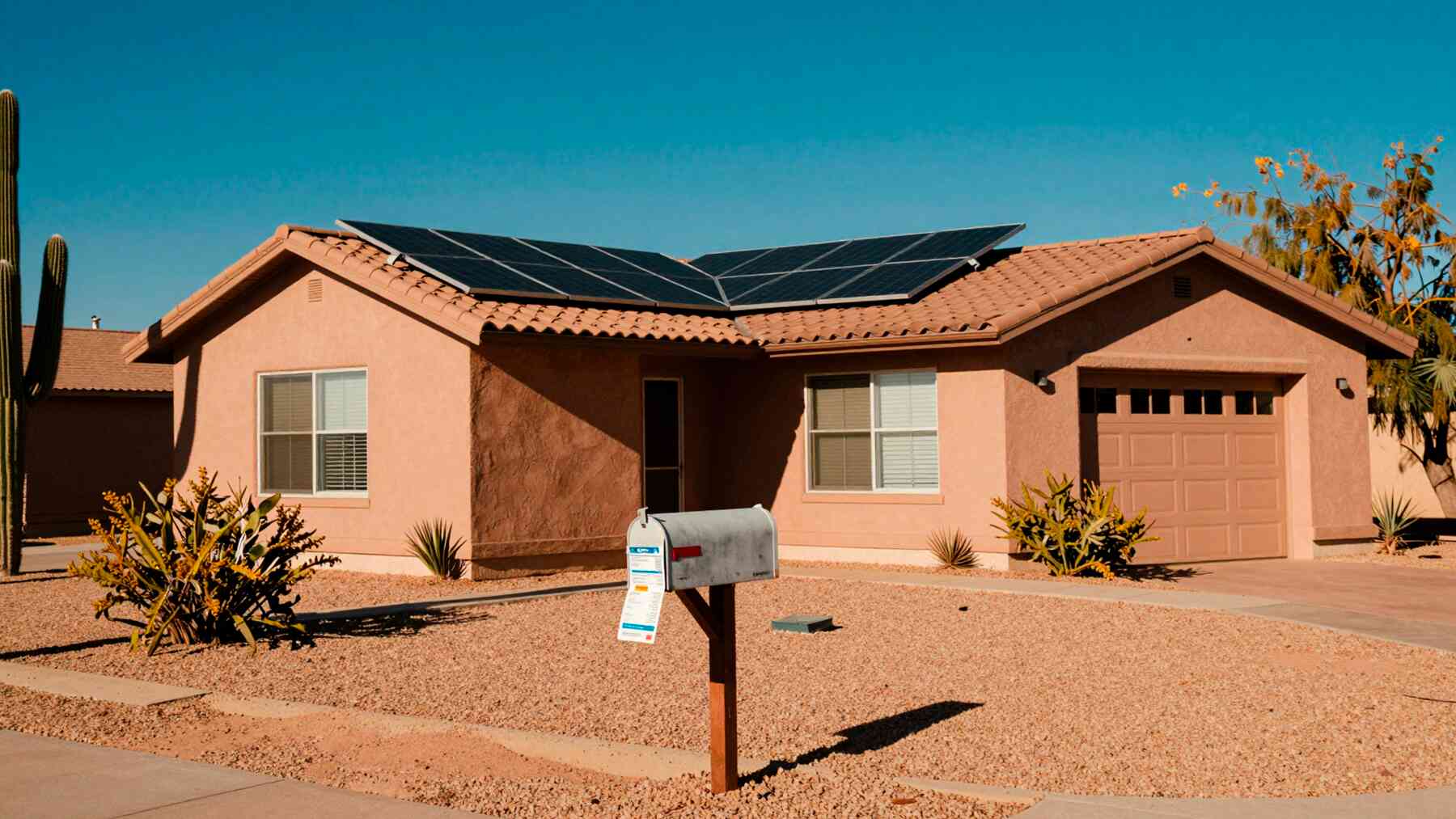 Credits: AI made
Residential rooftop solar was supposed to provide energy independence, but it ended up costing some people more.
Worldwide, electricity consumption continues to surge, placing immense strain on regional grids.
While utilities struggle to balance operations, homeowners have turned to solar panels to relieve pressure on their households.
Under no circumstances does it seek to promote an opinion or create a trend, nor can it be taken as investment advice or a recommendation of any kind.
However, the rapid expansion of distributed electricity has triggered a clash between homeowners and traditional utilities.
What can be done to prevent this tension in the future?
How the strain on power grids is growing
Utilities are facing a critical balancing act as electricity demand rises.
A grid can only remain stable when the power supply perfectly matches demand every second.
During periods of high consumption, voltage within the system drops. This increases the risk of frequency fluctuations that threaten equipment.
To prevent cascading failures or widespread blackouts, utilities must respond quickly.
The first response is often to raise output from dispatchable power plants or request that consumers decrease usage through incentives.
In extreme events, rolling blackouts could be implemented to preserve overall system integrity.
Furthermore, surging demand forces utilities into major capital investments. Aging transformers must be upgraded, substations expanded, and transmission lines reinforced.
These improvements are costly, complex, and often need lengthy regulatory approval.
Quite often, the financial burden of grid upgrades is shifted onto ratepayers.
This is why so many homeowners are investing in rooftop solar.
The rise of residential energy autonomy
Rooftop solar has become a vital defense against the growing grid instability.
As electricity rates rise and the threat of outages worsens, energy self-sufficiency has become a top priority.
Generating power at the point of use with solar systems helps bypass the volatility of centralized utilities.
For many, this resource has become more about economic survival than environmental values. Rooftop solar can save between $37,000 and $154,000 over 25 years on average.
This makes panels an ideal financial hedge, locking in energy costs and protecting families from frequent rate hikes.
These systems also offer independence and peace of mind.
When pairing residential solar with batteries, households can enjoy greater security, even as grids buckle under the pressure.
However, in Arizona, some solar homeowners had been paying a surcharge for years without knowing it.
The Arizona Attorney General’s Office launched a successful legal challenge against the practice.
Exposing a regulatory overreach for rooftop solar
Residential solar and storage solutions have become key in many fast-growing U.S. regions.
But a surcharge controversy can change it all.
It began when the Arizona Corporation Commission (ACC) approved the surcharge for Arizona Public Service (APS) rooftop solar customers.
The fee was buried within a broader rate case. It was never officially requested by the utility nor properly communicated to the public.
Regulators attempted to justify the charge, but it was approved despite a lack of supporting evidence.
When this was challenged, expert testimony was restricted and critical evidence sidelined. This shielded the utility from scrutiny.
Stepping in to challenge the Commission
The Arizona Attorney General’s Office argued that the public had been “blindsided.”
The Arizona Court of Appeals vacated the surcharge after a decisive ruling.
By failing to provide a transparent justification of any such fees, the Commission violated its duty.
This decision highlights that solar customers cannot be singled out for discriminatory charges without sound legal and factual bases.
Residential rooftop solar households may have emerged victorious with this ruling, but some predict it is just the beginning.
Energy demand and grid costs will continue to rise, increasing pressure on utilities. This will likely lead to a persistent tension between traditional business models and consumer energy independence.
Transparent and evidence-based regulation will be essential moving forward. Policymakers must also embrace the idea that homeowners will lead the way toward a decentralized, sustainable future.
Disclaimer: Our coverage of events affecting companies is purely informative and descriptive. Under no circumstances does it seek to promote an opinion or create a trend, nor can it be taken as investment advice or a recommendation of any kind.
Anke Maree is a writer with a clear and engaging editorial style. Her work focuses on making complex topics accessible, informative, and relevant for readers across different areas of interest.
