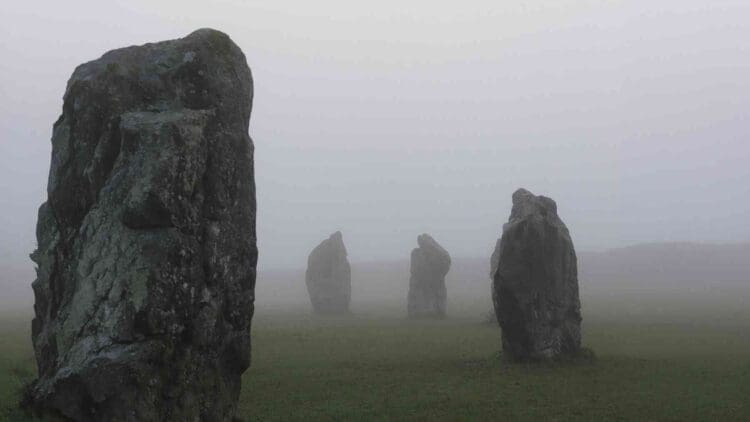

A wind farm construction site accidentally turned into a Bronze Age archaeological discovery.
Globally, nations are racing to meet strict international climate mandates as deadlines rapidly approach.
However, some renewable energy projects, such as wind and solar, require vast tracts of land.



In some regions, development often collides with physical remnants of the past.
What exactly happens to a green initiative when landscape clearing ends up uncovering a piece of history?
How the global race for clean power has tightened
The world’s rush to increase renewable energy capacity is driven by fundamental stakes.
Three primary drivers include:
- Rising global temperatures
- Extreme weather disruptions
- Fluctuating fossil fuel markets
These have forced nations to establish legally binding climate targets.
Global warming is the most catastrophic. To prevent it, international models demand rapid decarbonization.
This major shift from fossil fuels to clean electricity is placing immense pressure on the world’s land availability.
In the United Kingdom, this issue has become extremely critical.
International commitments demand that the UK government lower greenhouse gas emissions by at least 68% compared to 1990 levels. This must be achieved by 2030.
An ambitious milestone has been set to adhere to these commitments.
Within the next four years, 100% clean energy must cover Great Britain’s electricity.
Low-carbon sources must account for at least 95% of the total domestic power.
This must predominantly be wind and solar.
These targets necessitate unprecedented infrastructure growth.
There is currently a major gap, but land limitations prevent progress.
Wind farm developers are being forced into the wilderness
One of the biggest challenges of building massive clean energy projects is the specific geographic requirements.
In the UK, acquiring suitable lots is extremely difficult.
The nation has very strict regulations that pose severe limitations.
Development cannot occur near residential settlements, towns, or cities.
Buffer zones up to 1.2 miles from communities are enforced. This prevents noise and visual disruption.
Options become less available due to protected landscapes.
The following are entirely off-limits:
- National parks
- Nature reserves
- Highly valued agricultural zones
These restrictions have caused Scotland to bear the heavy burden for onshore wind infrastructure.
Developers seek out remote uplands, peatlands, and isolated hillsides such as Twentyshilling Hill for wind projects.
These wild locations offer high wind speeds for massive power generation.
However, these landscapes only appear untouched.
A wind farm project unearthed a historical site, and commercial firm GUARD Archaeology was responsible for mitigation.
The discovery of a tragic burial at Twentyshilling Hill
The UK is known for its Bronze Age past, and projects often uncover ancient findings.
During the clearing of an access route for the new wind farm, workers struck an ancient burial site.
The project timeline was immediately altered.
The site was identified as a Bronze Age barrow mound dating back 3,300 years.
However, excavations beneath the mound center revealed something tragic and exceptionally rare.
The broken burial tradition of Twentyshilling Hill
A single, central pit was discovered with five tightly packed earthenware urns.
They contained cremated remains of at least eight individuals.
This was surprising, as Scottish Bronze Age burials typically followed prolonged, multi-stage rituals.
Communities would expose bodies to the elements for months before cremation. Bodies would also be buried individually over many generations.
Analysis showed that the urns were buried simultaneously. Bodies were cremated immediately after death.
Furthermore, each urn paired the remains of an adult with a child.
Archaeologists conclude that the community was forced to break tradition due to a sudden crisis, like famine or disease.
The discovery itself only halted construction temporarily. However, it proved the value of modern heritage laws.
The wind farm developer funded the excavation and saved a rare prehistoric record from destruction. In the end, a green energy project turned into a bridge to the past.
Anke Maree is a writer with a clear and engaging editorial style. Her work focuses on making complex topics accessible, informative, and relevant for readers across different areas of interest.