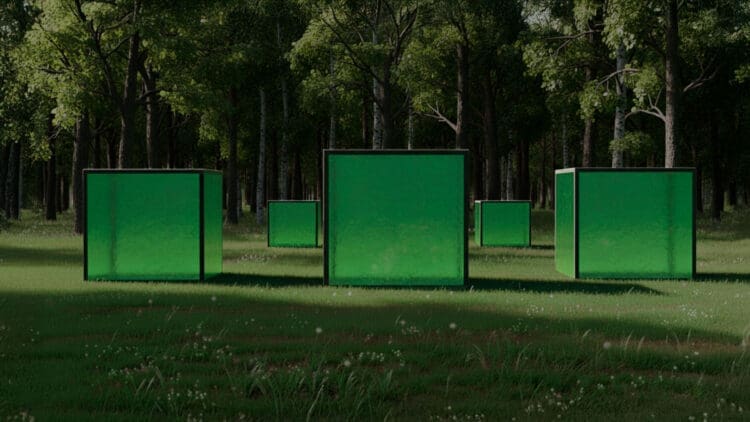

One of the fastest-growing geographical trends worldwide is urbanization. There is a universal understanding that cities offer more economic opportunities, increased access to advanced services, and rich cultural lifestyles. However, one of the greatest challenges all cities face is pollution. Fortunately, ‘liquid trees’ could be the revolutionary solution to change this inevitable fate. Now, you will not just be getting high-quality opportunities and services in cities, but also high-quality air.
Pollution: The greatest challenge in cities
The world has significantly changed over the past two centuries, from technology to styles, but the most significant change is evident in geographical trends. In 1800, not even 10% of the world’s population lived in urban environments. Now, more than 50% of the population lives in cities, and the UN predicts that this number may rise to 68% by 2050.
Key statistics indicate that the continents experiencing the greatest and fastest expansion include Asia and Africa. However, this global shift has increased the challenges often associated with cities, including, but not necessarily limited to:

- Strained infrastructure and services
- Expensive housing
- Scarce resources
However, one of the greatest challenges that cities face is pollution, especially as these regions become more densely populated. As a result, urban air quality has declined substantially. According to the Clean Air Fund, 41% of the world’s urban regions face air pollution, significantly higher than the World Health Organization’s (WHO’s) recommended levels. This has led to a global health threat, which may even cause premature deaths.
Fortunately, innovation may prevail in the end, as India has unveiled a revolutionary solution.
India’s ‘liquid trees’ could be a revolutionary solution
The obvious solution to improve air quality is to turn to nature itself and plant trees. However, with limited space, non-permeable ground, pollutant specificity, and additional challenges presented by canopy cover, this endeavour may not be the most beneficial. Fortunately, India has proven that a little innovation goes a long way. First, solar-powered trees were planted to absorb carbon, and now, ‘liquid trees’ have entered the conversation.
India’s Kerala University of Fisheries and Ocean Studies (KUFOS) and Lo Carbon Solutions have teamed up to show what can be achieved when engineering, biotechnology, and sustainability are combined. According to Lo Carbon Solutions’ website, on November 30, 2024, they unveiled the country’s first micro-algae-based exterior liquid tree prototype.
How it works
A shed-like structure was created to house micro-algae suspended in water in a transparent 1,000-liter tank, giving the design its green appearance. The micro-algae then absorb carbon dioxide and produce oxygen through photosynthesis, but at a record efficiency. Biomass is harvested as fertilizer.
From low carbon to fast clean air
This innovative creation not only addresses the challenges of planting conventional trees in cities by serving dual purposes but also serves as a feasible solution to improve air quality, as it outperforms conventional trees. The liquid tree’s shed itself can be used as a waiting area, and one liquid tree’s oxygen-production capacity is equivalent to that of 10 mature trees.
Furthermore, Lo Carbon Solutions added that these liquid trees are also like functional art that serves an educational purpose, as they inspire thoughtful thinking of and conversation about sustainable practices, reminding onlookers of mankind’s role in the clean energy transition. The fact that aesthetics were brought into consideration is a bonus to these liquid trees!
Biotechnology is playing an integral role in climate solutions. In October 2025, India’s “First Living Liquid Tree” was featured at the IGBC Connect Chhatrapati Sambhajinagar – Building a Green City event, celebrating innovation and sustainability alike. Soon, liquid trees could be “planted” worldwide, bringing nations closer to achieving climate targets. Cities are now changing for the good, from California with its ‘Solar Intersections’, which has been producing night-time lighting since the 80s, to several others.
Anke Maree is a writer with a clear and engaging editorial style. Her work focuses on making complex topics accessible, informative, and relevant for readers across different areas of interest.