
Finland is digging three giant caves beneath a city to fill with 140°C water and keep homes warm all year
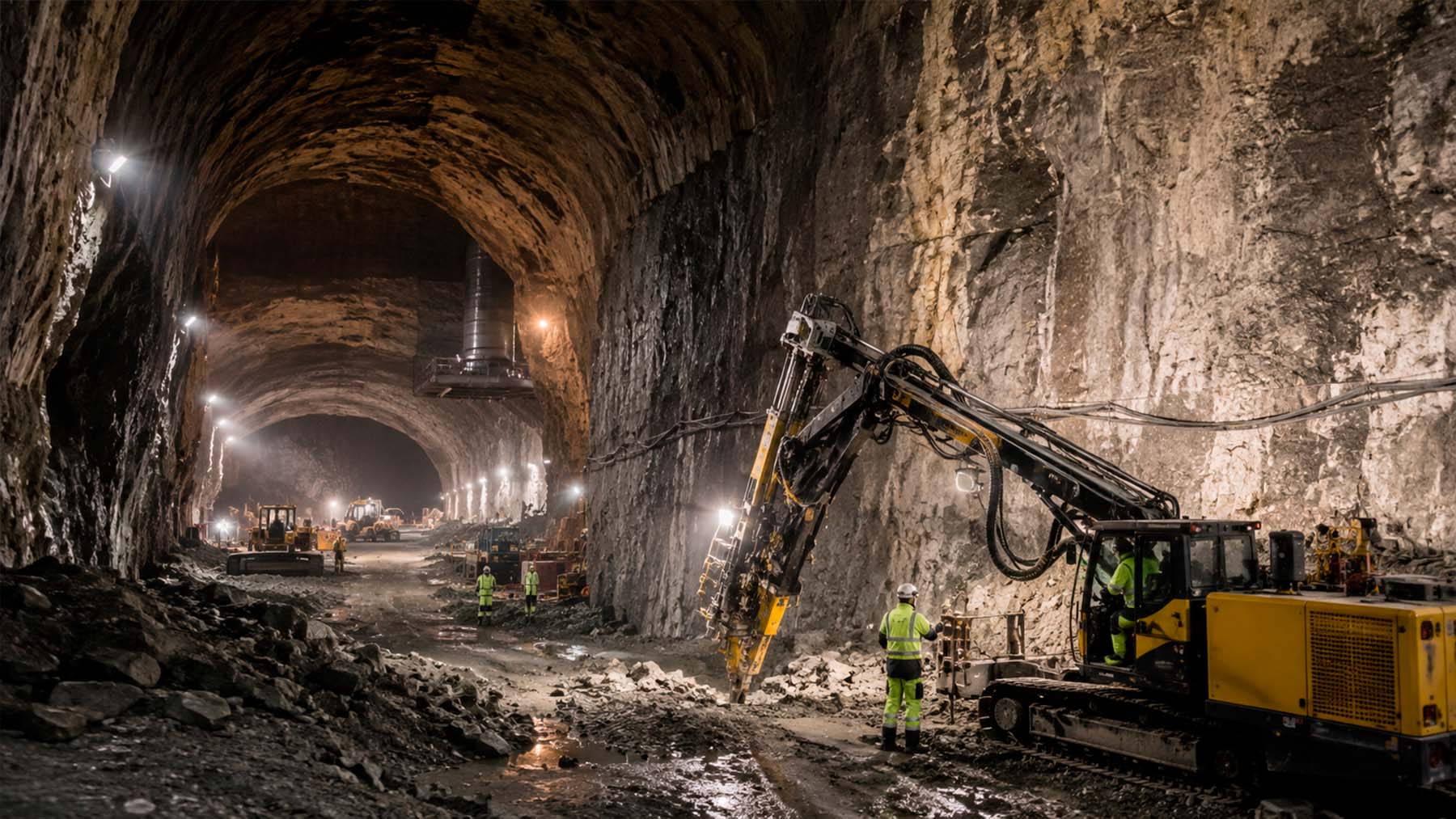 AI-made
Finland is heating its homes using an innovative water-filled cave approach and excess energy.
The world is racing to meet international climate mandates as global warming continues to accelerate.
However, seasonal fluctuations in global energy consumption make this mission more complex.
Offsetting carbon emissions from electric power grids is achieved by replacing fossil fuels with solar, wind, and battery storage systems.
In winter, the need for heating increases significantly, driving high energy-related carbon emissions worldwide.
Will this alternative Finnish method to warm households during winter help decarbonize municipal energy grids globally?
How the planet continues to warm despite strict climate targets
In the Digital Age, the world has become fast-paced, hyperconnected, and especially focused on convenience.
However, as humanity actively works towards advancements intended to help society, unprecedented changes have occurred.
One of these includes the significant acceleration of climate change.
Globally, greenhouse gas emissions have reached record levels.
This continuous increase is despite strict international policies such as the Paris Agreement.
The annual carbon dioxide emissions from burning fossil fuels are 38.1 billion tons.
Consequently, atmospheric carbon dioxide concentrations are 52% above pre-industrial levels.
The first factor behind this acceleration is electricity demand outpacing clean energy generation.
This gap is causing fossil fuel reliance to continue rising.
Additionally, the remaining carbon budget to limit warming has decreased to 170 billion tons.
Most importantly, the world’s massive thermal footprint accounts for nearly 40% of energy-related emissions.
To meet climate targets, decarbonizing the grid and thermal energy must be part of the solution.
The complexity of making heating greener
Offsetting carbon emissions from electric power grids is achieved by replacing fossil fuels with solar, wind, and battery storage systems.
However, decarbonizing global heating systems is significantly more complex.
It faces unique physical and economic barriers.
Residential heating may need lower temperatures, but district networks and heavy industry require water above 212°F.
Conventional air-source heat pumps are insufficient to generate these high temperatures during winters.
Furthermore, thermal heat naturally dissipates over time.
Usually, storing great volumes of hot water without any losses requires expensive insulation.
Seasonal demand also plays a key role.
This year, a sudden polar vortex brought on freezing conditions, which made heating essential.
During the cold winter months, solar generation is at its lowest while heat demand peaks.
Standard battery storage systems store energy for short periods. This renders them useless for bridging multi-month seasonal gaps.
In Finland, Vantaan Energy developed a system to overcome these barriers.
Finland created the world’s biggest seasonal thermal storage system
Caves are being repurposed as giant batteries to store excess energy.
In Finland, the Varanto project specifically aims to overcome seasonal heating limits.
By 2030, it will be the world’s largest seasonal thermal energy storage plant. Its location is up to 459 feet beneath Ring Road III in Vantaa.
Three giant underground caves will be dug directly into bedrock.
Each one will be 984 feet long, 65 feet wide, and 131 feet high.
The combined storage volume will be nearly the size of the Helsinki Olympic Stadium.
Using superheated water mechanics
The deep underground groundwater pressure will be higher than the atmospheric surface pressure.
This enables Varanto to store water at 140°C (284°F) without it evaporating.
The pressure mechanism allows storing high-temperature energy far more efficiently compared to surface containers.
Rock Mechanics Consulting Finland (RMCF) was responsible for ensuring long-term structural reliability.
3D numerical simulations analyzed 50 years of continuous cyclic heating and cooling. The models revealed that the rock will remain stable.
Varanto’s excavation began in late 2025, and it is scheduled to be completed in 2030.
The project will represent a major milestone in the urban energy transition.
The caves hold 90 GWh of heat, which is enough to power a medium-sized city in Finland for one year.
By storing excess summer energy and low-cost green energy as heat, winter peak demands can be met. Ultimately, it will help to break fossil fuel reliance.
Anke Maree is a writer with a clear and engaging editorial style. Her work focuses on making complex topics accessible, informative, and relevant for readers across different areas of interest.
