
For 50 years, engineers may have been measuring solar temperatures incorrectly, and they now think the Sun itself is to blame
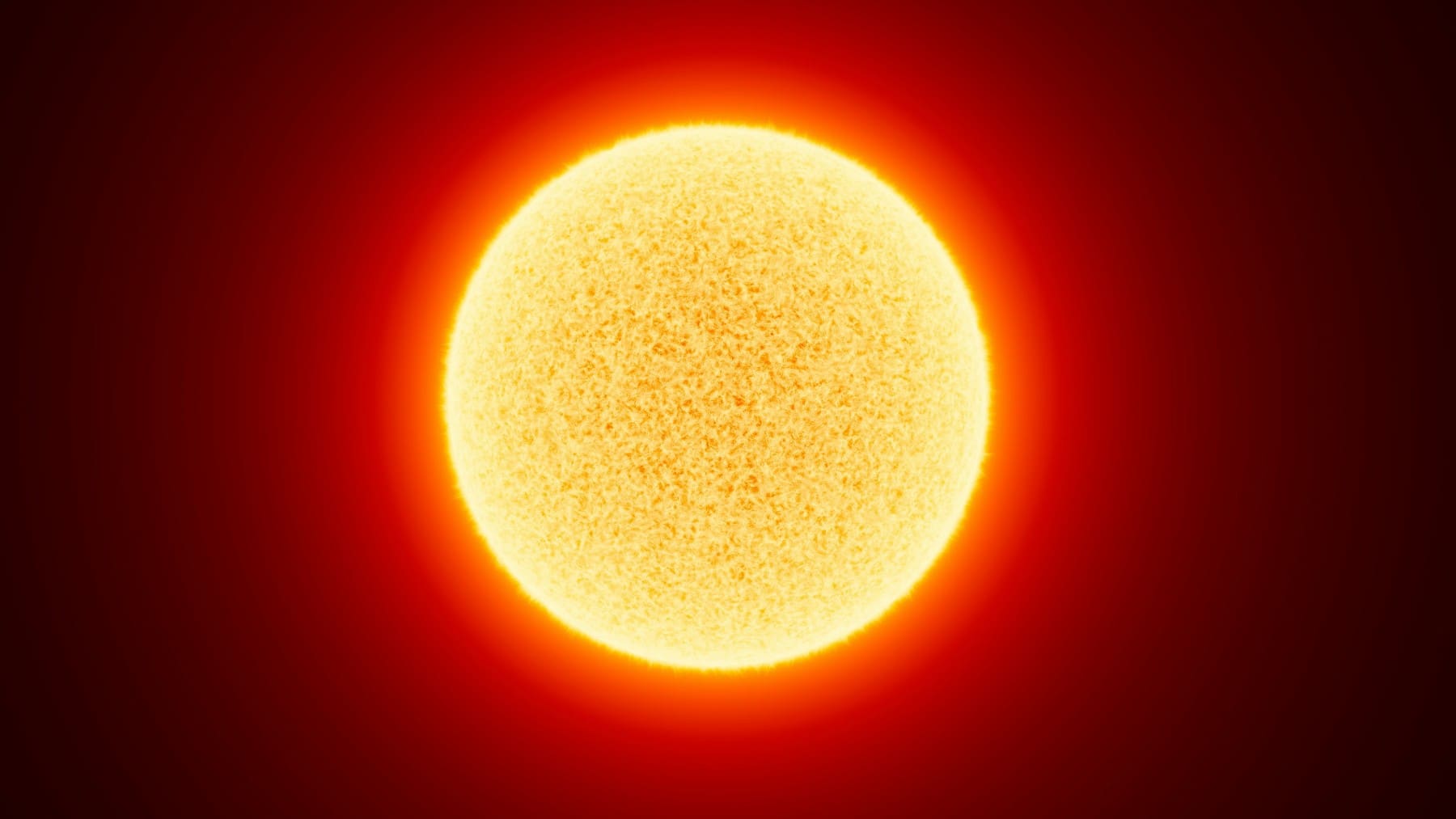
Solar flares rank among the most violent events in our solar system — sudden eruptions that release enormous amounts of energy and superheat parts of the Sun’s outer atmosphere to more than 10 million degrees. For decades, solar physicists believed they had a reliable handle on just how hot these events actually get.
They were off by a factor of 6.5. New research from the University of St. Andrews suggests that ions inside solar flares can reach temperatures exceeding 60 million degrees — far beyond what the field has long assumed. The finding challenges a foundational consensus that has shaped solar physics for half a century.
A long-held assumption goes up in flames
Solar flares are explosive releases of energy in the Sun’s outer atmosphere. They flood Earth with X-rays and radiation, threaten satellites and astronauts, and disrupt the upper atmosphere. Understanding exactly how hot they get carries real consequences for space weather forecasting and for the safety of technology we depend on daily.
That window is long enough for super-hot ions to exist, persist, and shape what we observe from Earth — a possibility the old models never seriously accounted for.
For decades, the standard model treated flare plasma as a single system with one shared temperature. Ions and electrons were assumed to equalize almost instantly, placing the temperature ceiling at roughly 10 million degrees Celsius. That ceiling, it turns out, was wrong.
The new study, published September 3 in Astrophysical Journal Letters, challenges that figure directly. Drawing on data from near-Earth space, the solar wind, and computer simulations, the St. Andrews team argues that ions — the positively charged particles making up half of flare plasma — can exceed 60 million degrees.
The clue hiding in magnetic reconnection
The mechanism at the center of this story is magnetic reconnection — the process by which tangled magnetic field lines in the Sun’s atmosphere suddenly snap and reorganize, releasing vast amounts of stored energy. It is widely understood to be the engine driving solar flares.
What the St. Andrews team noticed was a pattern emerging from other areas of plasma physics. Studies of magnetic reconnection in near-Earth space and in the solar wind had found that the process heats ions roughly 6.5 times more than it heats electrons — a ratio researchers had begun describing as a near-universal law. Nobody had applied it to solar flares.
Lead researcher Dr. Alexander Russell, a Senior Lecturer in Solar Theory at the University of St. Andrews, described the moment the connection became clear. “We were excited by recent discoveries that a process called magnetic reconnection heats ions 6.5 times as much as electrons,” he said. “This appears to be a universal law, and it has been confirmed in near-Earth space, the solar wind and computer simulations. However, nobody had previously connected work in those fields to solar flares.”
Why ions and electrons can stay at different temperatures
Plasma is a state of matter in which electrons have been stripped from their atoms, leaving a mix of free electrons and positively charged ions. Under most conditions, particles collide frequently enough that their temperatures equalize quickly — and solar flare models have historically relied on exactly that assumption.
The St. Andrews team recalculated the equalization timescale using modern data and found something unexpected. “Redoing calculations with modern data, we found that ion and electron temperature differences can last for as long as tens of minutes in important parts of solar flares,” Dr. Russell said. That window is long enough for super-hot ions to exist, persist, and shape what we observe from Earth — a possibility the old models never seriously accounted for.
Solving a 50-year spectral puzzle
Since the 1970s, a persistent frustration has run through solar astrophysics. When scientists examine solar flares in extreme-ultraviolet and X-ray light, the spectral lines appear broader than models predict. Turbulent motions inside the plasma became the dominant explanation, but repeated attempts to pin down the specific nature of that turbulence ran into dead ends.
The new ion temperature figures offer a different answer. According to the study, the elevated ion temperatures fit the observed line widths closely, suggesting that ion heat — not turbulence — may be the primary driver. If confirmed, it would represent a genuine shift in how scientists interpret solar flare spectra.
What comes next for solar science
The work is theoretical, and the researchers are clear that observational confirmation is the critical next step. Future instruments capable of directly measuring ion temperatures during solar flares would put the hypothesis to a proper test.
Should the findings hold up, the implications extend beyond pure science. More accurate flare temperature models could sharpen space-weather forecasts, giving satellite operators and space agencies better tools to protect hardware and crew. The broader lesson may be methodological: this discovery came from borrowing insights across disciplines that rarely talk to each other. Plasma physics, heliospheric research, and solar science each held a piece of the answer — and bringing them together is what finally made the picture visible.

Carlos is an engineer with strong expertise in technical and industrial topics. He previously worked at international companies such as Siemens and is multilingual.
