
Researchers gave a tiny drone hummingbird wings that feel the wind and it may quietly reshape how we harvest energy from the air
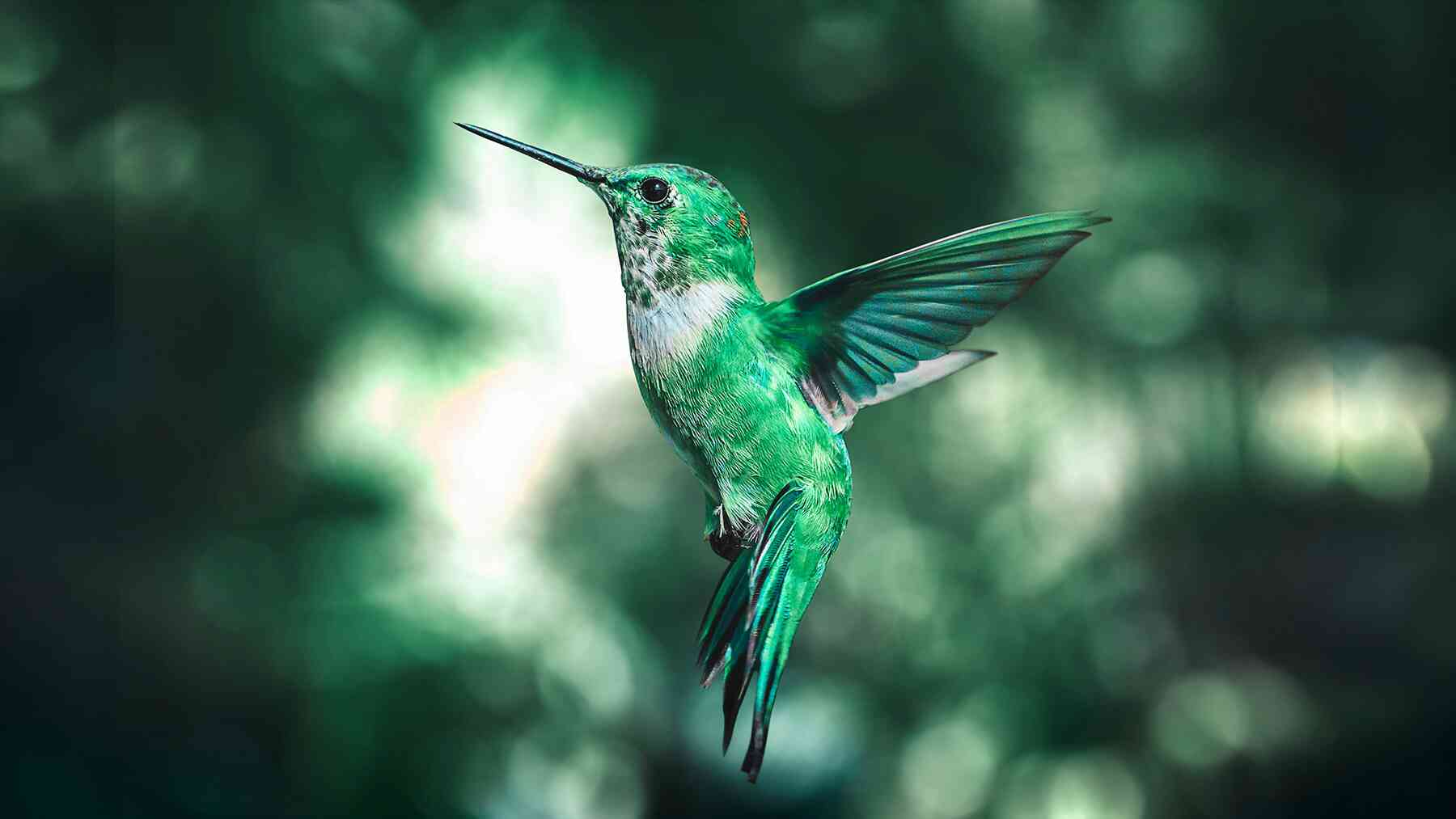
A hummingbird hovers in a breeze with an almost uncanny stillness — its wings bending and flexing dozens of times per second, constantly adjusting to shifts in the air that no instrument is measuring. Nature handles this effortlessly.
Engineers building small aerial robots haven’t been so lucky. Conventional wind-sensing equipment is simply too heavy and bulky for tiny flying machines, leaving them largely blind to the airflow around them. Researchers at Institute of Science Tokyo think flexible wings themselves might hold the answer.
Nature’s wing sensors, reimagined in a lab
Birds and insects don’t carry anemometers. Their wings contain mechanical strain receptors — tiny biological sensors embedded directly in the wing structure — thought to detect changes in wind, body movement, and environmental conditions, feeding real-time information into the animal’s flight control system.
Testing in free-flight conditions — rather than the tethered wind tunnel setup used here — will reveal how well the system holds up when the robot is fully airborne.
Associate Professor Hiroto Tanaka and his team at Institute of Science Tokyo drew directly from that biological principle. They built a flexible wing modeled on hummingbird anatomy, using tapered shafts that support a thin wing film, a structure that closely mirrors what you’d find in a real bird’s wing.
The motivation was practical. Small aerial robots face severe weight and size constraints, which puts conventional airflow sensors completely off the table. If the wing itself could do the sensing, no extra instruments would be needed at all.
Seven tiny gauges and a wind tunnel
The team attached seven commercial strain gauges to the flexible wing — inexpensive, widely available components, nothing exotic. Each gauge was placed at a different location on the wing to capture how deformation varied across the surface during flight.
A DC motor drove the wing at 12 flapping cycles per second, replicating hovering hummingbird motion. Inside a wind tunnel, the researchers introduced a gentle airflow of just 0.8 meters per second — roughly the speed of a slow indoor draft — applied from seven distinct directions ranging from 0° to 90°, plus a no-wind condition.
Strain data collected during flapping were then fed into a convolutional neural network tasked with classifying which wind condition the wing was experiencing.
Near-perfect results — even with minimal data
The results were notable. Using strain data from a full flapping cycle, the CNN classified wind direction with 99.5% accuracy across all eight conditions — a figure that held up even when the researchers pushed the system harder.
When the data window shrank to just 0.2 flapping cycles, a fraction of a single wingbeat, accuracy stayed at 85.2%. That matters for real flight, where decisions need to happen fast. A single strain gauge, tested over a full cycle, reached between 95.2% and 98.8% accuracy on its own. But with the shorter 0.2-cycle window, performance fell sharply to 65.6% or below. Multiple sensor locations are what keep the system reliable when data is scarce.
Why wing structure itself matters
The researchers didn’t stop at testing different sensor configurations. They also modified the wing itself — specifically by removing the inner shafts, the biomimetic structural elements that stiffen and shape it.
The effect was measurable. With all seven gauges active and a short 0.2-cycle data window, removing the shafts caused a 4.4% drop in accuracy. With a single gauge, the average drop was around 6–7%, depending on data length.
The physical architecture of the wing isn’t just aerodynamically useful; it actively amplifies and differentiates the strain signals the sensors pick up. Geometry shapes the information, not just the flight path. Biological wing structure may be functionally essential for sensing — not merely for generating lift.
What this means for the future of small aerial robots
The most immediate implication is weight. This system needs no dedicated airflow instruments, only simple strain gauges already integrated into the wing. For small drones where every milligram counts, that’s a meaningful advantage.
The approach could also allow flapping-wing robots to autonomously adapt to shifting wind conditions in real time — a drone that senses wind through its own wings, adjusting flight without relying on any external data source.
The research adds a new dimension to our understanding of animal flight as well. As Tanaka notes, hovering birds and insects may perceive wind sensitively through the strain sensing of their flapping wings, a capability that has likely shaped how these animals evolved their wing structures over millions of years.
The next steps will be telling. Testing in free-flight conditions — rather than the tethered wind tunnel setup used here — will reveal how well the system holds up when the robot is fully airborne. Expanding the range of detectable wind speeds and directions will also be critical before this approach can move toward practical applications. What researchers have now is a strong proof of concept. What comes next could represent a genuinely new way for small robots to read the air around them.

Carlos is an engineer with strong expertise in technical and industrial topics. He previously worked at international companies such as Siemens and is multilingual.
