
Illinois researchers simulated covering the Sahara desert with solar panels and wind farms—and the climate changed in ways no one expected
 Credits: Energies Media Internal edition
A Sahara simulation shows that solar panels and wind turbines change the local climate.
The planet’s atmosphere has shifted significantly, impacting regions and modern economies worldwide.
To prevent this from worsening, global large-scale green energy capacity must increase.
The study “Climate model shows large-scale wind and solar farms in the Sahara increase rain and vegetation” was published in Science.
However, these installations provide more than just clean power for grids; they also transform the environment.
In what ways can solar and wind energy alter regions such as the Sahara Desert, and is it beneficial?
How Earth continues to undergo change
Thousands of years ago, many of Earth’s ecosystems differed from the ones known today.
In fact, nearly every 20,000 years, the planet undergoes significant cyclical changes.
These shifts are localized and occur naturally as Earth’s axis “wobbles.”
The Sahara Desert is an example. It used to be a lush, green savannah, with abundant reservoirs and wildlife.
Today, this arid region no longer fits that image, and climate change threatens to override and disrupt these natural cycles.
Ever since the Industrial Revolution and the more recent digital era, the atmosphere has changed.
Higher energy demands and highly concentrated greenhouse gas emissions are driving global warming.
Consequently, moisture distribution and atmospheric pressure zones have shifted.
Now, the world’s biggest ecosystems are affected.
Climate zones are migrating to the poles, and deserts are expanding into semi-arid grasslands.
These human-driven transformations are impacting global communities and biodiversity, urging immediate intervention.
The effects on economies and biodiversity
In recent years, Earth has experienced the hottest temperatures ever recorded.
This has affected local economies, increased food insecurity, and raised water scarcity.
All of this is driven by extreme weather conditions such as flash floods, major wildfires, and prolonged droughts.
These disasters destroy natural landscapes and properties, displacing local communities and animals.
Furthermore, volatile weather directly impacts agricultural productivity.
Additionally, rapidly changing climates are forcing species to alter their geographic ranges.
Some tend to adapt to ecosystem changes, but others are not as lucky, facing a high risk of extinction.
These consequences highlight the importance of offsetting emissions to slow global warming.
Interestingly, while green capacity increased for this very reason, the University of Illinois found that it could play another role.
The research team conducted a simulation study to see how massive renewable infrastructure alters the local climate.
A solar panel and wind turbine Sahara simulation
The study “Climate model shows large-scale wind and solar farms in the Sahara increase rain and vegetation” was published in Science.
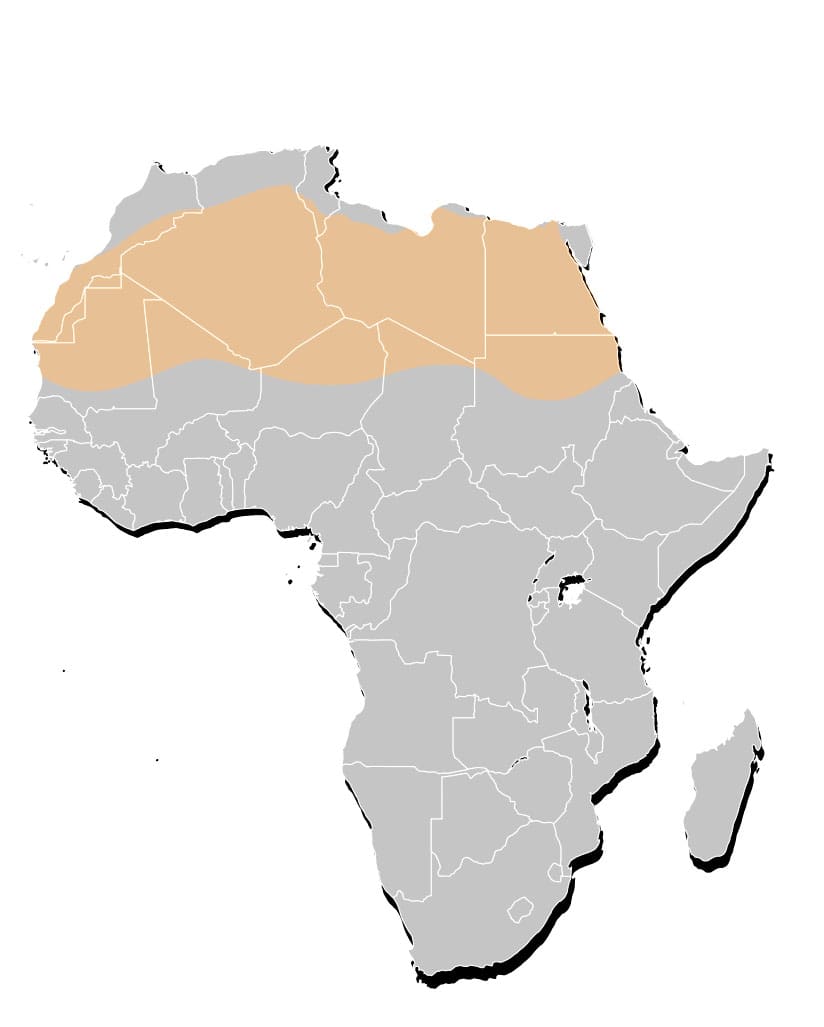
The Sahara Desert simulation entailed covering the desert with solar panels and wind farms. Naturally, the simulation produced substantial amounts of electricity.
The researchers found that it would generate four times the current global energy demand.
However, the most significant finding was the immense changes in the local climate.
Reshaping regional ecosystems with solar and wind
Solar panels and wind turbines alter the climate in different ways.
Dark panels absorb more thermal energy than the desert sand, changing the ground’s surface reflectivity.
The air becomes warmer and rises, forming low-pressure zones which draw in more moisture.
The turbines mix the air layers, which boosts near-surface temperatures.
Additionally, they create air friction that slows wind and creates low-pressure zones.
Together, they double the regional rainfall, triggering a greening effect and creating a self-reinforcing climate loop.
The Sahara Desert simulation shows that human intervention could effectively slow desertification.
As rainfall and vegetation growth increase, it has the potential to transform surrounding regions like the Sahel.
The ecological and economic benefits would also extend to the Middle East and adjacent drylands.
Ultimately, it shows that large-scale renewable energy installations can do more than produce clean power.
While it may take years to restore the Sahara to a savannah, at least solar panels can stimulate substantial environmental recovery.
Anke Maree is a writer with a clear and engaging editorial style. Her work focuses on making complex topics accessible, informative, and relevant for readers across different areas of interest.
